
Articles By

-
Environmental
U.S. Power Sector Meets 2020 Climate Change Target—for a Month
The failure of cap and trade seemed to have doomed the U.S. to missing greenhouse gas emissions cuts it committed to at the 2009 Copenhagen conference. But a funny thing happened on the way to the hothouse.
-
Fracking Toothpaste
There are legitimate concerns with the effects hydraulic fracturing can have on health and the environment, but the discussion is in need of some perspective.
-
News
Just How Much Gas Is There, Really?
Do we really have only a decade of gas left? Or a century? Or more than that? The answer requires agreement on some definitions, and a solid grip on the big picture.
-
Environmental
Fracking Guidelines Expand as Technology Evolves
New federal regulations promise to change the fracking landscape in the coming years, perhaps substantially. But technology may be running ahead of the law, as improvements in the fracking process threaten to make some of the new rules unnecessary.
-
Business
U.S. LNG Exports Gather Steam
All but unthinkable a decade ago, the U.S. gas industry is gearing up for a major shift toward export of liquefied natural gas. Across the country, projects are afoot that could make the U.S. a serious LNG exporter within the next decade. GAS POWER reviews some of the major players and issues.
-
O&M
Making the Switch: Converting a Simple-Cycle Plant to Combined Cycle
A lot goes into the decision to upgrade a simple-cycle plant to combined cycle. Careful planning and analysis can make the difference between a profitable, successful switch and an expensive hassle.
-
Business
Global Gas Power Projects Quarterly Status Report
A review of the global gas power industry shows solid growth in gas-fired generation. Here’s a snapshot of who’s doing what, and where.
-
General
Neither Party Can Let USEC Fail
By Kennedy Maize Washington, D.C., June 17, 2012 — If the Obama administration is, as Republicans charge, the most anti-business administration in U.S. history, why is it doing everything it can to save publicly-traded uranium enrichment enterprise USEC from itself? Could Ohio have something to do with it? We are shocked, shocked, as shocked as […]
-
General
Getting a Piece of the Pilgrim Pie
By Kennedy Maize Washington, D.C., June 12, 2012 – It’s hard to cry the blues for a union worker at a nuclear power plant making $122,000 a year with a good health plan and a solid 401(k). That’s the situation of the average striking (or locked out, if you will) member of Local 369 of […]
-
News
IEA: With Right Policies, Shift to Clean Energy Can More Than Pay for Itself
A host of new technologies are ready to transform the energy system, offering the potential to drastically reduce carbon emissions, enhance energy security, and generate a huge investment return, the International Energy Agency (IEA) said in a new energy technology publication launched on Monday.
-
News
Labor Pains at Pilgrim Nuclear Plant
In a long-running labor dispute, Entergy Corp. on June 7 locked out union workers at its Pilgrim nuclear plant 38 miles southeast of Boston near Plymouth, Mass., bringing in workers from its other plants and contract workers to operate the 685-MW unit along with management officials.
-
News
Coal Could Regain Ground from Gas as Summer Demand Ramps Up
Natural gas-fired generation enjoyed a competitive advantage through this past winter and spring as historically low prices for the commodity combined with mild weather and relatively light demand to turn the dispatch stack on its head and favor gas over coal. That advantage is narrowing as summer demand approaches. A senior market analyst with Bentek Energy expects coal-fired generation to be advantaged at least until the fall shoulder season.
-
News
Court Challenges NRC Decision to Extend Onsite SNF Storage
A three-judge panel of the U.S. Court of Appeals for the District of Columbia, Circuit ruled unanimously on Friday that the Nuclear Regulatory Commission (NRC) erred in deciding that spent nuclear fuel (SNF) from the nation’s power plants could be stored as long as 60 years after a plant’s operating license expires.
-
News
FERC Gives Conditional Approval to Duke-Progress Merger
Duke Energy and Progress Energy received conditional approval for their merger from the Federal Energy Regulatory Commission (FERC) on June 8. The companies plan to close their merger, which would create the nationís largest utility, by the targeted date of July 1.
-
News
Mayors Voice Support for MACT
Mayors of more than 90 U.S. cities have signed a letter to Environmental Protection Agency (EPA) Administrator Lisa Jackson voicing their support for the recent EPA Mercury and Air Toxics Standards for Power Plants (MATS).
-
News
Macfarlane Likely to Be Confirmed as NRC Chair and Svinicki to Gain Second Term
All indications from Wednesday’s Senate Environment and Public Works Committee joint hearing are that Dr. Alison Macfarlane will been confirmed as the new chair of the Nuclear Regulatory Commission (NRC) and that Commissioner Kristine Svinicki will be approved for a second term. Macfarlane, a nuclear waste expert who served on the White House’s Blue Ribbon Commission on Americaís Nuclear Future, was nominated by President Barack Obama last month after Chairman Gregory Jaczko, whose leadership style was described by commissioners from both political parties as abusive, resigned May 21.
-
News
FERC Approves MISO Resource Adequacy Enhancements
The Federal Energy Regulatory Commission (FERC) on Monday conditionally approved the enhanced resource adequacy proposal submitted by the Midwest Independent Transmission System Operator (MISO), which it says will provide even greater market and reliability benefits to MISO’s members and the customers they serve. The enhanced mechanisms become effective October 1, 2012, for the Planning Year that begins on June 1, 2013.
-
News
PPL Shuts Down Susquehanna Unit 2 to Probe for Turbine Cracks
PPL Corp. last week shut down Unit 2 of its Susquehanna nuclear power plant in Luzerne County, Pa., for a planned inspection of its turbine. Unit 1 of the two-reactor plant was shut down after workers in April found cracks similar to damage discovered and repaired in 2011.
-
News
SCE&G to Retire Older Coal Units in Anticipation of New Reactors
Regulated utility South Carolina Electric & Gas (SCE&G) last week filed plans with the Public Service Commission of South Carolina to retire up to six coal-fired units—a total capacity of 750 MW—by 2018. The units are some of the utility’s “oldest and smallest,” and it would not be a “good business decision” to add costly environmental control equipment to these plants, SCE&G said.
-
News
AEP to Reevaluate Retrofit Options for 1,097-MW Big Sandy Coal Plant
American Electric Power (AEP) last week temporarily withdrew a $1 billion plan to retrofit its 49-year-old Big Sandy coal-fired plant near Louisa, Ky., from the Kentucky Public Service Commission (PSC), saying it wanted to reevaluate alternatives to meeting the company’s obligations under the recently finalized federal Cross-State Air Pollution Rule, the Mercury and Air Toxic Standard, and other environmental standards.
-
News
Federal Court Orders DOE to Reevaluate Nuclear Waste Fund, Rules Fee Is Unlawful
A federal court on Friday ruled that collection of a fee by the Department of Energy that totaled nearly $750 million a year from nuclear generators for nuclear waste disposal since 1983 was “legally defective” because development of the Yucca Mountain permanent spent fuel waste facility had been discontinued. But in lieu of suspending the fee, the court ordered the DOE to conduct a reevaluation of the Nuclear Waste Fund within six months.
-
News
EPA’s NODA Proposes More Compliance Flexibility for Impingement Mortality Standards
The Environmental Protection Agency (EPA) last week issued a Notice of Data Availability (NODA) as a supplement to its April 2011 proposed rule for cooling water intake structures at all existing power facilities as part of section 316(b) of the Clean Water Act.
-
News
Tripling Texas Wholesale Prices Wouldn’t Adequately Raise Reserve Margin, Says Report
A report released on Friday by consultants at the Brattle Group concludes that tripling peak wholesale power prices in Texas (from $3,000/MWh to $9,000/MWh by 2015), as is being considered by Texas utility commissioners and grid operators to encourage power plant construction in the power-strapped state, would only raise the region’s reserve margin to 10% above peak demand—less than the 13.75% reserve margin recommended by federal regulators.
-
News
FERC-NERC Report: Fallen Trees Caused Most Outages During 2011 Northeast Snowstorm
Nearly three-quarters of the 74 transmission line outages were caused by fallen trees during a snowstorm that hit the Northeast in October 2011 and shut off the lights for more than 3.2 million homes and businesses, concludes a report released jointly by the Federal Energy Regulatory Commission (FERC) and the North American Electric Reliability Corp. (NERC).
-
News
Study: Lack of Cooling Water Could Dent Future Generation in U.S. and Europe
The growing lack of cooling water resources could decrease power generating capacity in the U.S. by between 4% and 16% and between 6% and 19% in Europe between 2031 and 2060, and the likelihood of extreme drops in generation as a result will almost triple, suggests a new study by European and University of Washington (UW) scientists.
-
General
Plans Could Turn the Internet, and Smart Grid, Over to the UN
By Kennedy Maize Washington, D.C., 3 June 2012 — An international effort is underway to give control and governance of the Internet to a United Nations agency, with implications for ways that U.S. utilities might implement smart grid technologies. Led by Russia and China, the plan to turn the Internet over to the International Telecommunications […]
-
 Gas
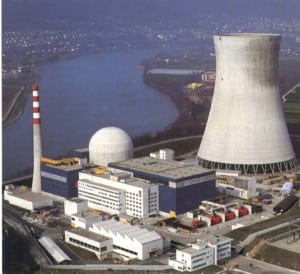
GasSwitzerland Contemplates Filling Future Nuclear Energy Gap
A model of Switzerland’s energy future to 2050 that abides with the country’s post-Fukushima decision not to build any new nuclear power plants suggests the phase-out could cost nearly $33 billion.
-
Nuclear
Too Dumb to Meter, Part 2
As the book title Too Dumb to Meter: Follies, Fiascoes, Dead Ends, and Duds on the U.S. Road to Atomic Energy implies, nuclear power has traveled a rough road. In this POWER exclusive, we present the second chapter, “Manhattan Transfer,” which covers the open fight for control of the development of nuclear power between the newly created Atomic Energy Commission and the military services, with the politicians playing both sides against each other.
-
 Coal
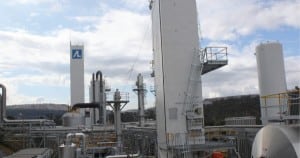
CoalCallide Oxyfuel Carbon Capture Plant Retrofit Moves Forward
Oxyfuel technology has been retrofitted at a 700-MW coal-fired power plant in Queensland, Australia, and is now capturing carbon dioxide from one of the plant’s six steam boilers.
-
 News
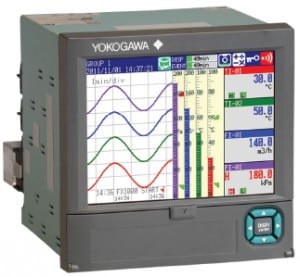
NewsNew Paperless Recorder
Yokogawa’s new FX1000 paperless recording system provides premium features and performance for cost-sensitive OEM suppliers and end user process recording applications. Delivering a high level of measurement, recording, and networking functionality in a compact package, the shallow 6.5-inch case depth behind the panel allows for installation in tight locations and easy system integration. A high-precision, […]