
Articles By

-
O&M
Coal Could Regain Ground from Gas as Summer Demand Ramps Up
Natural gas-fired generation enjoyed a competitive advantage through this past winter and spring as historically low prices for the commodity combined with mild weather and relatively light demand to turn the dispatch stack on its head and favor gas over coal. That advantage is narrowing as summer demand approaches. A senior market analyst with Bentek Energy expects coal-fired generation to be advantaged at least until the fall shoulder season.
-
News
Point Lepreau Reactor Gets Federal OK to Restart After Four-Year Refurbishment
Canada’s Nuclear Safety Commission (CNSC) on Tuesday approved restart activities at New Brunswick Power Nuclear’s (NBPN’s) Point Lepreau Generating Station, a 680-MW Candu 6 on the northern shore of the Bay of Fundy that has been offline for more than four years for a major refurbishment.
-
News
DOI, DOE Blueprint Foresees 23.7 GW of Solar Energy Development on Federal Lands
A Final Programmatic Environmental Impact Statement (PEIS) released by the Department of the Interior (DOI) and Department of Energy (DOE) on Tuesday identifies 17 Solar Energy Zones (SEZs) in six southwestern states—Arizona, California, Colorado, Nevada, New Mexico, and Utah—totaling about 285,000 acres of public lands, as priority areas for utility-scale solar development.
-
News
NRG and GenOn to Merge in $1.7 B Deal
Princeton, N.J.-based NRG Energy and Houston, Texas-based GenOn on Monday signed a definitive agreement to combine the two companies in a $1.7 billion stock-for-stock tax-free transaction. The merger will create "the largest competitive generator" in the U.S. with a fleet of about 47 GW and assets in the East, Gulf Coast, and West, and a combined enterprise value of $18 billion, the companies said.
-
News
Coal Dust Explosion at Polish Power Plant Injures Four
A coal dust explosion late on Tuesday at Polish utility Polska Grupa Energetyczna’s (PGE’s) 2.1-GW Turow power plant near Bogatynia in the southwestern part of Poland injured four workers and set off a blaze at three of the plant’s eight units. A team of more than 100 firefighters reportedly responded to the emergency at the facility that produces nearly 7% of power consumed in Poland.
-
Environmental
EPA Delays Issuance of Final Cooling Water Intake Rule by Nearly a Year
An amended settlement reached with environmental groups will allow the Environmental Protection Agency (EPA) to delay by nearly a year issuance of rules that would govern cooling water intake structures at existing power plants and mandate compliance under Section 316(b) of the Clean Water Act.
-
Coal
Federal Appeals Court Upholds EPA NAAQS Standards for NOx, SO2
The U.S. Court of Appeals for the D.C. Circuit last week handed the Environmental Protection Agency (EPA) two legal victories over challenges from states and industry, affirming the agency’s revisions to the National Ambient Air Quality Standard (NAAQS) for nitrogen oxides (NOx) and upholding its revised final sulfur dioxide (SO2) standard.
-
Solar
Solar Trade Tensions Intensify as China Launches Polysilicon Dumping Probe
Global solar trade tensions escalated on Friday as the Ministry of Commerce of the People’s Republic of China announced it would launch both anti-dumping and countervailing investigations on imports of solar-grade polysilicon from the U.S. and an anti-dumping probe on South Korean polysilicon imports. Germany on Friday, meanwhile, said it would support its solar industry in anti-dumping action against China.
-
Coal
EPA to Stay, Reconsider New Source Emission Standards in MATS Rule
The Environmental Protection Agency (EPA) intends to stay and reconsider new source emission standards contained in its February 2012-finalized Mercury and Air Toxics Standards (MATS), a letter from the agency’s assistant administrator, Gina McCarthy, shows.
-
Environmental
EPA’s “Sue and Settle Rulemaking” Criticized in New Report, Congressional Hearing
A new report from the U.S. Chamber of Commerce claims that the Environmental Protection Agency (EPA) uses a regulatory tactic dubbed “sue and settle rulemaking” to force states to relinquish their authority and accept agency-promulgated plans to mitigate regional haze that are much costlier to implement.
-
Nuclear
SCE: Most Tube Wear at San Onofre “Not Unusual”
Most steam generator tube wear or tube wall thinning at Southern California Edison’s (SCE’s) two-reactor San Onofre Generating Station (SONGS) was less than 20%—far below the 35% wall-thinning limit that would require the tubes to be plugged, data released last week by the Nuclear Regulatory Commission shows. Much of the wear was not "unusual," SCE said in a statement.
-
Business
PJM to Cancel High Voltage Transmission Line
The $2 billion Potomac Appalachian Transmission Highline (PATH) may be canceled this fall, a project analysis update from PJM Interconnection suggests. The grid operator for 13 states suspended the 765-kV project last year pending further analysis.
-
Wind
House Republicans to Scrutinize Political Sway in FAA’s Cape Wind Decision
Two Republican lawmakers are probing whether the Federal Aviation Administration (FAA) disregarded safety concerns and approved the Cape Wind project—the nation’s first offshore wind project—for political reasons.
-
Nuclear
DOE Announces $13 M in Nuclear Innovation Awards
The Department of Energy (DOE) on Tuesday announced nearly $13 million in nuclear energy innovation awards. The awards include $10.9 million to 13 projects to solve common challenges, including improving reactor safety, performance and cost competitiveness and $1.6 million in three university-led education projects.
-
Nuclear
EIA: U.S. Nuclear Uprates Since 1977 Equal Construction of Six New Nuclear Plants
Since 1977, more than 6,500-MW of nuclear uprates and been approved and many implemented in the U.S.—equivalent to the construction of six new nuclear power plants, the Energy Information Administration (EIA) said in an update on Wednesday.
-
Supply Chains
Uranium and Nuclear Fuel: No Bottlenecks Ahead
In addition to low prices for coal and natural gas, prices for uranium oxide are also gently falling. New supplies of uranium and enriched fuel should keep nuclear fuel prices stable for years to come.
-
Business
Cyber Threats to SCADA Systems Are Real
Some of the ripest targets for cyber soldiers and techno-terrorists are bland, non-descript boxes sitting inside electric utility generating, transmission, and distribution systems, controlling many of the operations of the utilities. The computer technology, once state-of-the-art, is decades old, and that’s part of the problem.
-
Finance
PwC: Big Demand Meets Tight Money in Power’s Future
As electric power utilities look ahead, they see the need for major financial investments, but also view a more difficult world in which to raise the needed funds for financing generation and transmission. That’s the conclusion of the 12th annual survey of global power and utility firms by PwC.
-
Finance
Securitizing Renewable Energy Loans
Renewable energy sources have increasingly become a focal point of U.S. regulatory and financial institutions as well as trade associations and legislatures. One area of particular interest is programs that have been established by local and state governments to encourage homeowners to become more energy efficient through the use of Property Assessed Clean Energy (“PACE”) loans.
-
Nuclear
Court Increases Spent Nuclear Fuel Storage Award to Kansas Plant Owners
Owners of the Wolf Creek Nuclear Power Plant in Kansas are entitled to $12.6 million in damages stemming from the federal government’s partial breach of a contract for disposal of spent nuclear fuel, $2 million more than previously awarded, a federal court ruled last week.
-
HR
The Leadership Dilemma
When did the term “management” change from a corporate organizational level to be achieved to a leadership model that must be mastered?
-
Commentary
A Call for Visionary Leadership in Energy
Along with the global economy, there are significant signs indicating how radically the energy business has changed in the past few years.
-
 Commentary
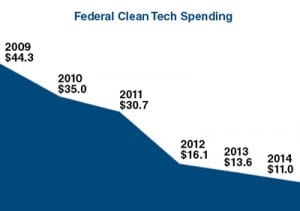
Putting Clean Tech on a Path to Subsidy Independence
Is the clean energy technology sector doomed because federal spending is sharply dropping?
-
HR
Workplace Drama: Why Behavioral Change Does Not Work
Do you communicate to manipulate or to change behavior?
-
Commentary
Jobs, Jobs, Jobs, and Blather
We are hot and heavy into election season, and there is a lot of buzz about “jobs.” We hear about job-killing regulations (mostly from Republicans) and the wonders of green jobs (mostly from Democrats). All this, of course, is aimed at tying favored policy options to something the average voter can understand, the need for […]
-
Supply Chains
TREND: U.S., Energy Exporter
The U.S. has been blessed with enormous quantities of natural resources yet has long been a net energy importer. The shift from global purchaser to global supplier of fossil fuels is accelerating.
-
General
Left-Right Cabal on Carbon Taxes?
By Kennedy Maize Washington, D.C., July 14, 2012 — A group of mainstream conservatives and representatives from Washington environmental groups have been meeting over recent weeks to revive the idea of a U.S. carbon tax as a way to combat alleged man-made global warming. The aim is to have a package of proposed laws to […]
-
Environmental
Left-Right Cabal on Carbon Taxes?
Washington, D.C., July 14, 2012 — A group of mainstream conservatives and representatives from Washington environmental groups have been meeting over recent weeks to revive the idea of a U.S. carbon tax as a way to combat alleged man-made global warming. The aim is to have a package of proposed laws to bring up when […]
-
News
Mississippi Power Appeals PSC Denial of Cost Recovery for Kemper IGCC in State High Court
Mississippi Power on Monday asked the Mississippi Supreme Court to review the June 22 unanimous denial by three commissioners of the Mississippi Public Service Commission (MPSC) of the company’s request to recover financing costs for its 582-MW Kemper County Integrated Gasification Combined Cycle (IGCC) plant.
-
News
Court Orders Olkiluoto EPR Operator to Release Withheld Payments to AREVA Consortium
Finnish utility Teollisuuden Voima Oyj (TVO)—operator of the Olkiluoto 3 (OL3) nuclear power plant under construction in Finland, a project that could be the world’s first EPR reactor but that has faced costly delays—must release €125 million ($155 million) of withheld payments to an AREVA-Siemens consortium, an international arbitration court ordered last week.