U.S. research and advisory firm Gartner reports that electricity demand for data centers worldwide is projected to double by 2030. As a result, developers are looking at small modular reactors (SMRs) to add low‑carbon power generation capacity.
The International Atomic Energy Agency has listed dozens of SMR designs (more than 80 worldwide in a recent report), with U.S. projects from NuScale Power, Kairos Power, X‑energy, and Oklo moving through permitting or construction, underscoring the urgency (and the stakes) of getting infrastructure choices correct from the start.
Long-term performance depends on more than the reactor core. Coatings and supporting materials influence safety, reliability, and regulatory outcomes, which often help determine whether schedules hold and assets endure. Because SMR designs and sites vary, coatings face new demands: environmental stress, inspection access, and maintenance cycles must be addressed early to keep programs on track.
New Deployments, New Pressures
SMRs will appear in places that traditional reactors have never reached. Developers plan installations on industrial campuses, within microgrids, and across remote regions. These locations could bring harsher climates, transport limitations, and construction schedules that look nothing like those of large‑scale nuclear builds.
Today’s supply chain can only deliver eight to 10 SMRs a year. Key components take up to two years to arrive, according to a 2025 Reuters webinar entitled “Unlocking SMR Growth: Strategic Partnerships Driving the Nuclear Boom Forward.” That makes it critical to protect every part of the project timeline, starting with transport and storage.
In modular construction, factory-built components often travel long distances, pass through ports and laydown yards, and may remain in storage before installation. Each step introduces handling risks. Coatings must not only perform in service but also endure this journey without damage.
 |
|
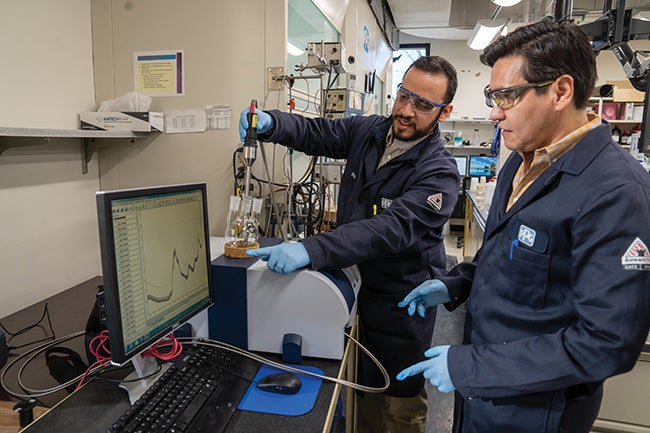
1. For decades, PPG’s research and development (R&D) experts have created coatings that have made products better across nearly every industry including nuclear power. Courtesy: PPG Industries |
A coating that fails during transport can delay schedules, add cost, and compromise quality assurance. That’s why advanced coatings designed to protect during shipping, staging, and long-term storage prove essential to successful SMR deployment (Figure 1).
New Operating Environments
SMR reactor designs introduce a wide range of operating conditions that push material limits in new directions. High-temperature gas reactors, for example, can reach up to 950C (1,742F) and use helium as a coolant. Molten-salt reactors operate around 700C (1,292F) and involve chemically aggressive salt mixtures. By contrast, conventional light-water reactors typically stay below 350C (662F), using water as both coolant and moderator.
Adding to the complexity, future SMRs may range from 20 MW up to 300 MW per unit, though some designs may go up to 500 MW, resulting in potentially different temperatures, chemical exposures, and containment strategies from site to site.
 |
|
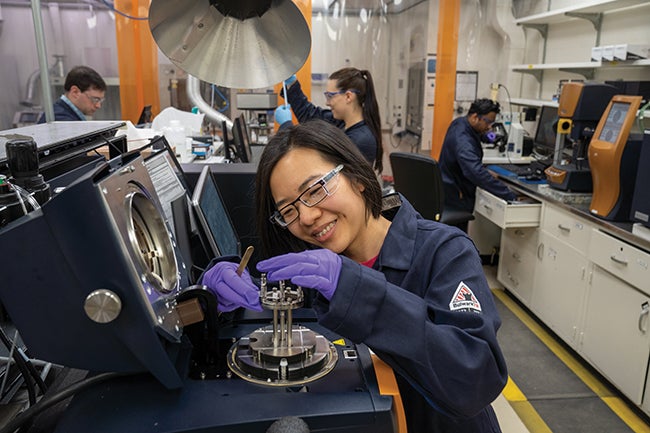
2. PPG has developed coatings for all existing major nuclear reactor designs and its R&D team is constantly working on new solutions. Courtesy: PPG Industries |
While coating requirements for reactor components must often be design-specific (Figure 2) and safety-qualified, the balance of plant, including tanks, structural steel, piping, and utilities, is an area where standardized, pre-qualified coating systems can be deployed more broadly. This includes corrosion protection, high-temperature resistance, and fire protection for key infrastructure systems that support nuclear operations.
Unlocking Speed Through Standardization
While early SMR designs may differ in scale and technology, the long-term vision for the sector remains standardization. Early planning will need to focus on identifying standardized, nuclear-qualified solutions that can be scaled and replicated across global deployments. With global suppliers and manufacturing nodes in regions such as Korea and Europe supporting SMR supply chains, a consistent approach to coatings helps align specifications, quality assurance/quality control, and logistics from the outset.
This opportunity for harmonization extends beyond materials to the qualification and regulatory frameworks that govern them. SMRs are intended to be faster to build and easier to replicate. That goal depends on minimizing redundant testing, aligning documentation requirements, and enabling new supply chain participants (many new to nuclear) to meet expectations without starting from scratch.
Safety, By Design
Nuclear projects typically adhere to a single set of safety standards, regardless of reactor size. SMRs are reshaping that model. Not all SMR designs require “safety coatings” in the conventional sense, particularly those that dissipate excess heat using passive systems or non-water-based coolants. Reactors using molten salt or gas cooling, for example, may minimize or eliminate the need for coatings in areas traditionally classified as safety-related.
Where coatings are required in safety-classified areas, they must meet rigorous expectations, including resistance to high heat, chemical exposure, radiation, and pressure conditions. Broken or delaminated coatings can interfere with strainers, valves, or emergency filtration systems, complicating incident response.
That’s why nuclear-grade coatings go through intensive qualification testing. Standards such as ASTM D5144, “Standard Guide for Use of Protective Coatings in Nuclear Power Plants,” provide protocols for evaluating coating systems. Systems need to remain bonded and stable under design basis accident, or DBA, conditions, though it’s important to note that other global regions operate under different qualification standards.
Quality Standards Still Set the Bar
American Society of Mechanical Engineers (ASME) NQA‑1 (Nuclear Quality Assurance) remains one of the most important requirements for nuclear infrastructure. Yet, many new SMR designers, along with engineering, procurement, and construction contractors and suppliers, may enter the sector without full visibility into NQA‑1 requirements. It governs how materials are produced, tested, and documented. It defines inspector qualifications, batch testing, and traceability.
A coating may meet technical performance requirements yet fail qualification if its manufacturing or documentation does not comply with nuclear quality rules. Early engagement with nuclear‑qualified coating suppliers who have experience in serving the traditional nuclear market prevents these issues. It aligns coating selection, documentation, and testing with regulatory expectations and keeps the project moving.
What the Conventional Fleet Got Right
Decades of experience in nuclear construction have already shown what works. The most successful projects shared one thing in common: the coatings were treated as part of the infrastructure strategy from the beginning.
In those projects, long-term performance was planned. Materials were selected based on expected operating stresses (radiation, moisture, temperature swings, chemical exposure) and tested under conditions that matched the plant’s environment. This level of preparation protected both the physical asset and the project schedule. According to the U.S. Department of Energy, standardized designs and repeat deployments, known as Nth-of-a-kind, or NOAK, help reduce overnight capital costs by 40%. Aligning coatings strategy early helps achieve these reductions by avoiding rework, extending inspection intervals, and reducing lifecycle maintenance.
Early involvement gave coatings teams a seat at the table while decisions were still flexible. Substrate selection, mock-up testing, ventilation planning, and access strategies were developed in tandem. Qualification testing validated system performance before critical path timelines took hold. That coordination paid off during construction and over decades of operation.
What also emerged from these legacy programs was a consistent body of best practices from materials qualification to inspection methodology that enabled repeatable success. As the SMR market moves toward modularization and multi-site rollouts, embedding these lessons into a more standardized global framework represents a major opportunity.
Standardizing coating system requirements, test protocols, and documentation expectations can accelerate timelines, reduce duplication, and streamline cross-border collaboration, particularly for new SMR developers and suppliers entering the sector. The more consistency built in now, the more scalable and efficient the next generation of nuclear construction can become.
What’s Ahead for SMR Projects
SMRs may be smaller in physical size, but the demands remain. Coatings will need to withstand chemical exposure, thermal cycling, radiation, and decontamination, often for 60 years or more (Figure 2). They must support inspection and safety reviews. They must meet nuclear-grade quality standards without exception and not just in one location.
For the SMR market to flourish at scale, the industry must seize the opportunity to drive global standardization but also in qualification pathways and regulatory expectations. A more harmonized framework across countries and certifying bodies could help new players meet cost, speed, and safety objectives, while minimizing duplication of testing and documentation.
The industry will need a supply chain that can optimize across continents, delivering components and a finished product that satisfies regulatory requirements in multiple jurisdictions without costly redesign.
When developers get coatings and materials right from the start, they save time, reduce risk, and achieve better outcomes. They also demonstrate to regulators that safety and durability considerations have been addressed. The first generation of SMRs will set the tone for the industry. Some will succeed because they integrated smart infrastructure decisions early. Others may struggle because they waited too long to act. The difference will come from execution that’s built on early decisions, qualified systems, and supplier-contractor coordination that ensures that every surface is ready to perform.
—Eric King is a PPG Global Segment Manager, Power and Mining, for the Protective and Marine Coatings business. His background spans technical coatings strategy, international business development, and advanced material applications.