
risk
-
 Management
Five Years After Winter Storm Uri, a Texas Co-op Shares Its Lessons Learned
Rayburn Electric Cooperative faced three years of power costs in five days during the 2021 storm. The experience transformed the organization’s approach to risk, generation assets, and long-term planning. When Winter Storm Uri swept across Texas in February 2021, Rayburn Electric Cooperative found itself staring down a crisis that would reshape the organization’s entire operational […]
-
 Commentary
Buyer Beware: Deeper Pockets Funding Deeply Speculative Power Sector Expansion
As billions of dollars flood into the historically niche electricity sector, U.S. power generation is having a moment and entering what may be its most consequential investment cycle in decades. The U.S. power space saw record levels of capital investments in 2024. These billions in new investments are coming not just from legacy participants, but […]
-
 Commentary
The Risk of Political Rebranding in the Clean Energy Industry
The U.S. solar industry has increasingly begun to rebrand itself as “MAGA-friendly,” emphasizing cost savings, energy independence, and job creation over climate concerns. This shift marks a departure from its traditionally left-leaning roots, as companies attempt to appeal to conservative consumers and policymakers. Some solar companies have changed their messaging to align with Trump-era rhetoric, […]
-
 Commentary
An Under-Appreciated Threat from Airborne Attacks on Large Nuclear Power Plants
Most of the 440 operable nuclear power plants (NPPs) currently deployed worldwide have long been recognized as potential targets for attack by enemy military forces or terrorists. Such an attack could not only destroy the power-generating capacity of the plant but also release a large plume of radioactive material having the potential to cause long-term […]
-
 Energy Security
Risks Associated with Geomagnetic Storms
In May 2024, stargazers and smartphone photographers witnessed a spectacular moment in time over the course of two nights. Social media and news outlets were dazzled by incandescent light plays from around the world—magenta skies gleamed over the city of Vienna, rainbow hues illuminated a lighthouse in England, emerald displays lit up the lakes of […]
-
 Commentary
Management Strategies Needed as Power Sector Faces Increasing Risk
Owners and operators of thermal and renewable energy infrastructure are navigating new and emerging risks due to digitization of the grid, an uncertain regulatory landscape, and changing environmental and weather patterns. These factors and others are forcing risk management stakeholders to increase preparation and resilience of their organizations. As digital transformation accelerates in the power […]
-
 Safety
Key Considerations for a Successful PPE Program
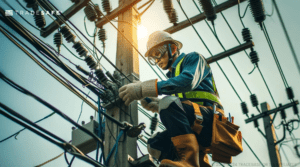
Electricity is an indispensable commodity in our modern society. It powers industries, businesses, and homes. With a flick of a switch, customers expect electricity to come through. To achieve this, numerous workers put themselves on the line and are exposed to hazards every day. In a study conducted by the Electrical Safety Foundation from 2011–2022, […]
-
 Cybersecurity
Energy’s Biggest Challenge? Modernizing Lines of Defense
The riskiest position for a company to take when it comes to its cyber governance, risk, and compliance (GRC) practices is the attitude that “it could never happen to us.” The truth is, risk is everywhere
-
 Connected Plant
Energy Is the Most-Targeted Sector for Cyberattacks: Here’s What to Do
The energy sector recorded three times as many operational technology (OT) and/or industrial control system (ICS) cybersecurity incidents as the next closest vertical, according to a study conducted by the Cyentia Institute, a research and data science firm, and sponsored by Rockwell Automation, an industrial automation and information provider. “Energy, critical manufacturing, water treatment, and […]
-
 Renewables
Emerging Risks in Renewable Energy: A Brief Overview of Solar, Wind, BESS, and Hydro Trends in Latin America
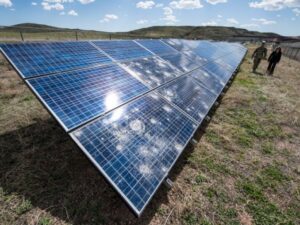
Renewable energy technologies, including solar, wind, hydro, and battery energy storage systems (BESS), are at the forefront of the global energy transition. The U.S. and Latin America (LATAM) are witnessing significant advancements in these technologies, driven by geopolitical and economic trends. The International Energy Agency (IEA) projects a growth of electricity demand from 1,295 TWh […]
-
 Solar
SolarEffects of Evolving NatCat Risks on Reliability and Insurability of Renewable Assets
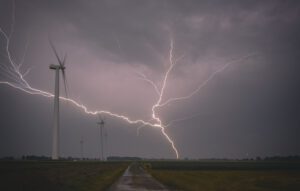
News on extreme weather events in the U.S. report an increase in both frequency and size over the last couple of years, including thunderstorms, tornadoes, convective storms, flash floods, hurricanes, and winter storms. This has a massive impact on a renewable energy asset’s reliability and insurability; there have even been cases where lenders won’t approve […]
-
 Commentary
The Path to EV Supply Chain Independence in the U.S.
Electric vehicles (EVs) are in the spotlight and every industrialized country is looking for a piece of the pie. We’re at a pivotal moment in the transition to more sustainable forms of energy and transportation, and the United States is clambering to lead the pack. There’s a problem, however, that promises to make EV production […]
-
Commentary
Minimizing Talent Risk Critical to Success of Cleantech 2.0
“Deploy, deploy, deploy” is a mantra coined by Jigar Shah that’s gaining momentum as the climate tech and energy industries seek to scale their operations to meet the 2030 net-zero goals. With this Decade of Action in full swing, the urgency to implement carbon reductions in corporate and government operations is (finally) palpable and intensifying. […]
-
Cybersecurity
Modernizing Cybersecurity Practices Within Utilities
The utility industry needs to be prepared to adapt at this time of uncertainty and change, rising prices, and international turmoil. However, it is becoming more challenging to comply with regulations and
-
 Cybersecurity
Keeping the Lights On: How Plant Operators Manage Cyber Risk
Interrupting power grids is one of the most effective ways to cripple a town or a city. If a region can’t keep the lights on, pretty much everything must come to a halt until the issue is remedied. For this reason, the power and energy industry has become a prime target for cyberattacks on operational […]
-
 Press Releases
DTN Storm Risk Analytics Offers Enterprise Level Weather Insights to Mid-Size U.S Utilities
First-to-market solution offers emergency managers access to better prepare and manage through weather impacts with advanced outage prediction technology MINNEAPOLIS, MN (November 8, 2022) – DTN®, a data, analytics, and technology company, recently launched Storm Risk Analytics, a first-to-market solution that combines advanced weather intelligence and machine learning outage prediction to help mid-size electric utilities more confidently make incident […]
-
 Climate change
Understanding Climate Change Risks Associated with the Power Generation Industry
Increased temperatures, precipitation, sea level, as well as the frequency and severity of extreme events, will inevitably have an impact on the amount of energy generated, transported, and consumed in the U.S. Climate change is increasing dangers to human health and safety, quality of life, and the rate of economic growth, introducing new risks and […]
-
 Climate change
Power Companies Must Plan to Deal with Climate Risks
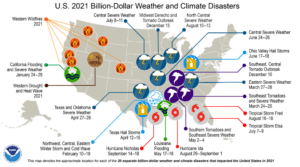
The Intergovernmental Panel on Climate Change (IPCC) issued a report at the end of February titled “Climate Change 2022: Impacts, Adaptation and Vulnerability.” Among the warnings found in the 3,675-page
-
 Legal & Regulatory
SEC’s Landmark Climate Disclosure Rule Weighing on Power Sector
Investor-owned electric companies are thoroughly reviewing the Securities and Exchange Commission’s (SEC’s) broad new proposed rule that requires registrants to disclose climate-related risks and governance, and plan to remain engaged with the regulatory agency as the rulemaking continues. The proposed rule, which the SEC approved 3–1 on March 21, has drawn intense interest from the […]
-
 Connected Plant
How Data—with Context—Will Drive a More Secure Energy Future
I’ve come to depend on the navigation system in my car. It predicts traffic jams, gives me the fastest route, informs me of store hours, and even tells me where to get a burger. To give me this experience, the navigation system draws on multiple data sources, puts it into context, and presents it through […]
-
 O&M
O&MHow Power Plants Can Reduce Asset Integrity Risks with Digital Technology
There are countless risks associated with power plant operations. For example, the risk of equipment failure is present in virtually every power plant system. In some cases, the risk is very low and could even be inconsequential. In others, it’s much higher and could be catastrophic, not only to plant operation, but also to the […]
-
 Power
PowerPower Sector Risks Loom Large Over the Energy Transition
The fog of uncertainty that hangs over the global power industry is getting larger and denser as generating companies and utilities navigate ever more complex challenges.
-
 Legal & Regulatory
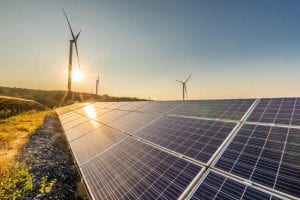
International Trade Laws and the Clean Energy Industry: How to Keep Regulatory Issues from Short-Circuiting Your Company’s Growth
New restrictions on international trade have become near-daily headlines. Sanctions, export controls, restrictions on foreign investment in the U.S., and actions prohibiting the importation of goods produced using forced labor affect all U.S. companies including those in the clean energy sector. Keeping up with these ever-evolving regulations is a difficult task, but getting smart about […]
-
 Connected Plant
To Reap the Benefits of Modern Grids, Proactive and Resilient Cybersecurity Is Crucial
Managing a nationwide system of assets providing power generation, transmission, and distribution, which underpin the energy sector, can be a challenging endeavor. Particularly when you take into account the vast array of modern and legacy technologies that may not work in harmony together. For energy professionals, the stakes could not be higher. Prolonged outages as […]
-
IIOT
The Energy-Sector Threat: How to Address Cybersecurity Vulnerabilities
Electric-power and gas companies are especially vulnerable to cyberattacks, but a structured approach that applies communication, organizational, and process frameworks can significantly reduce cyber-related risks. In our experience working with utility companies, we have observed three characteristics that make the sector especially vulnerable to contemporary cyberthreats. First is an increased number of threats and actors […]
-
 Solar
SolarMitigating Emerging Utility-Scale Solar Project Risks
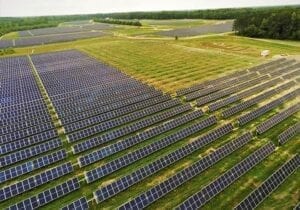
America’s energy systems are being led by renewables development, both now and in the foreseeable future. There should be no real argument about what the future of our energy economy looks like. Not just because renewables bolster needed decarbonization efforts, but because renewables are a better economic solution and embody core principles of American entrepreneurism. […]
-
Cybersecurity
Cybersecurity Is More Important Than Ever Due to COVID-19
The COVID-19 outbreak has forced many companies to change the way they conduct operations. Leaders have had to divide employees into essential and non-essential categories. Essential employees must report to
-
 T&D
T&DPublic Safety Power Shutoffs: How Utilities Could Partner
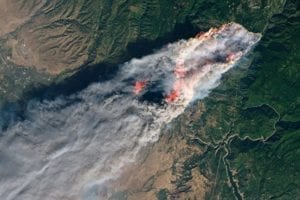
Catastrophic wildfires have devastated California in recent years. This article seeks to outline a plan wherein neighboring utilities can send energy to support a utility that has shut down critical paths during wildfire mitigation efforts. On the morning of Nov. 8, 2018, the Camp Fire erupted 90 miles north of Sacramento, California (Figure 1). This fire […]
-
 O&M
O&MHow Utilities Can Manage Supplier Risk [PODCAST]
Power companies are turning to external suppliers and contractors now more than ever. Utilities are getting help with tasks ranging from the relatively simple, such as vegetation management and the handling of customer calls, to the complex, including turbine repair and large infrastructure projects. Although the benefits of utilizing contractors are often obvious, the dangers, […]
-
 Environmental
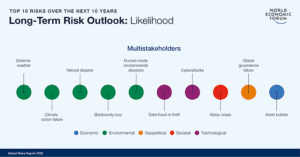
Environmental Concerns Dominate Global Risks List
For the first time in the 15-year history of the World Economic Forum’s Global Risks Report, environmental perils filled the top five positions on the list of long-term risks in terms of likelihood of occurrence over the next 10 years. The report, which is a qualitative and quantitative study of global risks, conducted in partnership […]