
power markets
-
 Legal & Regulatory
DOE Uses Emergency Powers to Freeze More Than 2 GW of Coal Retirements as Opposition Intensifies
A rapid succession of Section 202(c) emergency orders has forced utilities to keep more than 2 GW of coal capacity online in December alone, marking an unprecedented federal intervention in grid operations and triggering legal challenges from states and environmental groups. Across all orders issued since May 2025, the DOE has now stalled the retirement […]
-
 Trends
EIA’s Perspective on Price Volatility Needs Context
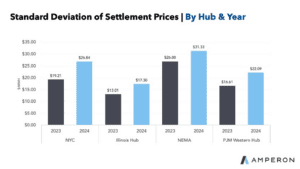
In January, the U.S. Energy Information Administration (EIA) said U.S. wholesale electricity prices were less volatile in 2024 than they have been over the last few years. But that’s just one, limited perspective on the data. If we consider the macrotrends at play, it’s clear that U.S. markets won’t return any time soon—if ever—to the […]
-
 Power
PowerAI-Powered Energy Forecasting: How Accurate Predictions Could Save Your Power Company
Net-demand energy forecasts are critical for competitive market participants, such as in the Electric Reliability Council of Texas (ERCOT) and similar markets, for several key reasons. For example, accurate forecasting helps predict when supply-demand imbalances will create price spikes or crashes, allowing traders and generators to optimize their bidding strategies. It’s also important for asset […]
-
 Legal & Regulatory
FERC Approves CAISO Day-Ahead Market Enhancements, EDAM Proposals
The Federal Energy Regulatory Commission (FERC) has unanimously approved the California Independent System Operator’s (CAISO’s) Day-Ahead Market Enhancements (DAME) and Extended Day-Ahead Market (EDAM) proposal, effectively allowing new market options to address challenges caused by increasing system variability and uncertainty in the West. FERC’s decision issued on Dec. 20, for the most part, accepts CAISO’s […]
-
 Technology
Technology Is Critical for Hedging and Trading in Energy Markets
The world is currently going through a major shift toward clean energy, triggered by concerns over climate change, depleting resources, and energy security. The energy transition is a massive undertaking, requiring significant investment and a long-term vision. However, as with any transition, there are challenges and uncertainties, and this is where hedging and trading come […]
-
Press Releases
Bangladesh leans towards coal-based power as renewables development faces challenges, says GlobalData
Bangladesh is set to increase the coal-based power generation capacity to ensure supply security at a time when many other countries are focussing on the development of renewables and cut dependency on thermal power to achieve climate goals. The country’s move to expand coal power comes as challenges remain for renewables development, including inadequate grid […]
-
 Commentary
What RTOs and ISOs Can Learn from the Parable of the Fox and the Hedgehog
An ancient proverb imparts: the fox knows many little things, but the hedgehog knows one big thing. This insight is expanded through the moral of Aesop’s fable, “The Fox and the Hedgehog,” which
-
 Distributed Energy
A Win-Win-Win Solution for DER Owners, the Power Grid, and the Environment
New distributed energy resources (DERs) are being added to the power grid every day. However, DERs don’t automatically provide owners with the greatest value possible. In many cases, that requires the help of an aggregator, that is, a company that specializes in managing DERs owned by a pool of clients and optimizing performance of the […]
-
 Commentary
COP, New Energy Laws, and the Power of Competition
There’s a lot going on in the energy world right now. The United Nations Climate Change Conference (COP26) is happening in Glasgow, Scotland. Congress recently passed major new energy legislation in the Infrastructure Investment and Jobs Act. And as consumers soon will find out if they don’t already know: much higher energy costs and heating bills are […]
-
 Markets
FERC Tackles Modernization of U.S. Power Markets
The seven major organized electricity markets scattered across the U.S. account for roughly two-thirds of all power generated in the country. Most of these markets are made up of Independent System Operators (ISOs) and Regional Transmission Organizations (RTOs) that were created more than twenty years ago. The primary mission of the markets is to neutrally […]
-
 Commentary
Competition for Cleaner Energy Will Pay Dividends for Climate and the Economy
America’s energy system has entered a new era where companies are competing against one another to reduce greenhouse gas emissions. Customers—large and small—are concerned about climate change, forcing business models to adapt beyond keeping the lights on. Today, 75% of households in the U.S. are served by a utility with a carbon or emissions reduction goal—to […]
-
 Energy Storage
We Don’t Have to Wait for Real-Time Markets to Bid Renewable Power Onto the Grid
Growing the amount of renewable power that’s available on the grid is equally as crucial for the energy transition as the ability to generate power from renewable sources. Fossil fuels continue to have the advantage because of market-bidding protocols that place their power on wholesale energy markets across the country, making it widely available to […]
-
 Commentary
FERC Order Opens Wholesale Power Markets to DERs
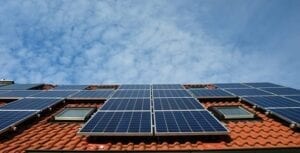
The Federal Energy Regulatory Commission (FERC) in September issued Order 2222, a final rule to remove barriers for distributed energy resource (DER) aggregators to participate in the wholesale capacity
-
 Interview
The POWER Interview: Powering Through a Pandemic
It’s an unprecedented time for power generators worldwide. Utilities, grid operators, equipment manufacturers, and others working to keep the lights on know that a reliable supply of electricity is more important than ever as the world battles through the coronavirus pandemic. Dino Barajas, who recently joined the finance arm of DLA Piper in Los Angeles, […]
-
 Commentary
Designing an Electric Power System from Scratch
The Smart Electric Power Alliance (SEPA) launched its 51st State Initiative in 2014 with a simple question: What if there were no predefined electricity market? No rules. No market designs. No policies. No subsidies for any type of energy resource. Just a grid to deliver electric power from a variety of sources. And customers. Plenty […]
-
 Legal & Regulatory
Obama Administration’s Environmental Rules to Leave Lasting Legacy on Power Sector, Markets
Witnesses at a Congressional hearing raised concerns about the complexity, costs, legality, and feasibility of the 3,900 final rules published by the Environmental Protection Agency (EPA) during the Obama administration. A large portion of those rules affect the power sector, but none are more contentious than the Clean Power Plan, regulatory and citizen interest experts […]
-
 Legal & Regulatory
Byron, Three Mile Island Nuclear Plants at Risk, Exelon Says
Fresh on the heels of its decision to finally move ahead with the long-anticipated retirements of the Quad Cities and Clinton nuclear plants in Illinois, Exelon officials told an Iowa newspaper that its Byron and Three Mile Island (TMI) plants face the same challenges and could be forced into retirement without changes to markets and […]
-
 Commentary
Power Industry Policy Flip-Flops
When I started working in the energy industry in 1999, I had a conversation one day with Adam, a researcher who was writing a report for utilities that were marketing “green energy” programs. At the time, customers’ ability to purchase solar- or wind-generated electrons was limited to fewer utilities, and those companies were looking for […]
-
 Finance
European Power Markets Force Changes at RWE, E.ON, and Vattenfall
Persistently low prices on the wholesale electricity market are forcing RWE—the third-largest electricity provider in Europe, serving 16 million customers—to consider dismantling some gas-fired power plants and shipping them abroad, Dr. Rolf Martin Schmitz, RWE’s COO, told Reuters in an interview. The German-based company has been struggling for awhile. In August 2014, RWE announced that […]
-
 Legal & Regulatory
Texas and Germany: Energy Twins?
Geographically and politically, Texas and Germany are on opposite sides of the world, but both believe strongly in competitive energy markets, and both have largely deregulated their power industries. Now both are reconsidering their market designs. Its easy to think that Germany and Texas could not be more different. One is northern, cold, and Old […]