
MISO
-
 News
NewsFERC Order Backs Grid Market for DERs
The Federal Energy Regulatory Commission (FERC) issued an order that advocates for distributed energy resources (DERs) say will enable DERs, including renewable energy such as solar, wind, and battery storage, to compete on a more-level playing field in the organized capacity, energy, and ancillary services markets run by regional grid operators. FERC Order No. 2222, […]
-
Coal
MISO Role for Coal Approved by FERC
Washington, D.C. – Yesterday, the Federal Energy Regulatory Commission (FERC) approved a proposal from the Midcontinent Independent System Operator (MISO) to add a new affiliate sector to its Advisory Committee that will provide formal representation for the coal sector, thus enabling coal interests to provide their perspective on important policy issues as part of MISO’s […]
Tagged in: -
 Coal
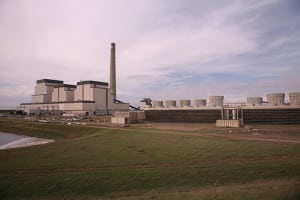
CoalXcel Energy Approved to Run Two Coal Units on Seasonal Basis
The Minnesota Public Utilities Commission approved Xcel Energy’s request to offer two of its coal units into the Midcontinent Independent System Operator market on a seasonal basis. That means the company can idle the two units for six months of the year, which is expected to save customers money while also reducing air emissions. “This […]
Tagged in: -
Business
All Resource RFP
CWLP is committed to serving customers with excellence, planning for the future, and delivering exceptional services to the community. Due to the anticipation of unit retirements, CWLP is seeking bids for Power Purchase Agreements (PPA) with a Commercial Operation Date (COD) between 2021 and 2023 from new or existing resources. CWLP seeks to procure Energy […]
-
 O&M
O&MPower Loads Changing as Coronavirus Impacts Energy Sector
Power industry analysts who’ve spoken with POWER agree there will be an impact to power load due to the COVID-19 pandemic, with the loss of much of the U.S. commercial and industrial demand for power, and certainly an uptick in the amount of demand from the residential sector as more people work from home, away […]
-
News
Energy Groups Make Plans to Deal with Coronavirus; EEI Issues Bulletin
The Edison Electric Institute (EEI), whose membership includes all investor-owned U.S. power companies, has told its members to prepare contingency plans for their operations due to the COVID-19 pandemic. Several U.S. grid operators already have announced measures designed to keep employees as safe as possible, while maintaining the reliability of the nation’s power supply. The […]
-
 Fuel
FuelNERC: Long-Term Reliability Uncertain Amid Rapid Changes to Bulk Power System
Significant and rapid changes that are reshaping North America’s power sector will likely leave Texas and Ontario, Canada, with supply shortfalls over the next decade, and energy deficiencies could also occur during off-peak conditions in the Midcontinent Independent System Operator (MISO) area and the Western Electricity Coordinating Council (WECC) region, the North American Electric Reliability […]
-
 Commentary
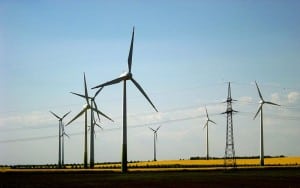
How Existing Technology and Market Updates Lead to More Affordable, Reliable, Clean Power
America’s energy mix is undergoing a period of rapid change. The way we generate electricity in this country looks dramatically different than it did just a decade ago, as wind and solar have matured and
-
 News
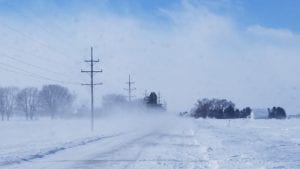
NewsPolar Vortex Tests Resiliency of U.S. Power System
Brutally cold temperatures in the midwestern and northeastern U.S. spurred grid operator alerts as natural gas demand has surged, power prices have soared, and there have been forced generator outages. The polar vortex, an extreme cold event characterized by back-to-back cold fronts, has so far prompted states of emergency in Wisconsin, Illinois, and Michigan. On […]
Tagged in: -
Infographics
THE BIG PICTURE: A Cold Comparison
The “bomb cyclone,” a winter storm that descended on much of the eastern U.S. from December 27, 2017, to January 8, 2018, renewed the raging debate about resiliency and prompted flashbacks of the “polar vortex,” a similar deep freeze that transpired in January 2014 and was compounded by the loss of 82 GW nationwide for various reasons. […]
Tagged in: