
AI
-
 Technology
Enverus Launches AI-Based Platform to Support Energy Industry
Energy and analytics group Enverus said it has launched an artificial intelligence (AI)-based platform that will serve as a new execution layer for the energy industry.
-
 Research and Development
The Genesis Mission: How AI Supercomputing Is About to Reshape American Science and Energy
Dr. Dario Gil, the Department of Energy’s (DOE’s) Under Secretary for Science, lays out a bold vision to double the productivity of U.S. research and development (R&D) within a decade—and explains why energy and artificial intelligence (AI) are two sides of the same coin. After 22 years at IBM, where he rose to senior vice […]
-
 Commentary
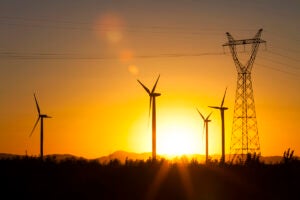
How Artificial Intelligence Can Accelerate Power Delivery to the U.S. Grid
Power demand in the U.S. is rising faster than the grid was designed to accommodate, driven in large part by rapid growth in data centers. Large, concentrated data center loads are clustering in regions where
-
 Business
Investing in Energy’s ‘Anti-Fragile’ Future
With federal tax credits under threat and regulatory stability in short supply, Bala Nagarajan, managing director of the energy investments team at S2G Investments, explained what he looks for in a company. “Is the product or the solution sold by this business cheaper, faster, better than the incumbent solution?” he asked. If so, it’s worth […]
-
 Geothermal
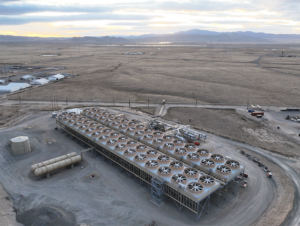
Fervo Energy Secures More Funding for Cape Station Geothermal Project
Geothermal energy group Fervo Energy, known as a pioneer of next-generation geothermal deployment, said it has successfully closed $421 million in non-recourse debt financing for the first phase of its flagship Cape Station development in Utah.
-
 Commentary
Speed-to-Power: Energy Strategy in the Age of AI
As we move further into 2026, the global energy landscape is increasingly defined by divergence. Oil and natural gas fundamentals are separating, geopolitical volatility remains elevated, and across the industrial economy, execution speed is becoming the defining competitive variable.
-
 Commentary
Why Nuclear Power Is Most Viable Option for Data Centers
The first data center to run entirely on self-generated nuclear power will shatter a long-held assumption that computing infrastructure must wait for the grid. A large-scale facility will operate around the clock while controlled fission reactions take place 1,000 feet from its server racks. When that happens, every data center operator still waiting for grid […]
-
 Data Centers
AI Groups Utilidata, NexGen Cloud Partner to Unlock Stranded Energy
Utilidata, a group specializing in embedded artificial intelligence (AI) for power infrastructure, and NexGen Cloud, a European AI cloud provider, have announced the deployment of the Karman AI power control platform across NexGen Cloud’s data centers. The companies on March 12 said the collaboration is designed to increase available AI compute capacity within existing grid […]
-
 Data Centers
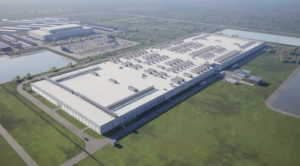
Babcock & Wilcox Will Deliver 1.2 GW of Gas-Fired Capacity for Applied Digital Data Centers
Energy group Babcock & Wilcox (B&W) said it will proceed on a $2.4-billion design-build agreement with an independent power producer (IPP) to support data center campuses. B&W on March 4 said the deal with Base Electron, an IPP, will supply power for what the groups called artificial intelligence (AI) factory campuses for Dallas, Texas-headquartered Applied Digital.
-
 Technology
Why the Promise of AI Is Real, but Potential Yet Unrealized
While artificial intelligence (AI) adoption has spread rapidly, meaningful productivity gains remain elusive because organizations have conflated easy-to-deploy horizontal AI tools with the domain-specific
-
 Instrumentation & Controls
No Boots on Deck? How AI Enables Autonomous Energy Operations
Artificial intelligence (AI) has pushed the idea of a “one-button start-up” from sci-fi closer to engineering reality. But where is industrial AI for energy operations today, and how far away is that fully
-
 Interview
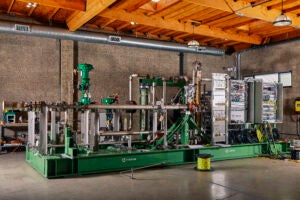
The POWER Interview: Former SpaceX Exec Drives Arbor’s Turbine Innovation
Demand for electricity from artificial intelligence (AI), data centers, industrial electrification and more is driving innovation in the power generation sector. Speed to power has become even more important, as companies seek ways to more quickly satisfy their hunger for power, without sacrificing efficiency and in some cases their clean energy goals.
-
 Nuclear
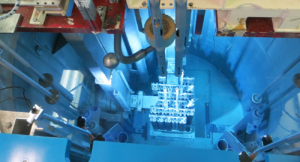
INL Enlists NVIDIA on ‘PROMETHEUS’ AI Effort to Halve Nuclear Deployment Timelines Under DOE Genesis Mission
Idaho National Laboratory (INL) has teamed up with artificial intelligence (AI) computing giant NVIDIA to advance “PROMETHEUS,” INL’s first-of-its-kind demonstration of an autonomous nuclear reactor driven by AI, to execute a key challenge under the Department of Energy’s (DOE’s) Genesis Mission. The move adds momentum to DOE’s push to apply AI across the full reactor […]
-
Research and Development
DOE Details 26 Genesis Mission AI Challenges, Targeting Nuclear Timelines, Grid Planning, and Energy Systems
The Department of Energy (DOE) has released specifications for 26 artificial intelligence (AI) challenges under its Genesis Mission that could reshape how power plants are designed, licensed, built, and operated. Several directly target nuclear plant deployment timelines, grid interconnection bottlenecks, data center load integration, fusion commercialization, and subsurface energy recovery. Launched via executive order on […]
-
 Commentary
Why AI Pilots Stall Without Operating Discipline
Artificial intelligence (AI) has moved quickly from the margins to the mainstream in electric utilities. Control room vendors promote AI-driven insights, asset platforms promise predictive intelligence, and most major utilities are running at least one pilot or proof of concept. More than 80% of North American utilities already report using AI in some form.
-
 Data Centers
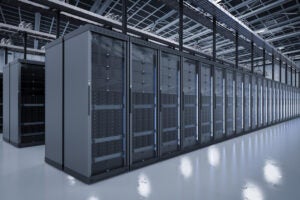
Shared Power: Building Data Centers That Serve Everyone
The unprecedented revolution in digital infrastructure, driven by the explosion in artificial intelligence (AI) services and cloud computing, is fueling an economic boom so large it drove 92% of U.S. gross domestic product (GDP) growth in the first half of 2025. However, this wave of technological innovation is hiding rising ratepayer burden and mounting reliability […]
-
 Gas
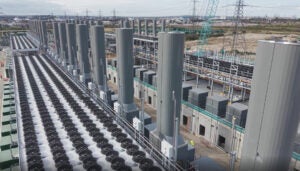
GasNew Gas-Fired Plants Bring Needed Generation, Flexibility to the Power Sector
Several natural gas–fueled units are being developed as a way to support the industrial sector, including data centers, and to help integrate more renewable energy to the grid.
-
 Trends
Empowering the Grid: How Utilities Can Harness AI Safely and Effectively
When it comes to the latest technologies, utilities aren’t exactly early adopters—with good reason. Silicon Valley’s motto of “move fast and break things” can have disastrous consequences when applied to an industry tasked with keeping the lights on around the clock for millions of Americans.
-
 Trends
How AI Use Cases from Other Sectors Can Transform Utilities
The AI boom is poised to fuel a rapid—and drastic—surge in electricity demand, placing unprecedented pressure on utilities to modernize their grids, integrate distributed energy resources, and reduce mounting supply chain and customer costs.
-
 Trends
How Utilities Can Prepare for the AI-Driven Energy Surge
After more than two decades of relative stasis, electricity demand in the U.S. is expected to increase by 25% by 2030 and by more than 75% by 2050, compared to 2023—a transformation largely driven by the surge in new data centers needed to power the artificial intelligence (AI) boom.
-
 Engineering
Solving Problems, Not Chasing Technology
In recent years, the artificial intelligence (AI) landscape has shifted from quiet curiosity to relentless noise. Conference taglines, vendor solicitations, and slide decks all seem to begin with the same question: What can AI do for you? And too often the answer comes in the form of a catalog of hundreds of “use cases,” neatly […]
-
 Power
PowerIdled California Biomass Power Plant to Be Rebuilt as Carbon-Negative AI Factory
A startup specializing in carbon-negative artificial intelligence (AI) infrastructure powered by renewable energy systems has acquired the idled Buena Vista Biomass Power facility in Ione, California, and plans to convert the legacy wood-burning plant into a 41-MW “carbon-negative AI factory.” The redevelopment announced on Jan. 14, which New York-based NewYork GreenCloud (NYGC) is executing with […]
-
 Data Centers
Data Center Developer, Major Investment Group Plan Gigawatts of New Capacity
A data center development company led by former executives with Amazon Web Services (AWS) has joined with a leading investment group to launch a platform for hyperscale data centers in North America.
-
 Commentary
How AI’s Energy Challenge Is Becoming Its Innovation Engine
As artificial intelligence (AI) models and workloads continue to scale in size and sophistication, their hunger for processing power—and the energy that fuels it—is accelerating faster than any previous wave of digital innovation.
-
 Interview
The POWER Interview: Investing in Energy Solutions for the Data Center Boom
The race to lead when it comes to artificial intelligence (AI) is becoming more about securing the power necessary for data centers and other AI infrastructure. In this POWER Interview, Andrejka Bernatova, founder, chairman, and CEO of Dynamix Capital Partners, discusses Dynamix’s belief that the energy and infrastructure industry is in the early phases of a decades-long transition to a low-carbon, sustainable future.
-
 O&M
O&MBridging the Gap: How the Power Industry Is Tackling Its Workforce Crisis
The power industry’s ambitious expansion plans for 2026 face an unexpected obstacle that has nothing to do with technology, regulations, or capital: there simply aren’t enough skilled workers to build and
-
 Research and Development
DOE’s ‘Genesis Mission’ Enlists AI to Double U.S. Research Productivity in a Decade
The U.S. Department of Energy (DOE) has launched the “Genesis Mission,” a national effort to build an integrated artificial intelligence (AI) platform across its 17 national laboratories. According to The White House, the initiative will “accelerate scientific discovery, strengthen national security, secure energy dominance, enhance workforce productivity, and multiply the return on taxpayer investment into […]
-
 Hydro
HydroThe Next Wave in Hydropower Condition Monitoring
The hydropower industry stands at a critical juncture where traditional operation and maintenance are quickly becoming obsolete. As global energy demand surges and grid systems become increasingly dynamic, hydropower operators face unprecedented challenges in maintaining optimal machine performance under variable operating conditions while at the same time managing aging infrastructure and reduced staffing levels. Not […]
-
 Commentary
The Long Arc of Efficiency: What Refrigerators Teach Us About the Future of AI Data Centers
As AI demand accelerates, the race is on to bend the power curve before it bends the grid. The first electric refrigerators were mechanical curiosities—loud, bulky appliances that consumed staggering amounts of electricity. But they spread anyway, because the productivity gains were too great to ignore. Daily habits shifted. Food systems reshaped. Household labor changed […]
-
 Commentary
Powering the AI Revolution: Why the Energy Race Is the AI Race
The power of U.S. innovation and market incentives cannot be underestimated. The convergence of a business-driven energy transition and the explosive growth of artificial intelligence (AI) have exposed a critical bottleneck within our energy grid.