POWER
-
 Gas
GasTOP PLANT: Valley Power Plant, Milwaukee, Wisconsin
Owner/operator: We Energies Converting a boiler’s fuel source from coal to natural gas involves a lot of planning and reengineering. When the plant is the sole steam service supplier to a downtown metropolitan area, it also involves a rigid schedule. The Valley Power Plant overcame several challenges to successfully complete one such conversion. The Valley […]
-
 Nuclear
The Nuclear Power Industry Is Increasingly Global—and Complicated
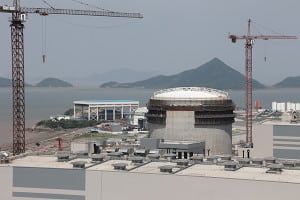
The second World Nuclear Exhibition was held at a moment in time when the prospects for nuclear power are both tantalizing and frustrating. One thing is clear: The dynamics of the nuclear power industry have changed recently—and so have the solutions proposed for achieving greater certainty. One of the strongest arguments nuclear power has going […]
-
Commentary
The Power Industry’s E Pluribus Unum
As the U.S. enters the final stretch of what seems like an interminable presidential campaign, I’ve been thinking about the motto “ e pluribus unum” (out of many, one). That motto also applies to the power industry. The U.S. is composed of many states, individuals with family origins in virtually every part of the world, […]
-
 O&M
O&MHRSG Condition Assessments Identify CAPEX, Maintenance Priorities
As combined cycle gas turbine plants are called upon to play a larger and more flexible role in the generation mix, it’s important to schedule a comprehensive assessment of major components at key intervals to ensure reliable operation. Just like humans, power plants can benefit from regularly scheduled condition assessments, which are sometimes called “health […]
-
 Hydro
HydroOSU Develops Open-Source Tool to Assess Run-of-River Resource Potential
A new assessment tool developed by engineers at Oregon State University (OSU) could allow people, agencies, and communities interested in developing small-scale hydropower plants in remote places to easily and accurately assess whether a potential project would meet their current and future energy needs. The free, open-source computer modeling package dubbed the Hydropower Potential Assessment […]
-
 Legal & Regulatory
Coal Power Plant Post-Retirement Options
Deciding to retire a coal-fired unit is often a tough call, but even tougher decisions follow. The next steps taken by a generation owner have multiple economic, environmental, and stakeholder consequences. Since 2000, U.S. generating companies (Gencos) have announced the closure of more than 200 coal-fired power plants, totaling 102 GW of generating capacity. Closures […]
-
 Renewables
Interest Builds for DONG Energy’s Bioresource Power Technology
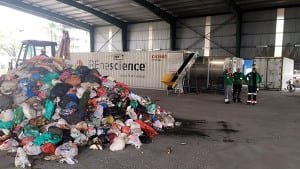
Danish firm DONG Energy has begun building one of the world’s first bioresource power plants that will produce electricity from household waste by using enzymes to convert the waste to biogas. The commercial 5-MW plant under construction in the UK city of Northwich could be commissioned in early 2017. It will use the company’s proprietary […]
-
 Waste to Energy
Waste to Energy: An Opportunity Too Good to Waste, or a Waste of Time?
Inexpensive natural gas, increased renewable energy utilization, and ever-tightening environmental regulations have limited the use of waste feedstocks for power generation. But while often dismissed out of hand, with proper planning and understanding of the market, power producers can realize benefits from waste-to-energy projects. It was a tropically hot day at the plant, and it […]
-
Nuclear
POWER Digest
UK Abolishes Climate Change Department. As part of the major governmental shakeup triggered by Brexit—the UK’s momentous vote to leave the European Union—newly appointed UK Prime Minister Theresa May
-
 Coal
CoalExelon, America’s Leading Nuclear Generator, Keeps the Faith on Nukes
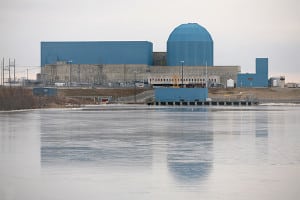
The U.S. nuclear power business is in trouble, and Exelon has six units totaling more than 5,300 MW of dependable capacity on the chopping block. How will the Chicago electricity giant respond? Perhaps by acquiring more nuclear capacity? Chicago-based Exelon Corp., the largest nuclear power generator in the U.S., is facing what could be the […]
-
 Nuclear
Japan Extends Reactor Lifetimes for First Time Since Fukushima
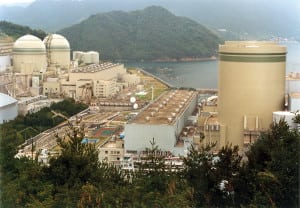
Japan’s Nuclear Regulation Authority (NRA) this June approved 20-year license extensions for the aging Takahama 1 and 2 reactors, a first for the power-strapped country that has been conflicted about the future of its nuclear power plants since the Fukushima Daiichi catastrophe in 2011. A regulatory system established in the aftermath of Fukushima limits the […]
-
Nuclear
Lloyd’s Register on Current Nuclear Power Challenges
P OWER Editor Gail Reitenbach interviewed King Lee of Lloyd’s Register on June 29 at the World Nuclear Exhibition in Le Bourget, France. The firm is a “non-profit distributing charity with a public benefit
-
 Hydro
HydroOcean Power Technologies Deploys Commercial PowerBuoy with Energy Storage
Ocean Power Technologies (OPT) deployed its first commercial PB3 PowerBuoy—a wave energy conversion system that incorporates energy storage—off the coast of New Jersey this July. The Pennington, N.J.–based firm has been working to advance its PowerBuoy technology since the firm was founded in 1994. Development of the wave energy conversion technology for naval and civilian […]
-
 O&M
O&MEfficient Use of Power Plant Process Data Improves Asset Management
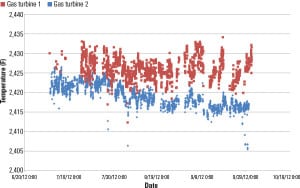
Asset data is crucial in the power generation industry. Without it, utilities are forced to speculate about how long their assets will last, when they will need repair, and which strategies will maximize plant efficiency. With it, plant owners have the tools to drive down operational and maintenance costs while ensuring highly reliable power delivery. […]
-
 Legal & Regulatory
Can Anything Save Merchant Nuclear?
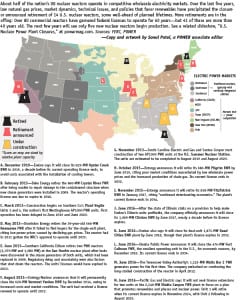
In an industry as slow-moving as power generation, where planning horizons are measured in decades and assets can remain in operation for the better part of a century, it’s rare that things happen fast enough to catch anyone by surprise. But that’s exactly what’s happened to the U.S. merchant nuclear business over the past four […]
-
 Gas
GasTOP PLANT: Cane Run Generating Station Unit 7, Louisville, Kentucky
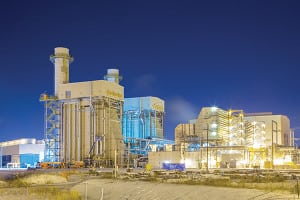
Owner/operator: Louisville Gas and Electric Co. and Kentucky Utilities Kentucky has always been coal country, but times are changing, and its generation fleet is changing with them. Facing the prospect of costly emissions control upgrades at the 60-year-old Cane Run Generating Station, Louisville Gas and Electric and Kentucky Utilities opted to retire the aging facility […]
-
 Gas
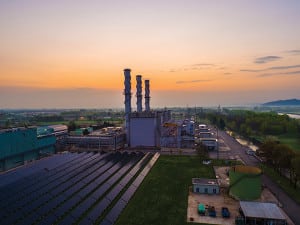
GasTOP PLANT: Chivasso Combined Cycle Power Plant, Turin, Italy
Owner/operator: A2A When a plant goes into mothballs—especially because of poor economics—it’s often a harbinger of impending retirement. Upgrades to improve performance may help, but in changing markets, returns can be highly uncertain. Italian energy firm A2A partnered with GE to return one plant to profitability with a combination of hardware improvements and cloud-based analytics. […]
-
 Nuclear
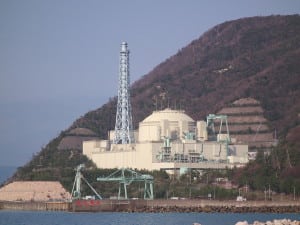
An Asian Nuclear Duo: Monju Down, Bataan Up?
With costs for a restart escalating, Japan is considering scrapping its troubled Monju fast breeder nuclear reactor, just as a never-started nuclear plant in the Philippines may get a new lease on life. Monju May Be Finished Japan Times reported that readying the Monju plant for restart “would cost several hundred billion yen.” Sources said that […]
-
Commentary
The Progress of Power Technology
I’ve developed something of a love/hate relationship with awards. Initially, it’s exciting to spot outstanding or unusual projects for our POWER awards, but over time, any number of things can happen to those plants, making them appear less than stellar. Sometimes it’s changing policy or market conditions that make a record-setting plant completely uneconomic (see […]
-
Legal & Regulatory
South Korea to Partially Liberalize Power Sector
In a major shakeup of a power sector currently monopolized by a state-owned giant, South Korea has moved to partially open its electricity generation market to private companies in a bid to improve efficiency
-
Commentary
More Communities Choose Their Own Energy Future
As the effects of climate change have increased and renewable energy is becoming cost-competitive with conventional forms of energy generation, more and more towns, cities, and counties are pushing their local utilities to increase the amount of renewables in their energy portfolios. While many utilities are embracing this shift to renewable energy, others are slow […]
-
 Legal & Regulatory
Abolished Nuclear Tax Is Relief for Unprofitable Nuclear Operators in Sweden
Sweden, which has been contemplating the role of its 10 nuclear reactors in its future power mix, said in June it will phase out a tax on nuclear power over the next two years and replace aging plants with new ones. The agreement by the Social Democrats, the Moderate Party, the Green Party, the Centre […]
-
 O&M
O&MAll About Lubricant Additives
Lubricant additive technology is a complicated business because it involves several different chemistries. Often, one additive can adversely interact with another additive as they both compete for the same area on substrate surfaces. This kind of interaction can lead to the canceling of the additives’ desired properties. Conversely, the use of different additive chemistries can, […]
-
 Renewables
Time to Catch the Sea Breeze? Offshore Wind Power Development in China
After years of planning and sluggish development, 2016 may be the year that offshore wind power development takes off in China. Once it does, the market will be large. Offshore wind power has a very important role to play in easing power shortages in coastal areas of China and in responding to climate change effectively. […]
-
 Legal & Regulatory
TVA Uses Advanced Technology to Store and Monitor Coal Ash
At 2:45 p.m., Nicholas McClung’s cellphone chirps during a business meeting. He doesn’t bother to look at it; the special chirp says it all. He politely excuses himself from the meeting and rushes to the Tennessee Valley Authority’s (TVA’s) Advanced Technology for Impoundment Monitoring (ATIM) center in the basement of the company’s Chattanooga headquarters. When […]
-
 Water
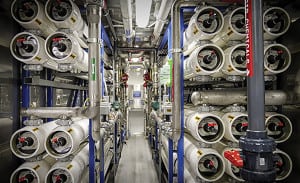
WaterPrevent Purified Water from Putting a Damper on Your Next Commissioning
When commissioning a new power plant, requirements for purified water can be large—often more than an unfinished plant can supply. When it’s time to bring in outside help, proper planning can help avoid problems and keep budgets under control. With all the complexity inherent in the commissioning of a power plant, the last thing anyone […]
-
 Coal
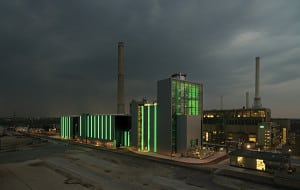
CoalDusseldorf’s Lausward Power Plant Fortuna Unit Wins POWER’s Highest Award
Düsseldorf’s new “Block Fortuna” at the Lausward Power Plant, owned by municipal utility Stadtwerke Düsseldorf, is setting records and giving Germany’s coal-fired power plants some much-needed competition for backing up the nation’s large percentage of variable renewable power. Germany’s Energiewende (literally, “energy turn”) functions as something of a living laboratory, where innovation equals survival, because […]
-
 Coal
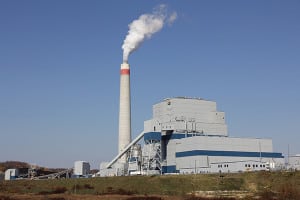
CoalLongview Power Plant Rehabilitation Results in Most Efficient U.S. Coal Plant
We’ve all probably purchased a “lemon”—an item that didn’t work as advertised—but when that lemon is a $2.1 billion power plant, you can’t just return it. For Longview Power’s management team, taking a “belts-and-suspenders” approach to problem-solving allowed them to identify root causes, make changes, and convert their lemon into “lemonade.” Most people expect a […]
-
 Energy Storage
Kilroot Power Station, Carrickfergus, Northern Ireland, UK
The governments of Ireland and Northern Ireland have big ambitions for their unified electricity market, including a wind-heavy 40% renewable generation target by 2020. Making that happen while delivering safe, reliable electricity to customers across the island means a sea change in how the grid is operated. One of the first big steps is installation […]