
POWER
-
 News
NewsCombustion Gas Analyzer
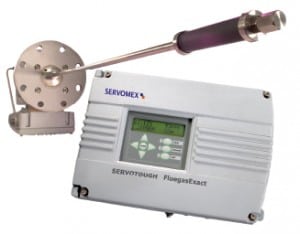
Building on the success of the Fluegas 2700 combustion gas analyzer, the new SERVOTOUGH FluegasExact integrates Servomex’s unique Flowcube flow sensor technology to give users even more confidence in their combustion gas measurements. The analyzer features a patented zirconium oxide cell for oxygen measurement and a thick film catalytic sensor for measuring carbon monoxide (CO) […]
-
Legal & Regulatory
The Water-Energy Balancing Act
Water has long been energy production’s silent partner. In the past, we Americans seemed to take it for granted that plentiful water supplies would be available for a variety of energy needs ranging from the operations of coal-fired power plants to natural gas production activities.
-
 Nuclear
Top Plants: Four Plants Demonstrate Global Growth of Nuclear Industry
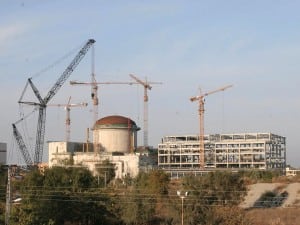
The global nuclear industry is moving forward at a brisk pace, only slightly slowed by the Fukushima Daiichi accident. The International Atomic Energy Agency’s most realistic estimate is that 90 new nuclear plants will enter service by 2030. Ten new nuclear plants went online over the past two years. We profile four of them as POWER’s nuclear Top Plants for 2011.
-
 O&M
O&MOptimizing Condenser Tube Selection
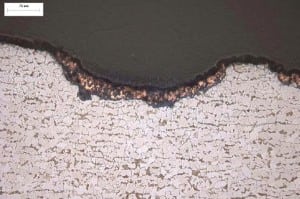
Selecting the most economical tube for a new condenser, or the retrofit of an existing one, is much more complex than mere price shopping. Each material has unique performance characteristics that affect the operating economics of the entire plant. A case study illustrates the importance of carefully choosing the tube material that is right for your plant.
-
 O&M
O&MCondenser Tube Failure Mechanisms
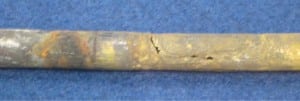
The operating environment within a condenser is extremely harsh, and in spite of the designer’s best intentions, sometimes tubes made of the best materials fail. The most important tube failure mechanisms typically result from different forms of corrosion and erosion. When it’s time to select new condenser tube material, you’ll need to consider the projected operating environment and failure mechanisms that material will be subjected to.
-
 O&M
O&MCondenser Retubing
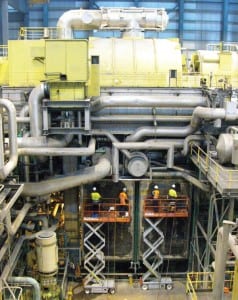
Once the condenser tubes are designed, selected, and purchased, the final step in a retubing project is to remove the old tubes and install the new ones. The success of this project is very dependent upon attending to quality control, following proper procedures, using the right tools, and having a highly skilled workforce.
-
 Gas
GasNordic Nations Provide Clean Energy Leadership
In the past few years, nuclear concerns, rising oil prices, and a growing understanding of our environmental impact has given energy issues a higher profile worldwide. In this report on the Continental Nordic countries, we look at the efforts being made in much of the Nordic region to secure a sustainable energy supply for the future and at the extent to which the innovative solutions of these countries can be exported around the globe.
-
News
It’s More Than a Process
The Office of the Inspector General (OIG) of the U.S. Environmental Protection Agency (EPA) recently concluded that the agency failed to follow prescribed policies in its peer review of the technical support document that provided the justification for its 2009 “endangerment finding” on greenhouse gases. The OIG report is timely, but in an unexpected way.
The Office of the Inspector General (OIG) of the U.S. Environmental Protection Agency (EPA) recently concluded that the agency failed to follow prescribed policies in its peer review of the technical support document that provided the justification for its 2009 “endangerment finding” on greenhouse gases. The OIG report is timely, but in an unexpected way.
-
 Nuclear
The U.S. Spent Nuclear Fuel Policy, Part 2: Playing Hardball
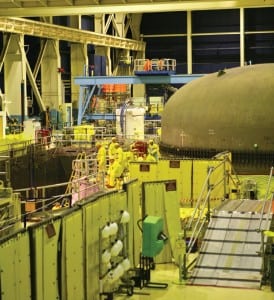
Ongoing investigations into cancellation of the Yucca Mountain project have revealed an astonishing number of irregularities by agencies responsible for the project. Those investigations have exposed a broken system that failed to properly manage the project and that surrendered to political pressure. Worse still, the draft report of President Obama’s Blue Ribbon Commission on America’s Nuclear Future gave the industry little reason to hope that there would ever be a long-term nuclear waste fuel repository.
-
Solar
Epic Fail
Over the past 18 months, four solar energy equipment companies have closed their doors. Each one blamed poor market conditions for its economic woes, even though each had fundamental weaknesses that went unaddressed. It now appears that the Department of Energy (DOE) did insufficient due diligence before backstopping one of those four companies, Solyndra, with a $535 million loan guarantee.
-
 Coal
CoalTop Plant: St. Johns River Power Park, Jacksonville, Florida
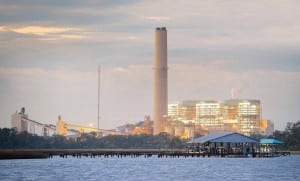
A recent NOx reduction project added selective catalytic reduction equipment to each of the two 640-MW, mixed coal–fired units at the St. Johns River Power Park. The selection of precisely the right catalyst required extensive long-term testing with “mini” reactors. Once the right catalyst formula was identified, the actual retrofit project was completed in a mere 23 months, an aggressive project schedule that required overcoming many design and construction challenges.
-
 Nuclear
Germany’s Nuclear Phase-Out Has Widespread Implications
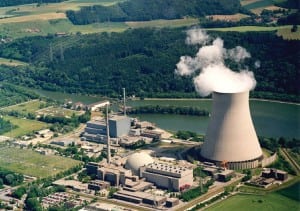
The German government in July finalized a package of bills that will phase out nuclear’s 23% contribution to the country’s power supply by 2022 and increase renewable generation from the current 17% to 35%. In August, the Federal Network Agency ( Bundesnetzagentur) said it wouldn’t rely on power from seven of the nation’s oldest reactors […]
-
 Coal
CoalCWA 316(b) Update: Fish Guidance and Protection
The U.S. Environmental Protection Agency (EPA) has proposed new Clean Water Act section 316(b) regulations for once-through cooling water intake structures. Comments on the proposed rules closed in August, and a final rule is expected mid-2012. The EPA estimates that at least half of the power plants using once-through cooling will be required to implement a best technology available solution in coming years. That typically means barriers and screens, but you may want to consider other options.
-
 Nuclear
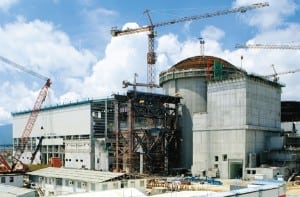
Ling Ao 4 Starts Up While Sanmen Gets First AP1000 Reactor Vessel
In China this August, as Ling Ao Unit 4—the second unit of the Ling Ao Phase II nuclear plant—started commercial operation, Westinghouse and its consortium partners marked the milestone of receiving the reactor vessel for the Sanmen nuclear power plant—the world’s first AP1000—in China’s Zhejiang province. The start-up of Ling Ao Unit 4 in Guangdong […]
-
 Coal
CoalFundamentals of Zero Liquid Discharge System Design
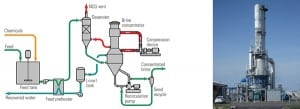
Power plants often produce wastewaters that contain salts, such as those from wet gas scrubbing, coal pile run-off, and leachate from gypsum stacks. Evaporation of those liquid wastes in a modern zero liquid discharge system produces clean water that is recycled into the plant plus a solid product suitable for landfill disposal. Here are the options to consider.
-
 Gas
GasNew Peaking Plant to Balance California’s Renewables
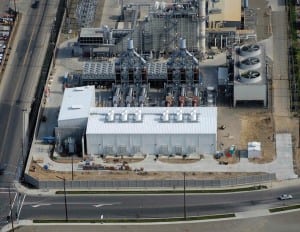
As utilities in California are scrambling to meet the state’s 33% renewable mandate by 2020, a 49.6-MW peaking plant in Modesto, Calif., built by Finnish firm Wärtsilä for the Modesto Irrigation District, has been commissioned to provide flexible, fast-start peaking generation to balance the state’s increase in intermittent renewable generation (Figure 4). 4. Flexible peaking. […]
-
Legal & Regulatory
New EPA Rule Calls for Flexibility
Quin Shea, vice president, environment for the Edison Electric Institute, comments on the Utility MACT rule that is expected to be finalized in November.
-
 Gas
GasKuwait Starts First Turbines of 2,000-MW Gas Plant
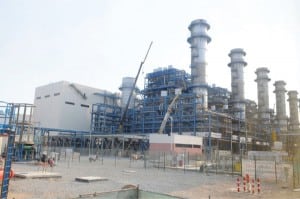
Kuwait put online the first 1,400 MW of its massive 2,000-MW combined cycle gas turbine Sabiya facility in June to mitigate looming power shortages it faces each summer. The plant—Kuwait’s largest power plant and one of the largest in the Gulf region—is now operating six GE 9FA gas turbines; the remaining 600 MW are expected […]
-
 Coal
CoalAn SCR Can Provide Mercury Removal Co-Benefits
Complying with various state (and expected federal) requirements governing mercury removal from the stack gas of coal-fired power plants has usually been achieved by adding an expensive activated carbon injection system. Now there is another alternative: a catalyst that features higher mercury oxidization activity than conventional catalysts while maintaining the same SO2 to SO3 conversion activity—and all at a lower operating cost. Full-scale installations are under way at several Southern Company plants that burn a variety of coals.
-
 Hydro
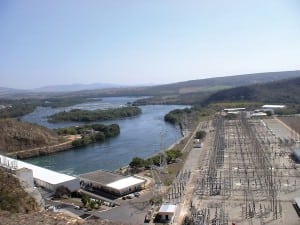
HydroHydro Reservoir GHG Emissions Lower Than Estimated
A new analysis of 85 hydroelectric reservoirs distributed around the world suggests that these systems emit about 48 million metric tons of carbon annually. That figure is much lower than earlier estimates of 64 million metric tons that were based on studies relying on more limited data and which cautioned that reservoirs of all types […]
-
 Instrumentation & Controls
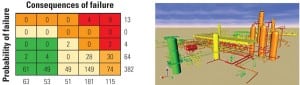
Managing Equipment Data Through Asset Virtualization
Asset “virtualization” extends and combines the technologies of 3-D visualization and virtual reality to a new, practical level for the life-cycle management of power industry equipment. All pertinent data for a component, subsystem, or plant is associated with, stored, and accessed through as-built 3-D digital models of the actual plant that are constructed using laser scanning techniques.
-
News
POWER Digest
Siemens Gets $1 Billion Order to Build Gas Power Plants in Thailand. Siemens on Aug. 17 said it received two orders worth $1 billion from Thailand for the engineering, procurement, and construction (EPC) of combined cycle power plants. The firm will build Chana Block 2 in the province of Songkhla and Wang Noi Block 4 […]
-
 Coal
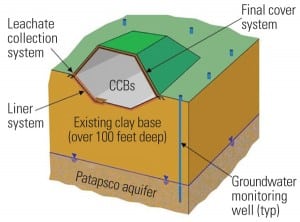
CoalConstructing Maryland’s First Permitted Landfill for Coal Combustion By-products
Constellation Power Source Generation Inc., which owns and operates three coal-fired power plants in Maryland, has contracted with Charah Inc., an ash management company, to build a landfill to strict environmental requirements for the disposal of its plants’ coal combustion by-products that can’t be recycled for other uses.
-
 Solar
SolarTHE BIG PICTURE: A Solar Switch
The plummeting cost of photovoltaic (PV) panels—resulting from lower costs for high-grade silicon and advancements in thin-film technology, solar storage, and electronic control technologies—has a slew of firms rethinking concentrating solar power (CSP) projects. Although there is a CSP project pipeline (including both CSP and concentrating PV) of more than 9 GW in the U.S., […]
-
 News
NewsNERC CIP Information and Security E-Learning Series
Global Training Solutions Inc. released an interactive, self-paced, and fully customizable electronic training program to achieve compliance with the North American Electric Reliability Corp.’s (NERC’s) Critical Infrastructure Protection (CIP) security standards. The company designed its NERC CIP Information Security E-Learning Series on open-web standards, sharable content object reference model (SCORM) compliance, and advanced technical concepts. […]
-
 O&M
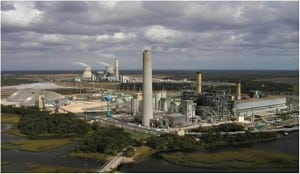
O&MJEA Increases Power Output Through CFB Improvements
JEA’s Northside Generating Station in Jacksonville, Fla., Units 1 and 2 were built in 1966 and 1972, respectively, although the Unit 2 boiler had not operated since 1983. Both were heavy oil– and natural gas–fired steam units rated at about 300 MW. The utility “repowered” those two units by removing the old boilers and adding new circulating fluidized bed (CFB) boilers (Figure 1) that entered service in 2002. At that time, they were the world’s two largest CFBs, and the plant won POWER’ s Plant of the Year Award.
-
 News
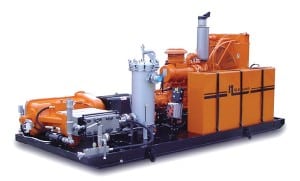
NewsHigh-Horsepower, High-Pressure Water Jet Pumps
The new NLB 605 series of water jet pump units from NLB Corp. gives users a powerful combination of ultra-high pressure and high horsepower in a rugged unit they can convert to a variety of operating pressures. The range of the NLB 605 Series has been expanded to include eight operating pressures from 4,000 psi […]
-
 O&M
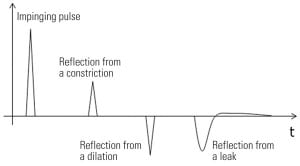
O&MApplying Acoustic Pulse Reflectometry in a Geothermal Plant
Acoustic pulse reflectometry (APR) is a tube inspection method that has been gradually gaining acceptance as a tool for heat exchanger inspection. Different types of heat exchangers operating in different operating environments have different failure mechanisms, making some of them more suited than others for inspection by APR. Finned tube heat exchangers are a typical example of heat exchangers particularly conducive to APR inspection.
-
 News
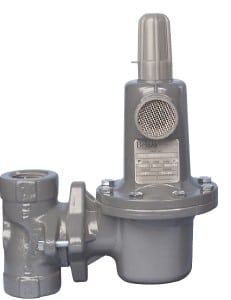
NewsHigh-Flow Gas Regulators for Pipeline Monitoring
The BelGAS division of Marsh Bellofram Corp. introduced Type P627, a high-performance, spring-loaded, direct-operating high-flow gas regulator that is designed to control both low- and high-output pressure in oil and gas applications. Designed for maximum durability, Marsh Bellofram BelGAS Type P627 regulators are compact and offered in multi-position body and spring case configurations. Units offer […]
-
Legal & Regulatory
Too Much of a Good Thing Creates Legal Havoc
As last winter’s abundant snowfall in the Pacific Northwest melted, rivers swelled and hydroelectric operators enjoyed substantial increases in generation. That bountiful clean and cheap power generation was a blessing, but it also triggered a host of legal issues.