
POWER
-
Nuclear
Too Dumb to Meter, Part 7
As the book title Too Dumb to Meter: Follies, Fiascoes, Dead Ends, and Duds on the U.S. Road to Atomic Energy implies, nuclear power has traveled a rough road. In this POWER exclusive, we present the 11th, 12th, and 13th chapters, “The Atomic Earth-Blaster,” “Chariot Swings Down to Alaska,” and “Sedan Side Trip to Nevada— the first three chapters of the “Eddie Teller’s Exploding Ambitions” section.
-
 Solar
SolarDistributed Generation: California’s Future
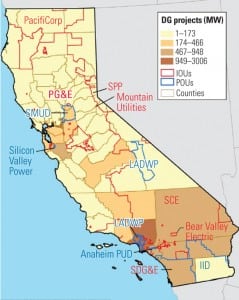
Once you synthesize all the elements of the Golden State’s clean energy strategy and extrapolate current trends, it’s easy to see that an impending break with the traditional power generation paradigm is coming, intended or not.
-
Grading My 2012 Industry Projections
It’s that time of year again. At the end of each year I am forced to revisit predictions I made a year ago in my “Speaking of Power” editorial and accept your kudos for my stellar soothsaying or blame shift when my guesswork falls short.
-
 News
NewsExplosion-Proof Carted LED Light
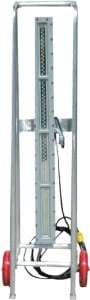
Larson Electronics’ Magnalight.com unveiled a wheeled, cart-mounted explosion-proof LED light with swivel mounting. Designed for versatility and easy light placement, the EPLCD-48-100LED Explosion Proof Low Profile LED Light provides the convenience of a wheeled car-mounted lighting system combined with the versatility of a swivel-mounted lamp. This LED light provides high output and the ability to […]
-
News
My Top 10 Predictions for 2013
Looking back over the past year’s predictions, I graded myself a “strong B,” slightly down from the past two years (a detailed discussion of my individual scores is available as an online supplement to this issue). Like coal, I’m expecting a comeback in 2013.
-
 News
NewsBattery-Powered Electromagnetic Flowmeter for Remote Sites
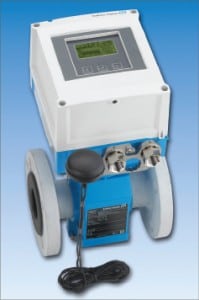
Endress+Hauser’s newly released Proline Promag L800 battery-powered electromagnetic flowmeter is an ideal flow measurement device for water and wastewater systems located at remote sites. The flowmeter has an integrated Global System for Mobile Communications and General Packet Radio Services (GSM/GPRS) cellphone system that allows data, such as alarms or totalizer counts, to be transmitted as […]
-
 Coal
CoalWorld Energy Outlook Foresees Distinct Generation Shift
Global generating capacity is poised to soar by more than 72%, to 9,340 GW, by 2035 from 5,429 GW in 2011, despite retirement of about 1,980 GW, the International Energy Agency (IEA) forecasts in its World Energy Outlook 2012, released in November.
-
 News
NewsAn Evolution in Bolt Security
Chicago-based Nord-Lock added a new dimension of safety to bolt security with the launch of the Nord-Lock X-series washer, which combines Nord-Lock’s wedge-locking protection against spontaneous bolt loosening (due to vibration and dynamic loads) with an exclusive spring effect that protects against slackening due to settlement and relaxation. The principle of Nord-Lock X-series washers includes […]
-
 Solar
SolarFloating Solar—on Water
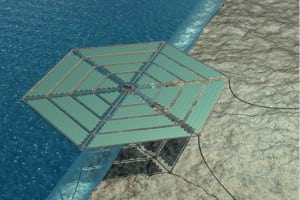
The recent explosive growth of massive solar plants in some of the world’s most remote deserts has stolen some of the spotlight from smaller solar installations that float on water. But in November, a concept proposed by researchers at Norwegian foundation DNV (Det Norske Veritas) for a dynamic floating offshore solar field concept stirred up myriad possibilities, particularly for congested urban regions such as coastal megacities.
-
 News
NewsRotary Peristaltic Pump
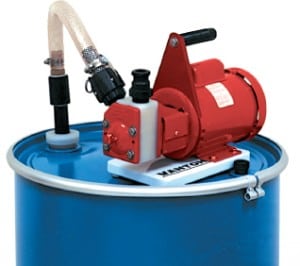
Vanton Pump and Equipment Corp.’s portable, nonmetallic Flex-I-Liner rotary peristaltic pump evacuates drums and totes containing acids, caustics, salts, chlorides, and reagent grade chemicals, without corrosion of the pump or contamination of the fluid. The self-priming design has no seals to leak or valves to clog, and the pump can run dry for extended periods […]
-
 Coal
CoalTHE BIG PICTURE: The Coal Pile
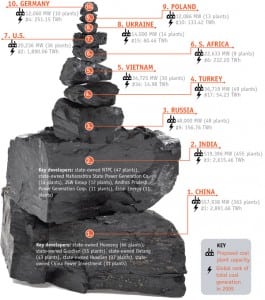
About 1,199 new coal-fired facilities (as defined by the World Research Institute)—a total installed capacity of 1,401 GW—were being proposed globally as of July 2012, spread across 59 countries.
-
 News
NewsHandheld Laser Scanner
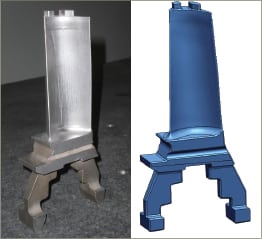
The NVision Handheld laser scanner is a powerful portable scanning device that is capable of capturing 3D geometry from objects of almost any size or shape. The scanner is attached to a mechanical arm that moves about the object, freeing the user to capture data rapidly with a high degree of resolution and accuracy. As […]
-
 Coal
CoalSafety a Main Theme at Asian Coal Users’ Meeting
Power plant operators, managers, and other professionals from across Southeast Asia met in Hong Kong in early November for the second annual Asian Sub-Bituminous Coal Users’ Group meeting, created to share information and best practices related to safety, handling, combustion, characteristics, and risk management of the fuel.
-
 News
NewsHigh-Speed Precision Rotation Stage
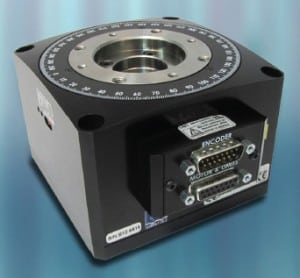
Newport Corp. introduced the compact and high-torque RGV100HL high-speed precision rotation stage. Developed to accelerate loads having higher rotational inertia, the new stage is compatible with Newport’s XPS-DRV02 driver. The RGV100HL provides the same high resolution and outstanding positioning performance as Newport’s legacy RGV100BL precision rotation stage while delivering three times the torque and five […]
-
 O&M
O&MControlling Fugitive Combustible Coal Dust
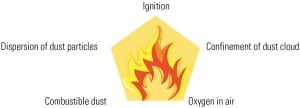
Regardless of how much prevention is employed to mitigate combustible dust in coal-fired power plants, fugitive coal dust is pervasive and can be dangerous. In coal-fired power plants, mechanical transfer points are leading sources for airborne fugitive dust. However, because coal dust travels quickly over large areas with minimal airflow, fugitive combustible dust settles in many areas.
-
Commentary
The Electric Power Industry: A Post-Election Assessment
With the passing of the 2012 election, one is reminded of the saying, “The more things change, the more they stay the same.”
-
Legal & Regulatory
Calif. Cap-and-Trade: Bull or Bear Market?
The California Air Resources Board (CARB) recently kicked off a new era in its cap-and-trade program designed to reduce greenhouse gases (GHG) when it held its first GHG emissions allowance auction on November 14. While CARB pronounced the auction a success, the low price and lukewarm demand for allowances evidences market reticence to fully embrace the program.
-
O&M
Emerging Technologies Enable “No Regrets” Energy Strategy
Achieving a balance between affordable and sustainable electricity while improving reliability is a challenge unlike any the electricity sector has faced since its inception. Technology innovations in key areas such as energy efficiency, smart grid, renewable energy resources, hardened transmission systems, and long-term operation of the existing nuclear and fossil fleets are essential to shaping the future of electricity supplies.
-
 Coal
CoalSlow Growth Ahead—with Unexpected Flares of Activity
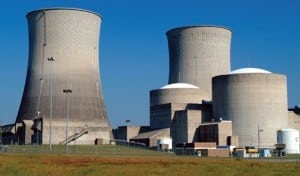
North American shale gas was supposed to realign the generation fleet here and abroad (thanks to anticipated exports) far into the future. Turns out, that’s not exactly how the near term is shaping up. Despite stagnant (and even putrid) economies and legislative bodies in the U.S. and EU, there promises to be sufficient market volatility to keep everyone alert.
-
 Coal
CoalCoal Battered Early, Later Rebounds
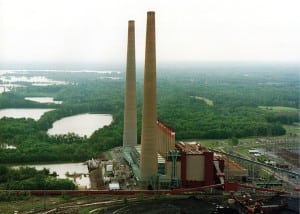
For the first time, U.S. generation from coal and natural gas was equal in 2012, although just momentarily. Gas dominated early in the year, but as gas prices rose in response to supply and demand forces, coal use rebounded. Expect more of the same give-and-take in 2013.
-
News
CAISO Agrees to Pay Penalties for Brief San Diego Blackout
The California Independent System Operator (CAISO) admitted to reliability standards violations connected with a 43-minute San Diego blackout on March 31, 2010, and agreed to pay a civil penalty of $200,000, says an order issued by the Federal Energy Regulatory Commission (FERC) on Friday.
-
O&M
Edison Mission Energy Seeks Bankruptcy Protection, Separation from Edison International
Edison International’s unregulated power generating unit Edison Mission Energy (EME) on Monday filed for bankruptcy protection after reaching a reorganization agreement with its parent company and holders of its $3.7 billion in debt to become an entity that is independent of Edison International.
-
 Solar
SolarTOP PLANT: Alamosa Solar Project, San Luis Valley, Colorado
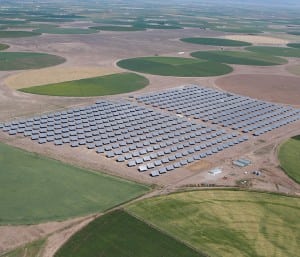
As the largest solar plant of its type in the world, the 30-MW Alamosa Solar Project is currently enjoying its place in the sun. The innovative project consists of 504 concentrating photovoltaic (CPV) solar trackers, each featuring a CPV solar cell panel assembly mounted on a support column. The modular design of the assembly allows the project to easily accommodate future improvements in cell technology.
-
Nuclear
Note on the Oconee Top Plant
Note on the Oconee Top Plant Some of our readers may have been confused by the wording of a press release about our November issue’s nuclear Top Plants, the table of contents blurb about Duke’s Oconee plant, or a sentence in the cover story about that plant. In the interest of brevity, it seems we […]
-
 Waste to Energy
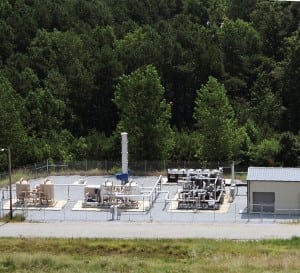
TOP PLANT: Coca-Cola/Mas Energy Trigeneration Facility, Atlanta, Georgia
By taking a waste product and converting it into a fuel source, the 6.5-MW Coca-Cola/Mas Energy Facility became the first U.S. operational trigeneration project fueled by landfill gas. Since March, the new system has provided electricity, steam, and chilled water to the adjacent Coca-Cola Syrup Plant, satisfying most of the plant’s energy requirements and reducing its long-term energy costs.
-
Commentary
Navigating a Sea of New Regulations
A convergence of new environmental regulations and practical realities is creating a boatload of challenges for power producers.
-
 Solar
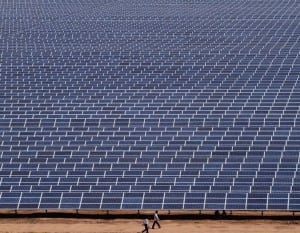
SolarTOP PLANT: Gujarat Solar Park, State of Gujarat, India
Set up by the Gujarat government, the Gujarat Solar Park is actually a group of solar parks that provide dedicated common infrastructure for photovoltaic-powered projects owned and operated by numerous individual companies. When construction at all the parks is completed by the end of 2013, the Gujarat Solar Park is projected to reach a combined capacity of almost 1,000 MW, which will make it the world’s largest solar energy generation installation.
-
 Solar
SolarTOP PLANT: Stillwater Solar-Geothermal Hybrid Plant, Churchill County, Nevada
The Stillwater hybrid facility is the world’s first renewable energy project that pairs geothermal power’s baseload generation capacity with solar power’s peak capacity. Inaugurated in May, the 26-MW solar plant is integrated with the adjacent 33-MW geothermal plant, which began operations in 2009, and provides energy to run the geothermal plant’s auxiliary loads.
-
Nuclear
Too Dumb to Meter, Part 6
As the book title Too Dumb to Meter: Follies, Fiascoes, Dead Ends, and Duds on the U.S. Road to Atomic Energy implies, nuclear power has traveled a rough road. In this POWER exclusive, we present the eighth, ninth, and 10th chapters, “Flightless Birds and Flying Elephants,” “The Devil Flies Nukes,” and “Flatulence in Space,” the concluding chapters of the “Up in the Air: Flights of Radioactive Fancy” section.
-
 Hydro
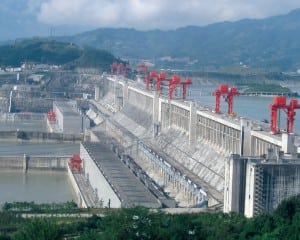
HydroTOP PLANT: Three Gorges Dam, Yangtze River, Hubei Province, China
After nine years of construction, installation, and testing, the Three Gorges Dam is now complete. On May 23, 2012, the last main generator finished its final test, increasing the facility’s capacity to 22.5 GW and making it the world’s largest capacity hydroelectric power plant.