As global electricity demand surges 40% by 2035 and warming projections worsen, nuclear, geothermal, gas, offshore wind, storage, and fusion must all advance—along with the workforce to build them.
The global energy landscape is undergoing its most significant transformation since the Industrial Revolution. Electricity demand is surging at unprecedented rates while the imperative to decarbonize intensifies. According to the International Energy Agency’s (IEA’s) World Energy Outlook 2025 (WEO), global electricity demand is projected to reach approximately 37,800 TWh by 2035—a 40% increase from today’s levels. This surge is being driven by electrification across industries, electric mobility, cooling demand, and the rapid expansion of data centers and artificial intelligence (AI) applications.
Yet, even as clean energy enters the system at an unprecedented rate, the world remains on a troubling trajectory. The IEA’s latest analysis projects global warming of 2.5 degrees Celsius by 2100 under stated policies—and nearly 3 degrees under current policies alone. Far from limiting warming to 1.5 degrees or well below 2 degrees as called for in the Paris Agreement, we are heading toward outcomes with severe implications for lives and livelihoods worldwide. Meeting this challenge will require deploying every available clean energy technology at scale while maintaining grid reliability. No single solution can address the complexity of modern power systems. This overview examines how multiple technologies could fit into the evolving global energy mix.
Nuclear: The Foundation of Clean Baseload Power
Nuclear energy is experiencing a global renaissance. According to the WEO, momentum for nuclear power is building driven by concerns about rising emissions and energy security. More than 40 countries now include nuclear in their energy strategies and have taken concrete steps to develop new projects. A record high in nuclear power output is expected in 2025.
The construction pipeline is the strongest in decades. More than 70 GW of new nuclear capacity is currently under construction—one of the highest levels in 30 years, according to the IEA. China accounts for close to half of all capacity under construction and is on track to become the world’s largest nuclear power operator as soon as 2030. Global nuclear power capacity is projected to increase by at least one-third by 2035 and by three-quarters by 2050 under the IEA’s current policies scenario.
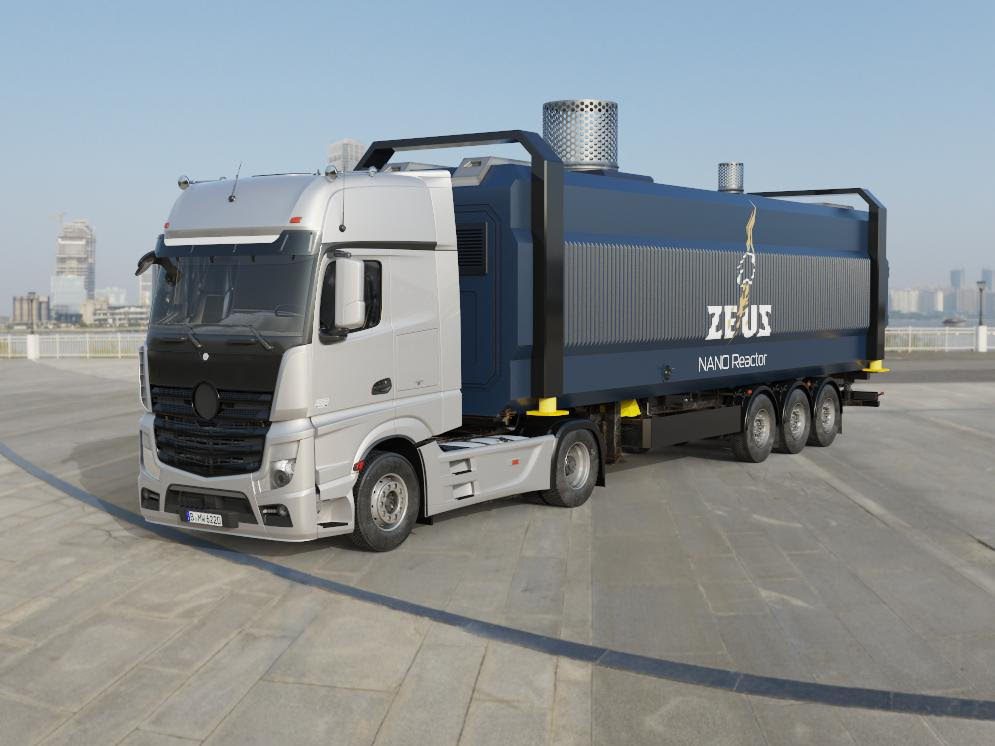
Small modular reactors (SMRs) represent a particularly promising development, with technology companies driving new business models. The IEA reports agreements and expressions of interest for 30 GW of SMRs, mainly to power data centers. U.S. technology companies already have plans to finance more than 25 GW of small modular reactors (Figure 1), although most of this capacity is not expected to materialize until after 2035. The International Atomic Energy Agency (IAEA) projects SMRs could account for 24% of new nuclear capacity in its high-case scenario, with about 70 designs proposed worldwide.

In This Issue
Full issue
The financial landscape is also shifting favorably. In June 2025, the World Bank Group signed a memorandum of understanding with the IAEA to support nuclear energy in developing countries—the World Bank’s first concrete step to reengage with nuclear power since financing an Italian reactor in 1959. The agreement focuses on building institutional expertise, extending reactor lifespans, and advancing SMRs, signaling that major development institutions now view nuclear as essential to meeting electricity demand projected to more than double in developing countries by 2035.
Geothermal: Unlocking the Earth’s Heat
Geothermal energy offers something few other renewable resources can match: continuous, weather-independent baseload power with capacity factors exceeding 90%. Yet, conventional geothermal resources have remained geographically limited, concentrated in areas where heat, water, and rock permeability naturally converge. Enhanced geothermal systems (EGS) are poised to change that equation. These systems work by creating human-made reservoirs in hot rock formations that lack natural permeability or fluid flow. Major technology companies are taking notice.
The WEO highlights geothermal as being backed by prominent hyperscalers seeking dispatchable sources of low-emissions electricity for data centers. The report notes that innovations can spill over from one sector to another, as with shale production techniques now enabling advanced geothermal development.
A report, titled Pathways to Commercial Liftoff: Next-Generation Geothermal Power, published by the U.S. Department of Energy (DOE) in March 2024, says next-generation technologies can expand geothermal power by more than a factor of 20, providing 90 GW or more of clean firm power to the U.S. grid by 2050. Furthermore, the report notes there are an estimated 5.5 TW of geothermal energy available for next-generation geothermal development in the U.S. alone, “enough to power the U.S. for thousands of years,” it says.
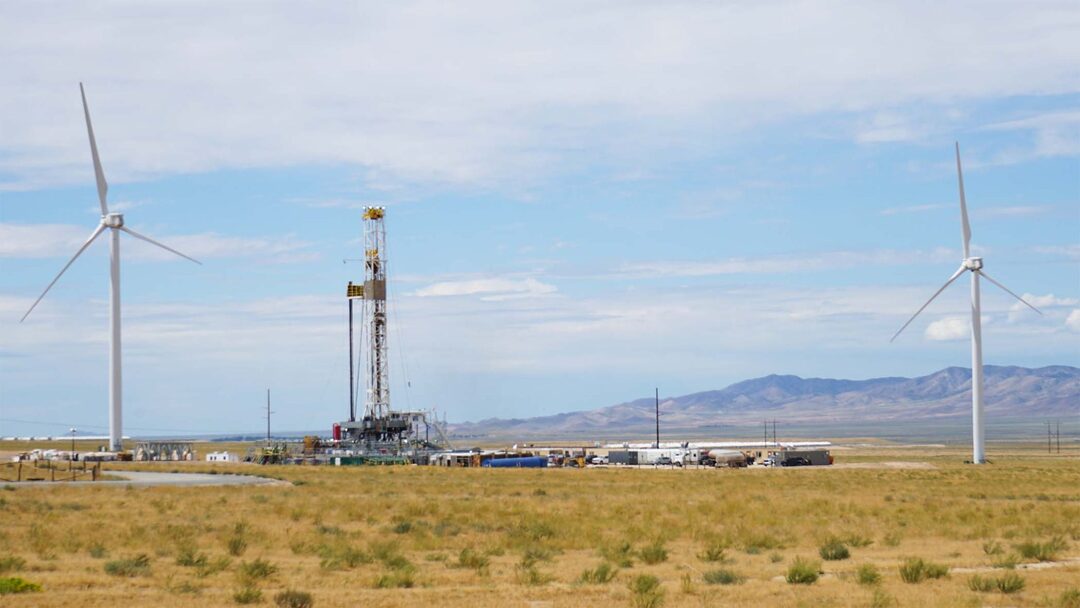
The DOE analysis found that private-sector advances cut estimated EGS capital costs nearly in half from 2021 to 2023, outpacing the trajectory needed to meet the Enhanced Geothermal Shot’s 2035 cost targets. Meanwhile, Fervo Energy reported in September 2024 that its Cape Station project (Figure 2) achieved flow rates matching NREL’s “Advanced Technology” projections more than a decade ahead of the 2035 target. This coincides with an IEA report released in December 2024, The Future of Geothermal Energy, which projects that with continued technology improvements and cost reductions, geothermal could meet up to 15% of global electricity demand growth through 2050—deploying as much as 800 GW of capacity worldwide.
Fusion: From Promise to Pilot Plants
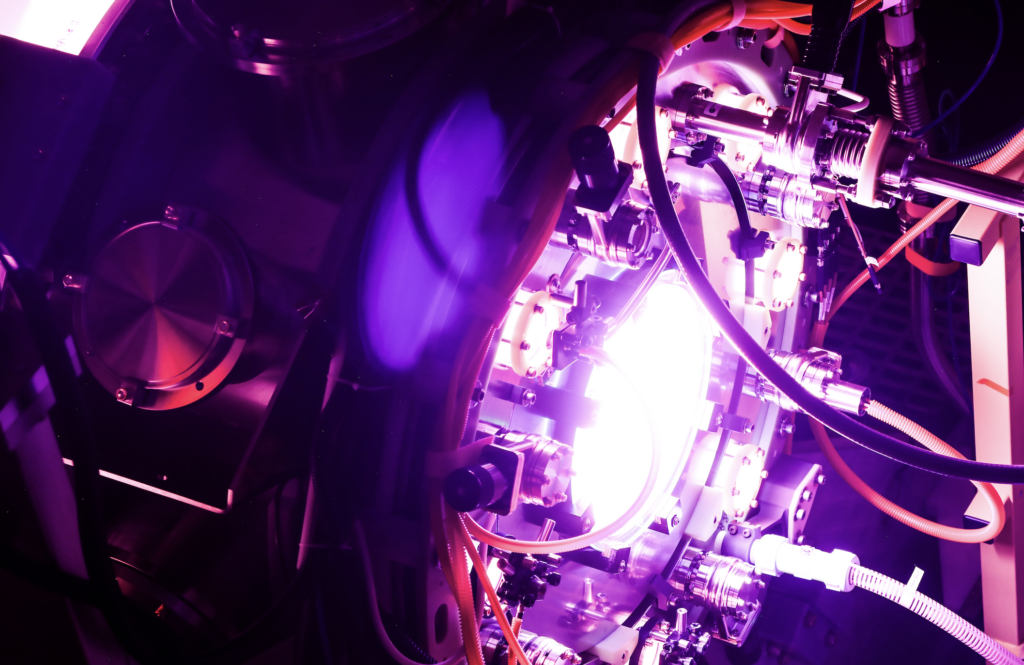
Fusion energy has moved from a long-term scientific aspiration to an emerging industrial sector targeting grid-connected pilot plants in the 2030s, but major physics, technology, and fuel-cycle challenges still separate today’s demonstrations from commercial deployment.
The DOE’s Fusion Science and Technology Roadmap, issued in October 2025, is structured around a “Build-Innovate-Grow” strategy aimed at delivering public infrastructure and science needed for private-sector scale-up in the 2030s. The roadmap focuses on closing six core challenge areas—structural materials, plasma-facing components, confinement, fuel cycle and tritium processing, blankets, and plant-level integration—on a 2- to 10-year timeline with quantitative milestones and technical metrics.
The Fusion Industry Association (FIA) says the 53 private fusion companies it surveyed in 2025 had tallied more than $9.7 billion in cumulative investment, with more than $2.6 billion raised in the previous year alone. The U.S. has established itself as the premier national fusion cluster, hosting at least 29 private firms including the three most well-capitalized players—Commonwealth Fusion Systems, TAE Technologies, and Helion Energy—each with funding exceeding $1 billion. Strong regional hubs are also emerging in Asia, Europe, and the UK.
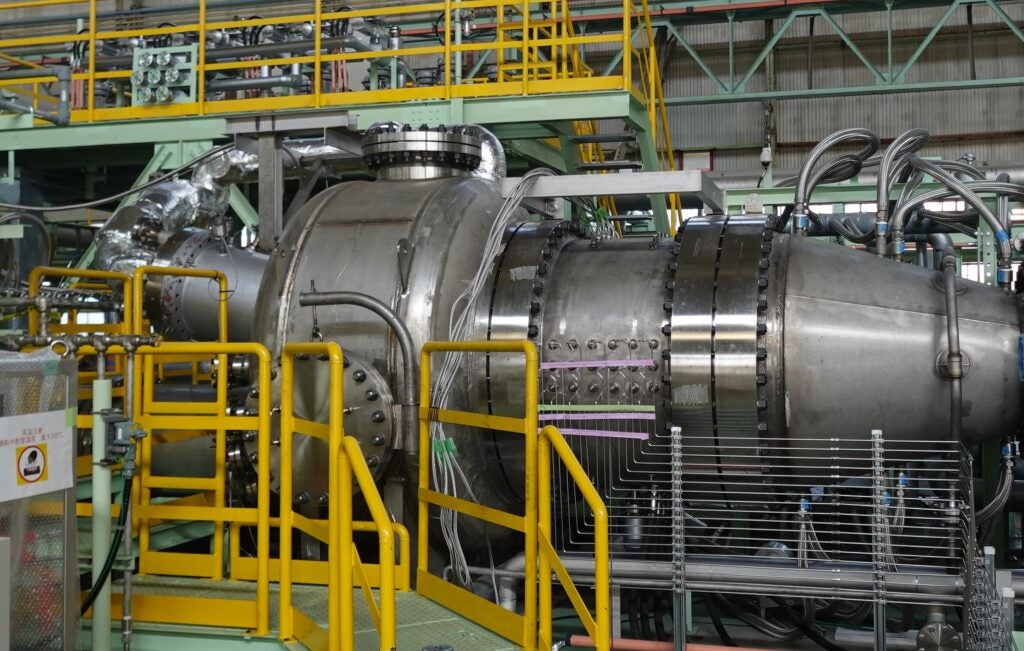
Companies are pursuing a diverse portfolio of concepts, including tokamaks and stellarators, magneto-inertial and inertial fusion, Z-pinch and mirror configurations, and both deuterium-tritium and advanced fuels such as proton-boron (p-B-11). Most firms surveyed by the FIA expect a commercially viable pilot plant with net energy gain between 2030 and 2035, and a majority predict the first grid-connected fusion plant delivering electricity sometime between 2031 and 2040—though industry self-reported timelines have historically proven optimistic.
Top pre-2030 challenges cited by survey respondents include achieving sufficiently high fusion gain, ensuring tritium self-sufficiency, qualifying neutron-resilient materials, and integrating complex systems for continuous operation and maintenance. Public-private partnerships, advanced computing and AI-enabled digital twins, and shared test facilities for blankets, fuel cycles, and materials are seen as critical levers to accelerate progress.
If successful, fusion would provide abundant clean baseload power with a limited waste stream and no meltdown risk—characteristics that distinguish it from fission. While commercial-scale fusion remains a longer-term prospect compared to other technologies in this report, its potential contribution to deep decarbonization beyond 2040 warrants continued investment and attention.
Natural Gas: Bridging and Balancing
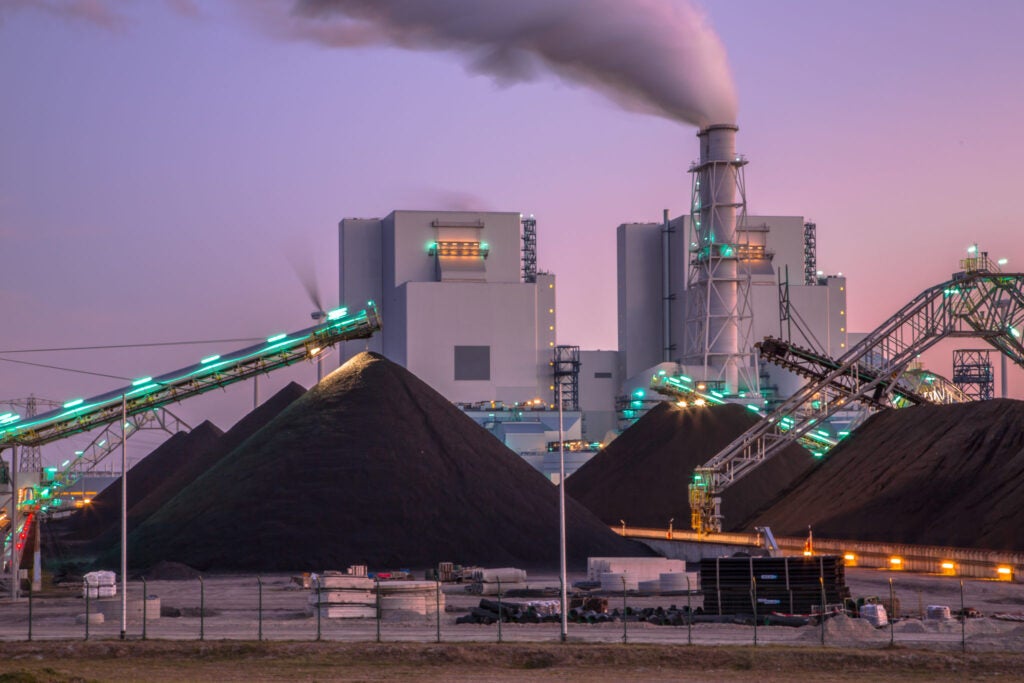
Natural gas remains indispensable to power system reliability as variable renewables scale up—and its role has been revised upward in the latest projections. The WEO projects 350 billion cubic meters more natural gas consumption by 2035 than its 2024 forecast, driven mainly by higher electricity demand for power generation in the U.S. and slower progress in adding renewables to the generation mix than previously anticipated. In contrast to last year’s outlook, gas demand now continues growing into the 2030s.
Natural gas continues to be the single largest source of U.S. electricity generation. The U.S. Energy Information Administration (EIA) forecasts record natural gas consumption of 91.4 billion cubic feet per day in 2025. The IEA notes that a wave of new liquefied natural gas (LNG) exports, led by the U.S., is bringing downward pressure on international prices, which helps explain the revised outlook for gas demand.
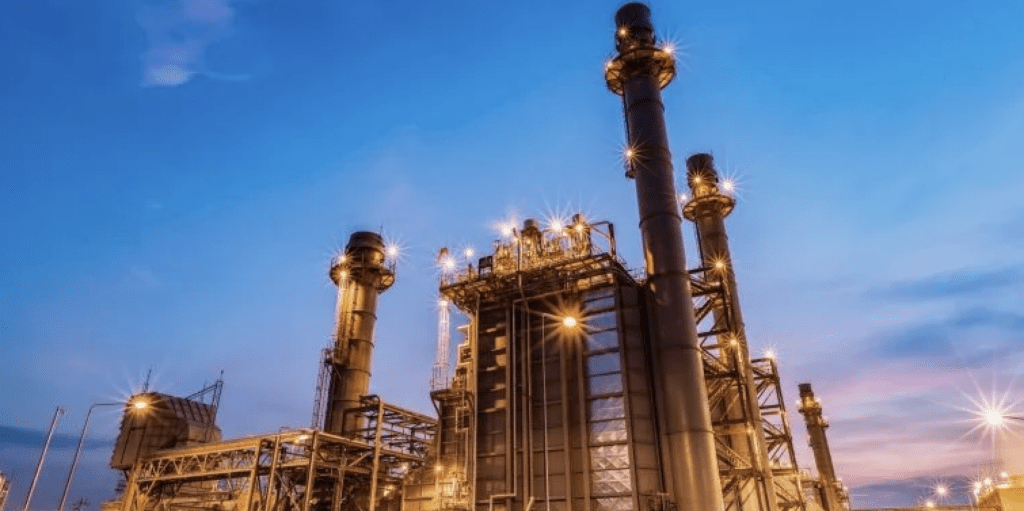
The role of gas-fired generation increasingly focuses on providing flexibility and reliability services. The IEA projects that by 2035, natural gas will provide over half of the electricity required by data centers in the U.S., followed by renewables and nuclear at about 20% each. Simple-cycle combustion turbines that can start quickly and ramp rapidly are gaining prominence, providing critical grid stability as intermittent resources proliferate.
Offshore Wind: Harnessing Ocean Resources
Global offshore wind capacity reached approximately 83 GW in 2024, according to the International Renewable Energy Agency (IRENA), continuing a trajectory of strong growth. Meeting climate goals, however, requires dramatic acceleration. IRENA’s analysis indicates the world needs roughly 500 GW of offshore wind by 2030, with the Global Offshore Wind Alliance targeting 2,000 GW by 2050.
Cost reductions have been substantial. IRENA data show the global weighted-average levelized cost of electricity (LCOE) for offshore wind fell 62% between 2010 and 2024, from $0.208/kWh to $0.079/kWh. Turbine capacity has grown dramatically as well, with new offshore projects deploying turbines in the 8- to 12-MW range compared to typical onshore turbines of 3 to 4 MW.
The WEO expects particularly robust growth in the European Union (EU) offshore wind sector, alongside continued onshore expansion in China. Floating offshore wind technology is particularly promising for accessing deeper waters where stronger and more consistent wind resources exist. IRENA says floating systems could quadruple the ocean surface area available for development compared to fixed-bottom installations.
Challenges remain, including supply chain constraints, permitting delays, and the need for massive transmission investments. The Global Wind Energy Council recently downgraded its 2030 outlook by 25%, and the IEA projects 27% less offshore wind capacity between 2025 and 2030 than forecast in late 2024, reflecting current headwinds particularly in the U.S., where policy changes have resulted in 30% less renewables capacity projected for 2035 than in last year’s outlook.
Energy Storage: The Grid’s Fast-Growing Flexibility Resource
Battery energy storage has emerged as one of the fastest-growing segments of the power sector. Global battery storage additions reached 77 GW in 2024, according to the WEO—a remarkable acceleration driven by strong policy support and declining technology costs. The report projects total installed battery capacity reaching nearly 1,700 GW by 2035 under stated policies.
In the U.S., cumulative utility-scale battery storage capacity reached 27 GW in 2024 after growing more than 68% in a single year, according to EIA data. Capacity was expected to be 45.6 GW by the end of 2025, marking a nearly identical year-over-year growth rate, according to the EIA’s December 2025-issued Short-Term Energy Outlook. With 18.6 GW of new capacity, battery storage was the second-largest source of capacity additions after solar, which was expected to add 25.1 GW. The EIA projected 20 GW of utility-scale battery storage additions to the U.S. grid in 2026.
The IEA emphasizes that batteries and demand response are set to become major contributors to system reliability, supplying most of the needed short-term flexibility by 2035. This represents a fundamental shift in how grids maintain stability. While dispatchable sources like hydropower and nuclear remain essential, their role will increasingly shift from bulk generation toward ensuring secure capacity and flexibility.
Costs continue to decline. The National Renewable Energy Laboratory’s (NREL’s) 2025 update on utility‑scale lithium‑ion battery storage estimates that capital costs for 4‑hour systems could fall by roughly 30% to 56% between 2024 and 2035 in its mid and low cases, while remaining roughly flat in a high‑cost case that assumes sustained supply‑chain and trade headwinds. The wide spread between scenarios reflects significant uncertainty in future market conditions.
Lithium iron phosphate has become the chemistry of choice for many stationary storage projects, offering improved safety and typically longer cycle life than other lithium-ion chemistries. Looking ahead, sodium-ion batteries and other emerging technologies could further diversify the market, though lithium-based systems are expected to remain dominant through the early 2030s.
Workforce: The Human Foundation
The energy transition’s biggest bottleneck may not be technology or capital—it’s people. Energy employment worldwide expanded by 2.2% in 2024—1.7 million new jobs—outpacing economy-wide employment growth of 1.3%, according to the IEA. The power sector consolidated its position as the largest provider of employment in the global energy industry with 22.6 million jobs, adding workers at twice the pace of the broader energy sector over the past four years.
Solar photovoltaic (PV, Figure 3) and grids accounted for 40% of all new energy jobs, and low-emissions power generation and grids remain the main employment growth engines looking ahead. Yet, the IEA projected job growth in energy slowed to only 1% in 2025 as policy shifts, tariff uncertainty, and geopolitical risks reshaped market expectations and led firms to take a cautious approach to hiring.
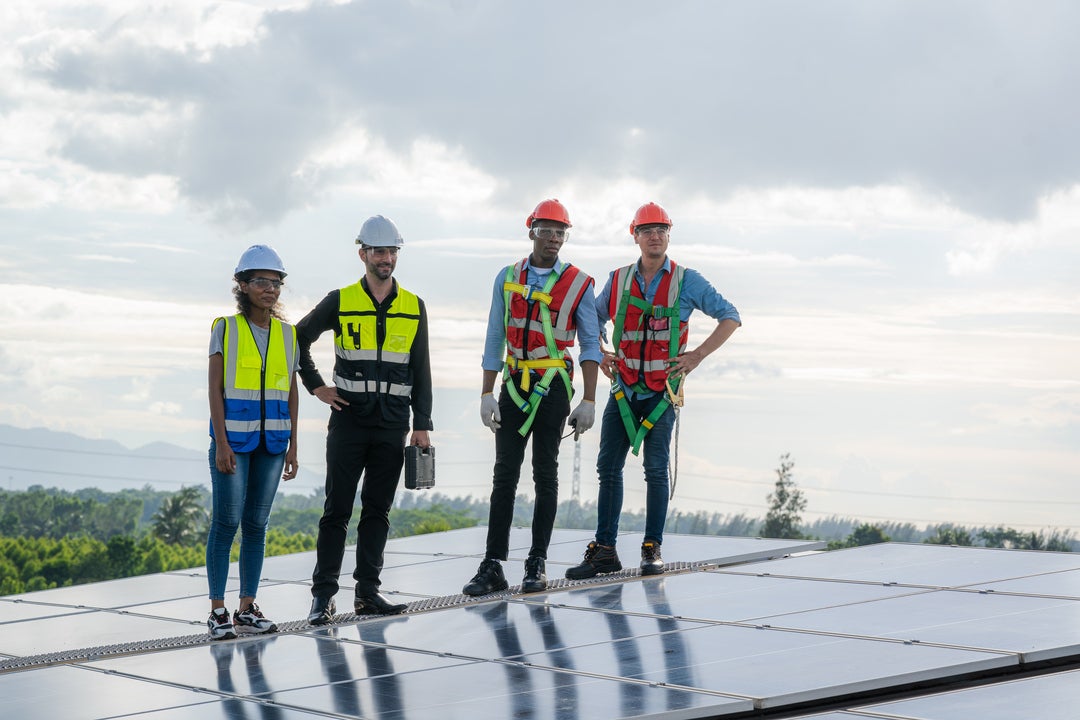
Critical labor shortages threaten to constrain the energy transition. According to the IEA, six of the 10 occupations with the most acute shortages were skilled trades—electricians, grid line workers, solar PV installers, pipefitters, welders, and heating, ventilation, and air conditioning (HVAC) installers. The energy sector relies more heavily on skilled labor than the wider economy. “Technical roles, including skilled trades, technicians, and plant operators, make up over half the energy workforce, more than double their 25% share in the broader economy,” the WEO says.
Demographic pressures compound the challenge. In advanced economies, retirements are outpacing new entrants. Nearly 30% of union electricians in the U.S. may retire within a decade, according to the WEO. The challenge is most acute in nuclear and grids, where for every young person joining there are 1.7 and 1.4 workers nearing retirement, respectively—well above the economy-wide average. Addressing these workforce gaps requires coordinated action to expand vocational education and training systems, strengthen provider-employer partnerships, and broaden access to training programs.
An All-of-the-Above Imperative
The scale of the energy transition demands humility about any single technology’s limitations and openness to the full portfolio of solutions. Nuclear provides proven, dispatchable clean baseload power with momentum building after decades of stagnation. Geothermal offers 24/7 renewable generation attracting major technology companies. Fusion holds transformative long-term potential. Natural gas ensures reliability during the transition, with demand revised upward in the latest projections. Offshore wind taps vast ocean resources despite near-term headwinds. Energy storage is becoming the grid’s backbone for flexibility. And a skilled workforce makes all of it possible.
The IEA reports that clean energy investment is approaching $2 trillion annually—nearly double the combined spending on new oil, gas, and coal supply. Renewables now account for about one-third of global electricity generation, up from one-fifth a decade ago, and their share is projected to reach nearly 55% by 2035 under stated policies. Yet current trajectories still point toward 2.5 to 3 degrees Celsius of warming by century’s end, well above Paris Agreement targets.
As the IEA bluntly states, overshoot of the 1.5-degree goal is now inevitable. The question is how far beyond that threshold warming will go. Closing the gap will require accelerating deployment of every technology examined in this report while developing the workforce to execute at scale. The articles that follow in this special report explore each of these pathways in greater depth. The transition is underway; the question now is whether we can move fast enough.
—Aaron Larson is POWER’s executive editor.