Utilities are facing immense pressure to modernize quickly. Distributed energy resources, rising customer expectations, aging infrastructure, and extreme weather are reshaping the grid.
Many utility leaders are asking a pressing question: how do you connect millions of devices across the grid in a way that is reliable, secure, and cost-effective, not just now but for decades to come?

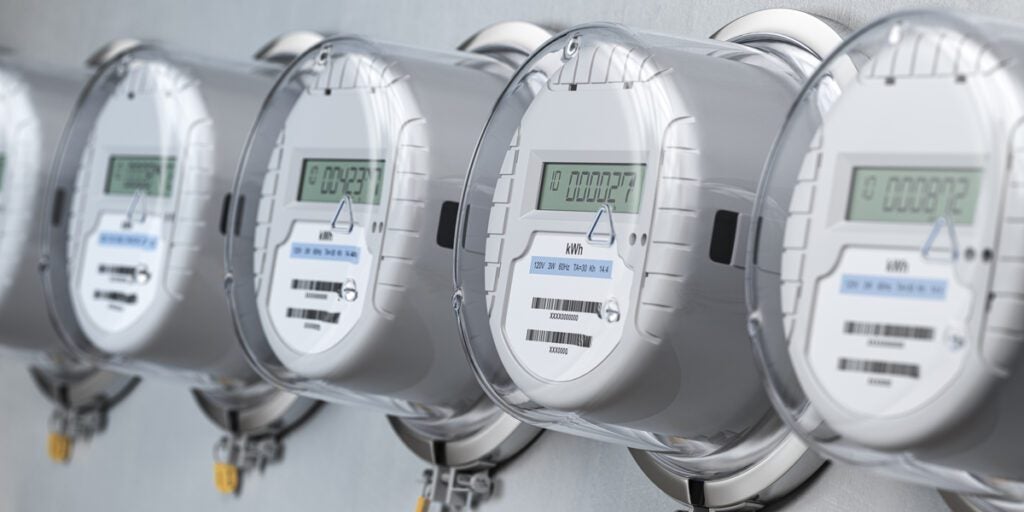
Advanced Metering Infrastructure (AMI) 2.0 provides a powerful answer. It builds traditional metering systems by integrating advanced connectivity, analytics, and automation to support a more dynamic and distributed grid. By combining proven metering technologies with secure, intelligent communication networks, AMI 2.0 enables utilities to modernize operations, improve reliability, and unlock new data-driven capabilities. Private wireless networks based on 3GPP LTE and 5G form the foundation for this evolution, offering the maturity, security, and scalability utilities need to connect millions of devices across the grid today while supporting the more advanced applications of tomorrow.
The task for utility leaders now is to balance today’s needs with the demands of the future.
LTE-M Today: A Proven Foundation for AMI 2.0
As utilities expand their AMI 2.0 deployments, LTE-M (also known as Cat-M1) has proven itself as a critical enabler. It has all the qualities utilities can’t afford to compromise on: reliability, security, and energy efficiency. LTE-M provides a robust foundation for keeping AMI 2.0 systems reliable and adaptable for the future. LTE-M continues to evolve through features such as the Release Assistance Indicator (RAI), extended transport block size, stand-alone deployments, and flexible use of public and private spectrum that fine-tune it for utility-specific needs. These improvements, when combined, make LTE-M even better at meeting the growing demands of modern grid operations for data, reliability, and coverage.
To put it simply: LTE-M is not a legacy technology. It is an active, adaptable platform that will continue to deliver value for many years.
Continuity Through Evolution: Preparing for 5G NR eRedCap
As networks continue to shift from 4G to 5G, utilities need continuity rather than disruption. Devices like meters and sensors often stay in service for 15 to 20 years. This means that every technology decision matters. The choices utility leaders make today affect far more than just the short term; they can have implications for years, if not decades, to come.
That is why 5G NR eRedCap (Enhanced Reduced Capability) is so important. It brings many of 5G’s benefits like higher efficiency, improved capacity, and longer device lifecycles, to the same class of low-power, cost-sensitive devices that LTE-M supports today. eRedCap builds on LTE-M instead of replacing it. The two work together to ensure a smooth evolution for utilities, protecting the investments of today while paving the way for the innovations of the future.
Collaboration Across the Ecosystem
Getting this right requires more than strong technology. Future-proofing your infrastructure depends on close collaboration across the entire ecosystem: spectrum providers, infrastructure vendors, chipset and module makers, smart meter manufacturers, and utilities all have a role to play.
Collaboration is the key to achieving this goal. Which is why it’s so important for utilities to work closely with technology partners to refine LTE-M performance today while laying the groundwork for future eRedCap-based deployments.
The Path Forward
Building a smarter grid is by no means a simple process. It is built step by step, technology by technology. LTE-M gives utilities a stable, proven platform for AMI 2.0 today. 5G NR eRedCap extends that platform into the future, combining the maturity of LTE with the scalability and innovation of 5G.
For utilities, success hinges on balancing maturity with future-readiness, maximizing today’s capabilities while preparing for tomorrow’s opportunities. By strengthening LTE-M now and embracing the evolution to 5G NR eRedCap, the industry can ensure that AMI 2.0 remains reliable, sustainable, and ready for what comes next.