
Latest
-
 Hydro
HydroChina Dam Gets World’s First Self-Closing Ring Gate Control System
A major technical advance in hydroelectric dam safety was achieved this March as Alstom’s Chinese arm, the Tianjin Alstom Hydro Co. (TAH), delivered what it called “the world’s first self-closing electronic ring gate control system” to the Ahai hydropower project in China.
-
 Environmental
Researchers Develop Supercritical CO2 Brayton Cycle Turbines
Researchers at Sandia National Laboratories say a project that focuses on supercritical carbon dioxide (CO2) Brayton cycle turbines is moving to the demonstration stage.
-
 Solar
SolarInterest, Funding Buoys Floating Solar Power Plants
Like most forms of generation, solar power has its disadvantages. Two cited most by critics of photovoltaic (PV) or concentrating solar power facilities are that they require large expanses of land and that solar cell fabrication and maintenance costs are high. Several companies have been assessing a new approach to tackling these factors: installing solar plants on water.
-
Business
POWER Digest (May 2011)
ABB, BHEL to Deliver $1.1B Multi-Terminal UHVDC Line in India. Zurich-based ABB and Indian state-owned company Bharat Heavy Electricals Ltd. (BHEL) said on March 23 that they had been selected by Power Grid Corp. of India Ltd. (PGCIL) to deliver an ultrahigh-voltage direct current (UHVDC) transmission system to convey hydropower from northeastern India to the […]
-
O&M
Preventing Copper Deposition in Steam Turbines
Many large utility-scale units with copper alloy condensers and feedwater heaters lose generating capacity when copper and copper oxide deposits develop on high-pressure (HP) steam turbine blading. It is not unusual for a 400-MW unit to lose 10% of its generating capacity over a six-month period when water treatment processes aren’t properly tuned to prevent copper transport in the steam and condensate systems. In fact, one utility reported that it lost 20 MW of capacity in one month because of such deposits. The financial implications of such deposits, particularly in power markets where plants are pushed to their generating limits, are tremendous.
-
O&M
Predictive Maintenance That Works
This series of articles focuses on the nuts and bolts of predictive maintenance (PdM), also known as condition-based maintenance. A well-defined and well-executed PdM program saves time and money by reducing unneeded time-based maintenance tasks and by identifying and fixing problems before they cause equipment failure or plant shutdown. In this article, we begin introducing condition-monitoring techniques commonly in use at power plants.
-
Legal & Regulatory
Is FERC Backstop Siting Authority Still Alive?
The U.S. Court of Appeals for the Ninth Circuit recently dealt another setback to the use of Section 216 of the Federal Power Act, which gives the Federal Energy Regulatory Commission (FERC) “backstop” authority to site electric transmission lines. Although enacted in 2005, this authority has never been used by FERC, and it can be questioned whether it ever will be used.
-
 Coal
CoalResearch and Development for Future Coal Generation
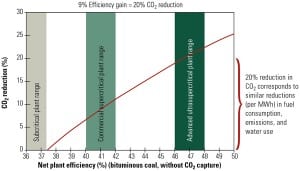
If coal is to be a viable long-term fuel for a significant percentage of electricity generation, research and development is needed to increase thermal efficiency, demonstrate cost-effective and secure carbon dioxide capture and storage, further improve emission controls, and reduce water demands.
-
 Coal
CoalAdded Regulatory Hurdles Will Accelerate Coal Plant Retirements
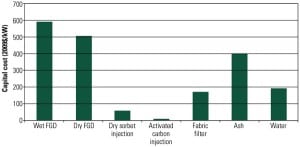
The U.S. Environmental Protection Agency is developing a number of new regulations for the power sector governing air emissions, cooling water intake structures, and coal combustion waste disposal methods. Combined, these regulations have the potential to drive as much as 40% of existing coal-fired generating units to retire in the next 10 years, representing about 51 GW.
-
Coal
Predicting U.S. Coal Plant Retirements
The question concerning coal plant retirements forced by looming regulatory rules, low gas prices, and moribund load growth has changed from “Why?” to “How many plants?” Many highly detailed analyses and reports have been written on the subject by superbly qualified analysts. This approach to estimating potential plant closures is much more qualitative, and much easier to understand. However, the results closely align: About 50 GW are threatened.