
Latest
-
News
Efforts to Stabilize Fukushima Daiichi See Incremental Improvements
Workers are scrambling to contain highly radioactive water and prevent another explosion at the quake-devastated Fukushima Daiichi nuclear power plant. Meanwhile, the situation—which still remains “very serious,” according to the International Atomic Energy Agency (IAEA)—has improved only incrementally, the chairman of the U.S. Nuclear Regulatory Commission (NRC) told lawmakers.
-
News
Industry Groups Urge EPA to Grant Stay on Boiler MACT Rules
Seventeen industry groups, including the Biomass Power Association (BPA) and U.S. Chamber of Commerce, last week petitioned the Environmental Protection Agency (EPA) to put on hold rules for industrial boilers while the agency reconsiders them.
-
News
Nuclear Sneak Attack
A renewed attack on nuclear power immediately followed the March 11 catastrophe at the six-unit Fukushima Daiichi nuclear power complex in Japan. At least one legislator and a multitude of anti-nuclear groups have demanded that the U.S. cease approval of all new nuclear plants for the foreseeable future and/or close our Mark I boiling water reactor (BWR) plants. This knee-jerk response adds nothing substantive to the nuclear safety debate. (Be sure to read our cover story for more on this issue.)
-
 Nuclear
The Battle to Stabilize Daiichi
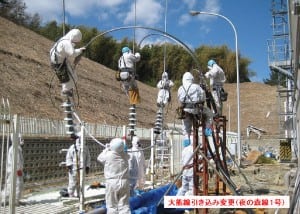
Weeks after a massive magnitude 9.0 earthquake and subsequent 14-meter-high tsunami devastated Fukushima Prefecture in northeastern Japan, workers from the Tokyo Electric Power Co. (TEPCO) were still struggling to regain control of four severely damaged reactors at the six-unit Fukushima Daiichi nuclear power plant.
-
 Coal
CoalChina’s Five-Year Plan Is Heavy on Non-Fossil Generation
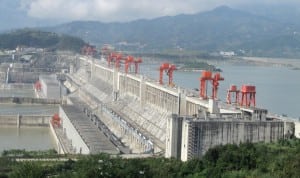
The People’s Republic of China’s Congress approved a much-anticipated draft of the country’s 12th Five-Year Plan (2011–2015) on March 14. Along with key objectives that included boosting its gross domestic product (GDP) by 7% annually on average, the country for the first time in a five-year plan established targets to tackle climate change. It plans to reduce carbon dioxide emissions per unit of GDP by 17% from 2010 levels by 2015 and to reduce energy consumption per unit of GDP by 16% from 2010 levels by 2015.
-
 Coal
CoalLarge-Scale Tests Begin to Convert Flue Gas to Usable Water
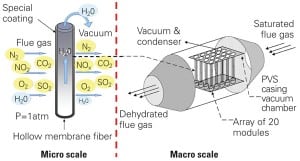
Subsidized by the Dutch government, a number of Dutch utilities, the European Membrane Institute at the University of Twente, and Dutch consulting firm KEMA have, for over a decade, been testing membrane technology that promises to directly convert water vapor from power and other industrial plants’ flue gases into drinking water. The technology could provide a new source of large volumes of potable water.
-
 Wind
WindMajor Offshore Players Introduce Colossal Wind Turbines
Competition among offshore wind turbine vendors vying for market share went into overdrive in the first three months of 2011 as several key players announced gigantic new turbine models.
-
 Hydro
HydroChina Dam Gets World’s First Self-Closing Ring Gate Control System
A major technical advance in hydroelectric dam safety was achieved this March as Alstom’s Chinese arm, the Tianjin Alstom Hydro Co. (TAH), delivered what it called “the world’s first self-closing electronic ring gate control system” to the Ahai hydropower project in China.
-
 Environmental
Researchers Develop Supercritical CO2 Brayton Cycle Turbines
Researchers at Sandia National Laboratories say a project that focuses on supercritical carbon dioxide (CO2) Brayton cycle turbines is moving to the demonstration stage.
-
 Solar
SolarInterest, Funding Buoys Floating Solar Power Plants
Like most forms of generation, solar power has its disadvantages. Two cited most by critics of photovoltaic (PV) or concentrating solar power facilities are that they require large expanses of land and that solar cell fabrication and maintenance costs are high. Several companies have been assessing a new approach to tackling these factors: installing solar plants on water.