
Latest
-
Legal & Regulatory
Is FERC Backstop Siting Authority Still Alive?
The U.S. Court of Appeals for the Ninth Circuit recently dealt another setback to the use of Section 216 of the Federal Power Act, which gives the Federal Energy Regulatory Commission (FERC) “backstop” authority to site electric transmission lines. Although enacted in 2005, this authority has never been used by FERC, and it can be questioned whether it ever will be used.
-
 Coal
CoalResearch and Development for Future Coal Generation
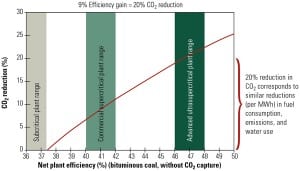
If coal is to be a viable long-term fuel for a significant percentage of electricity generation, research and development is needed to increase thermal efficiency, demonstrate cost-effective and secure carbon dioxide capture and storage, further improve emission controls, and reduce water demands.
-
 Coal
CoalAdded Regulatory Hurdles Will Accelerate Coal Plant Retirements
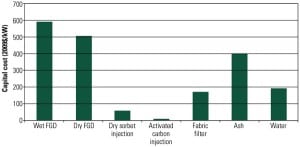
The U.S. Environmental Protection Agency is developing a number of new regulations for the power sector governing air emissions, cooling water intake structures, and coal combustion waste disposal methods. Combined, these regulations have the potential to drive as much as 40% of existing coal-fired generating units to retire in the next 10 years, representing about 51 GW.
-
Coal
Predicting U.S. Coal Plant Retirements
The question concerning coal plant retirements forced by looming regulatory rules, low gas prices, and moribund load growth has changed from “Why?” to “How many plants?” Many highly detailed analyses and reports have been written on the subject by superbly qualified analysts. This approach to estimating potential plant closures is much more qualitative, and much easier to understand. However, the results closely align: About 50 GW are threatened.
-
 Nuclear
Chernobyl: Twenty-Five Years of Wormwood
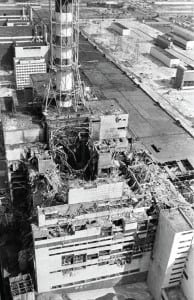
Twenty-five years ago last month, engineers and technicians were running low-power tests at the 1,000-MW Reactor No. 4 of the Chernobyl Nuclear Power Plant outside Kiev. They quickly, inexplicably, lost control of the light-water-cooled, graphite-moderated reactor. In an instant, the critical chain reaction flared out of control. The plant exploded like a small, dirty bomb, the graphite caught fire, and the worst catastrophe in civilian nuclear power was under way.
-
 Coal
CoalCoal-Fired Generation Cost and Performance Trends
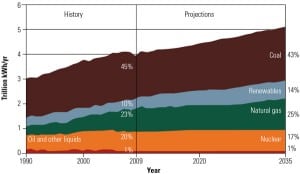
Increasing regulatory requirements and a focus on reducing carbon emissions in the U.S. have significantly reduced the number of new coal-fired plants under development compared with past years. In addition, projected capital costs for new coal-fired plants have risen sharply in the past year, while those for natural gas combined-cycle and combustion turbines have stayed relatively flat. In order to keep coal a viable energy source, many countries, including the U.S., are seeking ways to improve plant efficiency while reducing carbon emissions.
-
Business
HAZCOM Is Essential for Avoiding Explosive Situations
In 1983, OSHA published its Hazard Communication (HAZCOM) Standard, which requires that the hazards of all chemicals used in the workplace be communicated to employees so that responsible protective measures can be taken. Today, HAZCOM remains near the top of the list of most frequently violated OSHA standards that result in a citation. The 1917 Halifax Explosion, one of the world’s largest nonnuclear explosions, testifies to what can happen when you don’t have—or don’t follow—an effective HAZCOM program.
-
 Coal
CoalProactive Strategies for Dealing with Combustible Dust
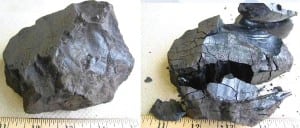
The challenges of using Powder River Basin (PRB) coal are as significant as the rewards. The subbituminous coal contains lower amounts of sulfur dioxide than bituminous coal but can be prone to combustible dust explosions if it is not properly managed. To eliminate such hazards, plant personnel need to establish best practices for the safe operation and maintenance of PRB coal-handling and -storage systems based on best available technologies.
-
 Hydro
HydroNew York City Backs Tidal Power
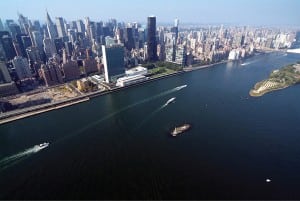
The Roosevelt Island Tidal Energy (RITE) pilot project used six full-scale hydrokinetic turbines to capture the power of river tides and currents and convert it into electricity. Located in New York City’s East River, it is the first and only grid-connected tidal array project in the world. RITE project developers are seeking approval to install up to 30 additional turbines in the near future.
-
 Coal
CoalBenchmarking Fossil Plant Performance Measures, Part III: Metrics Used for Compensation
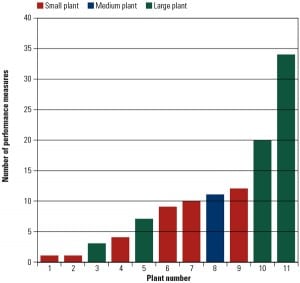
In Part III of this three-part report, we look at plant- and fleet-level metrics used to determine compensation. As expected from this EUCG-sponsored benchmarking survey, there is broad use of quantifiable metrics to set portions of compensation, but the metrics selected vary substantially across the surveyed utilities. More surprising was the number of utilities that used no performance metrics as part of their employee compensation packages.