
Latest
-
 Coal
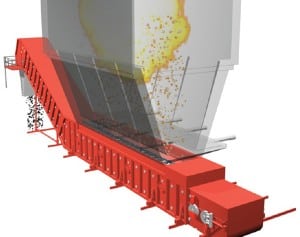
The Better Environmental Option: Dry Ash Conversion Technology
After the 2008 incident involving the failure of a large surface impoundment containing wet coal ash, the EPA began investigating all coal-fired power plants employing this wet coal ash management method. Now a new dry ash management technology offers coal-fired power plants an environmentally suitable alternative for handling coal ash that also increases energy efficiency.
-
 O&M
Titanium Tubing Still Going Strong After 40 Years
Since 1972, titanium-tubed power plant surface condensers have been providing corrosion-free service. Recent process advances are making the material suitable for even more applications.
-
Business
FERC Surrenders Jurisdiction over Station Power in California
In a surprising decision, a federal agency surrendered some of its regulatory authority—and parts of the industry don’t approve. The Federal Energy Regulatory Commission declined to defend its jurisdiction over station power in the California power market, potentially giving an economic advantage to utility generators nationwide and putting merchant generators at a disadvantage.
-
 Coal
Consolidation, Market Distortions Underlie Remarks by Industry Executives
If you needed additional proof that the power industry is changing, the ELECTRIC POWER keynote and panel discussions over the past few years have provided it—top-of-mind issues have been significantly different each year. For the 2011 keynote speaker and panelists, the challenges of reliability, regulatory compliance, financing, and getting the fuel mix right took center stage. In the wake of Japan’s nuclear crisis, safety also featured prominently.
-
 Nuclear
 Power in the Shadow of Fukushima
Risk, risk management, and the specter of Fukushima ran through the nuclear track at May’s ELECTRIC POWER Conference in Chicago. The reality of risk, driven home by the horrendous events in Japan, was a recurring theme in many presentations, in questions to speakers, and in the conversations among delegates during informal moments.
-
 O&M
Solid Fuels: Moving Material and Managing Emissions
In today’s solid-fueled power plant, managing emissions and moving materials more defines the task than the traditional work of making megawatts. That’s the message that emerged from the coal and solid fuels track at this year’s ELECTRIC POWER.
-
 Solar
Utilities Increase Renewable Energy Capacity
Driven by state RPS requirements and the desire to diversify their energy sources, U.S. utilities continue to add more renewable power to their generation portfolios. As a result, they must deal with a number of important issues, including resource availability that varies geographically.
-
 Solar
Sunny Days Ahead for Solar
In the U.S., developers of thermal and photovoltaic solar plants face a number of challenges in their efforts to deploy more utility-scale solar power. Some trends, however, are helping solar proponents move this renewable energy source closer to becoming a mainstream generating option.
-
 News
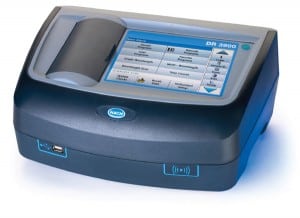
Spectrophotometer with Radio Frequency Identification
Hach Co. unveiled its DR 3900 spectrophotometer featuring state-of-the-art radio frequency identification (RFID) technology. Hach, which describes the device as being “similar to a GPS telling you when to turn,” also says that the DR 3900 requires less training and increases confidence in the test results. This helps water and wastewater facilities prevent measurement errors. […]
-
 News
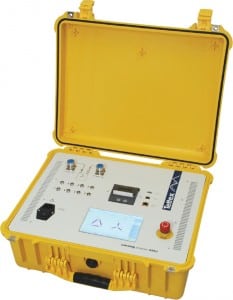
New Winding Resistance Meter
The Tettex 2293 from Swiss firm Haefely Test AG is the result of extensive research and years of experience testing transformers. A simple one-time-connection system, together with the simultaneous winding magnetization method (SWM), drastically reduces measuring time. The SWM guarantees fast and reliable measurements even on large power transformers with delta windings on the low-voltage […]