The current state of the national power grid in Cuba is a response to an exceptionally complex scenario, marked by the intensification of the U.S. embargo and its direct impact on fuel supplies. This was the message delivered by First Deputy Minister of Energy and Mines, Argelio Jesús Abad Vigoa, during his appearance on the Cuban TV program “Mesa Redonda.”
The official distinguished two clearly defined phases. Until the end of last year, although the embargo remained rigorous and had imposed severe restrictions for more than six decades—including the persecution of suppliers, sanctions on shipping companies, and financial obstacles—Cuba managed to acquire fuel on the international market.
“It wasn’t easy, it wasn’t cheap, but we managed,” he emphasized. Despite the threats and the alternative routes that had to be employed, ships arrived in the country to sustain the economy and essential services.
However, starting this year, the situation changed radically. A new executive order from the U.S. government intensified the policy of economic strangulation, transforming the energy-related embargo into one of “maximum intensity.” This has led to stricter measures against longstanding suppliers, increased persecution of vessels on the high seas, and pressure on shipping companies, insurers, and financial intermediaries. As a result, not a single ship carrying fuel contracted on the international market has entered Cuba for more than three months.
The country has stopped receiving diesel, fuel oil, gasoline, aviation fuel, and liquefied petroleum gas, which directly impacts electricity generation. Currently, more than 1,400 MW of installed capacity cannot be used due to a lack of fuel, including distributed generation and the generators at Mariel and Moa.
Generation is sustained solely by domestic crude oil in thermal power plants, associated gas from oil wells, and renewable sources during daytime hours. Even so, the average deficit reaches 1,400 MW during the day and between 1,800 MW and 1,900 MW during peak nighttime hours, causing instability in the system and prolonged power outages.
“We have the machines, we have the technicians, but we don’t have the fuel,” he stated. Added to this scenario is the decapitalization of the system, aggravated by the impossibility of accessing international financing for the maintenance and development of thermal generation.
Results Amidst the Siege
Despite this adverse context, the country has made significant progress in the energy sector during 2025 and so far in 2026. In oil production, the downward trend of previous years was reversed. The Union Cuba Petroleo (CUPET) met its annual plan in 2025, achieving the highest figure in the last seven years in oil equivalent production. This trend has continued in the first months of 2026.
This increase is key to sustaining electricity generation with domestic resources and reducing dependence on imports. New wells have been drilled with positive results, and four storage tanks have been built at the Matanzas supertanker base.
In parallel, 348 MW of thermal generation capacity has been recovered so far this year, with work carried out at thermal units in Felton, Santa Cruz, Cienfuegos, and Antonio Guiteras. Maintenance and investment work also continues at strategic units throughout the country.
A Commitment to Renewable Energy
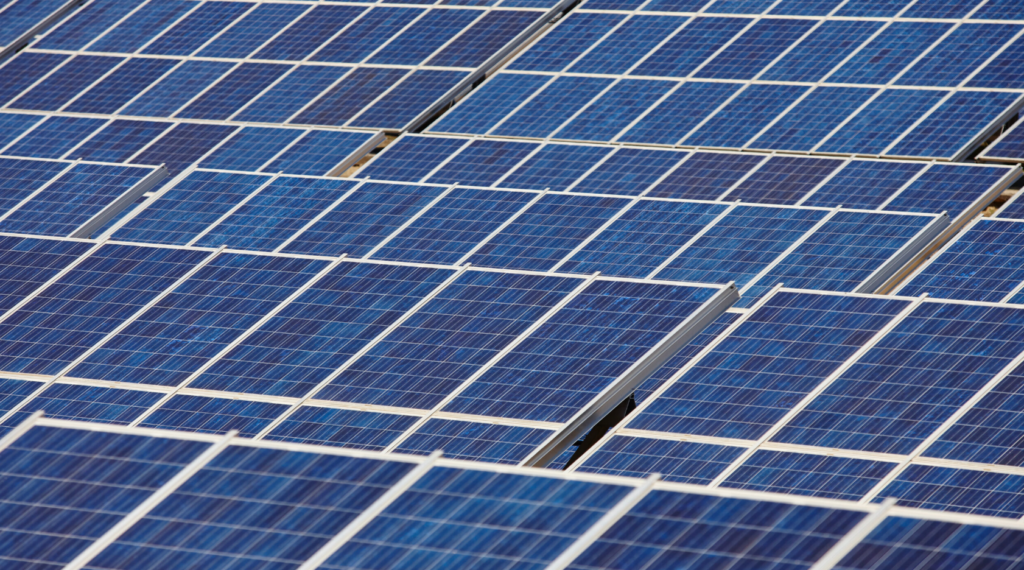
One of the pillars of the energy strategy has been the promotion of renewable energy sources. By the end of 2025, the installation of 52 photovoltaic solar parks was completed, contributing more than 1,000 MWp and raising the share of these sources to nearly 10% of the electricity mix, compared to 3% in 2024. So far in 2026, another 31.24 MW have been added. At certain times, these parks generate up to 38% of the energy consumed during daylight hours.
More than 10,000 solar systems have also been installed in homes in priority sectors, as well as 5,000 modules in isolated communities and vital centers such as clinics, nursing homes, bakeries, and communications centers. The program also includes the installation of battery systems to stabilize the grid, the development of solar pumping for aqueducts and agriculture, and progress in hydroelectric and wind power projects.
Alternative Solutions for Daily Life
Faced with fuel shortages, alternatives have been implemented to guarantee basic services. These include the rehabilitation of wood and charcoal ovens in bakeries, the use of animal traction for logistical activities, and the promotion of natural gas use in communities with available gas sources.
Work is also underway to expand the manufactured gas service in the capital and to identify new areas with potential for its use. The Deputy Minister described the current situation as the most complex faced by the energy sector in decades, a direct result of an intensified blockade aimed at strangling the country.
Nevertheless, he highlighted the efforts of the workers at the state-owned Union Electrica and CUPET, whom he called “titans,” and emphasized the country’s capacity to innovate and persevere. Cuba continues working on multiple fronts: increasing national oil production, recovering thermal power generation capacity, accelerating the transition to renewable energy, and seeking alternative financing and supply options.
“The road is long and complex, but we are clear about where we are going: toward full energy sovereignty,” he concluded.
Cuban Industry: Resilience, Creativity, and Sovereignty
Minister of Industry Eloy Álvarez Martínez presented a detailed report on the sector’s situation during the “Mesa Redonda” TV program. The report highlighted the shortages of fuel and electricity, but also the willingness to seek alternatives to sustain production.
The minister stressed that the primary cause hindering industrial development continues to be the U.S. economic, commercial, and financial blockade, the intensification of which is now compounded by fuel supply limitations. This combination, he explained, severely impacts production, causes factory shutdowns, work stoppages, and, consequently, affects the supply of goods to the economy and the population.
Given this situation, Álvarez Martínez said the fundamental objective has been to find alternatives to minimize the impact and maintain, as far as possible, production levels in the public sector. To this end, one of the first decisions was to concentrate efforts on those factories with the greatest potential for continued operation.
Work schedules were adjusted to coincide with times when electricity is available, a complex measure that has required close coordination with workers, who go to their workplaces when there is power, thus maintaining productivity levels and ensuring essential services for strategic sectors of the economy.
The water supply system in Cuba is facing one of its most complex periods, marked by the energy crisis and fuel limitations, which directly impact pumping, distribution, and sanitation capacity throughout the country. During his appearance on the television program, Antonio Rodríguez Rodríguez, president of the Cuban National Institute of Hydraulic Resources, explained the extent of these impacts and the strategies underway to maintain this essential service under adverse conditions.
The main obstacle lies in the hydraulic system’s heavy dependence on the electricity supply. There are more than 3,300 pumping stations in the country, but most depend on the national grid. Currently, 211 stations operate by gravity and 834 with photovoltaic solar panels, but these are mainly smaller-capacity installations. “33% of the pumping stations have some alternative power source … but these are the smallest ones, and that only benefits one million inhabitants,” Rodríguez Rodríguez specified.
“Today, 13% of the population has an alternative, but 87% depend on the national power grid,” he explained. In this context, he pointed out, the water sector is one of the country’s largest energy consumers, which amplifies the impact of both the lack of this vital resource and the power outages.
To mitigate the effects of the blackouts, 480 pumping stations have been identified as priorities, although not all of them have backup power. Of these, 135 are on protected circuits and 73 have backup generators, but due to the current shortage, their use has been limited.
“To protect the 480 stations, 591 MW of power would be needed. If that power were allocated solely to water supply, almost all activity in the country would grind to a halt,” he warned.
This situation necessitates daily, coordinated management with energy authorities. “Every day we have a working session with the Union Electrica and our colleagues from the Ministry of Energy and Mines to evaluate the situation province by province and prioritize pumping stations,” he explained.
Energy Transition and New Technologies
As part of the solutions, the water sector is advancing in a process of changing its energy matrix, with an emphasis on renewable energy and the electrification of operations. These include the installation of solar panels at pumping stations, the incorporation of electric vehicles, and the creation of charging infrastructure. “We were able to acquire all the components for 22 electric vehicles, which we will be putting into service soon in the capital. They will allow us to work on leaks and blockages, as well as on the operation of the aqueduct,” he noted.
The executive referred to the charging stations and the impact they are beginning to have. “We already have the first fast-charging station with battery storage for heavy transport,” he explained. “The first electric tanker truck is making eight trips a day on a single charge,” he added. He also noted that they already have an electric sewer cleaning truck and an electric septic tank cleaning truck, “solutions that don’t depend on fuel.”
—Amaury Pérez Sánchez (amauryps@nauta.cu) is a chemical engineer based in Cuba with the University of Camagüey.