Wind
-
Legal & Regulatory
California’s GHG plan gives power heaviest load
On Sept. 12, the California Public Utilities Commission (CPUC) and California Energy Commission (CEC) took the next step in the implementation of Assembly Bill (AB) 32, California’s ambitious greenhouse gas (GHG) emissions – reduction initiative, with the release of a 300-page proposed decision on GHG regulatory strategies.
-
 Coal
CoalGlobal Monitor (September 2008)
Cost hikes for all things nuclear in the U.S. and UK / North Americans plan liquid makeover for coal / California balloon bill deflates in legislative process / The Lego skyscraper / Of manure and methane / U.S. small wind turbine market moving slowly / Israeli desert center tests solar thermal tech for California desert / POWER digest / Correction
-
 Coal
CoalGlobal Monitor (July 2008)
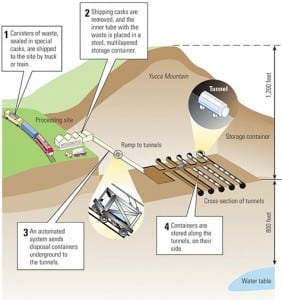
Yucca Mountain plan sent to NRC/ CPV cells get cooling chips from IBM/ StatoilHydro to pilot test first offshore floating wind turbine/ U.S. rivers next massive power source?/ Siemens delivers 500-MW gasifiers/ Algae: A green solution/ POWER digest
-
 Coal
CoalWoods and power company CEOs agree: “The state of the industry is cautious”
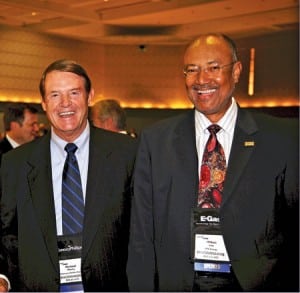
It is rare indeed to witness, at an otherwise staid industry forum, the public rebuke of the country’s most prominent supplier to the electric power industry. But at the Keynote session and Power Industry CEO Roundtable of the 2008 ELECTRIC POWER Conference & Exhibition in Baltimore this May, Milton Lee, general manager and CEO of […]
-
 Coal
CoalGlobal Monitor (June 2008)
Artificial photosynthesis for solar power? / Poultry litter to fuel 55-MW N.C. plan / First fuel cell-powered plane takes flight / First HTS transmission cable energized / PTC powers wind power industry / Renewing Greensburg / GAO deems coal-to-gas switch impractical / Assessing the Congo River’s power potential / POWER digest / Corrections
-
 Commentary
Growing a green economy
I believe there are three basic objectives for the energy industry in the modern era. First, to provide a reliable and ample supply. Second, to ensure that the supply is provided at the least cost to consumers. And third, to accomplish the first and second objectives with the least possible adverse effects on the environment. […]
-
 Coal
CoalGlobal Monitor (May 2008)
National Grid divested of Ravenswood/ GE to sell Baglan Bay plant; From prairie grass to power/Renewables experience 40% growth/ The sustainable city/Solar recharger for developing countries/ Seeking CCS solutions/ Hoover Dam could stop generating/ Japan turns to fossil fuels/U.S. reactors produce record power/ POWER digest
-
 Wind
WindRegulating wind power into a dispatchable resource
Perhaps the biggest shortcoming of wind power is its unreliability. Unconcerned with human needs, Mother Nature has decided that the wind usually blows strongest at just the wrong times, when electricity demand is lowest. However, using savvy negotiations to exploit a new provision in California’s renewable energy regulatory regime could make wind power more dispatchable during peak-demand periods and increase the capacity of wind farms at the same time.
-
 Coal
CoalGlobal Monitor (April 2008)
Tenaska proposes first new coal-fired plant with carbon capture/ Concerns raised over growth of China’s CO2 emissions/ Sandia, Stirling Energy Systems set new world record/ Indonesia orders first Wärtsilä Gas Cubes/ First wind turbines on Galapagos Islands cut oil imports/ Harnessing waste heat for electricity/ POWER digest/ Correction
-
 Legal & Regulatory
Congress failed to deliver a green Christmas
Renewable power proponents exuded great confidence as the U.S. Congress approached its near-annual end-of-year task of extending the production tax credit (PTC) for wind, solar, biomass, and geothermal power beyond its current December 2008 expiration. The debate promised to bypass the threshold issue of simply extending the PTC. It was expected to focus on […]
-
 Legal & Regulatory
One-size RPS does not fit all
The U.S. Congress continues to debate proposals that would mandate that a set amount of the nation’s electricity come from renewable energy sources such as wind, the sun, or biomass. These discussions about adopting a nationwide renewable portfolio standard (RPS) raise significant concerns for power providers and customers alike. Backers of a one-size-fits-all federal RPS […]
-
 Coal
CoalRegulatory risks paralyzing power industry while demand grows
In our second annual report on the state and future of the U.S. power generation industry, we combine the considerable experience of POWER’s editorial staff with the market savvy of Industrial Info Resources Inc. (see next story) to preview the industry’s direction in 2008. We anticipate that the specter of carbon control legislation will hobble coal and make renewables the hot ticket while nukes continue to inch forward in a generation market that is basically treading water.
-
 Coal
CoalGreater fuel diversity needed to meet growing U.S. electricity demand
Industrial Info Resources’ strengths are tracking capital projects and cost projections and providing intelligence about the power generation market, among others. IIR has used its large industry databases and numerous industry contacts to develop its outlook for 2008. Here’s what you should expect and plan for this year.
-
 Wind
WindBurbo Bank Offshore Wind Farm, Liverpool Bay, UK
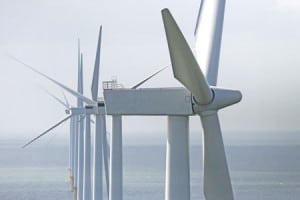
POWER congratulates DONG Energy and Siemens Power Generation on the October 18 inauguration of their 90-MW Burbo Bank Offshore Wind Farm. This project was the first commercial application of Siemens’ new 3.6-MW wind turbine and exemplifies how the right developer and supplier team can quickly add much-needed offshore wind power to a country’s generation mix.
-
 Wind
WindSteel Winds Project, Lackawanna, New York
This year, for the first time, the U.S. wind power industry is poised to push past the 3,000 MW installed per year milestone. At 20 MW, Steel Winds may seem like a footnote, but its importance is measured in more meaningful terms than just size. Steel Winds is the first commercial deployment of the Clipper Windpower 2.5-MW Liberty turbine, the first installation on a former Superfund site, and is said to be the largest wind farm in the U.S. developed in an urban setting. In addition, the project anchors Lackawanna’s redevelopment of a former industrial site along Lake Erie for public use.
-
 Wind
WindDeveloping wind projects in California—or anywhere
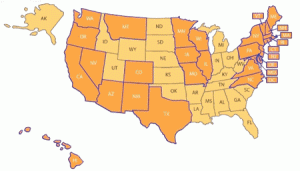
Acquiring capacity from renewable resources is now mandatory for many electric utilities, and nowhere is green generation being pursued with more vigor than in California. Regulators there want power from renewables to account for at least 20% of utilities’ annual sales by 2010, and Governor Schwarzenegger is proposing increasing the minimum to 33% by 2020. Wind power appears to have the lowest technical risks of the renewables options, but don’t ignore the rising development risks. Here’s a primer on developing wind projects in the Golden State—and elsewhere.
-
 Coal
CoalGlobal Monitor (October 2007)
Siemens ships first blade from U.S. plant; GE’s frames hit 1,000; Battery problems hit hybrid EV programs; Solar thermal rebounds in California;Peabody’s Illinois coal plant gets green light;EPA could sink 278-MW CFB unit; Longest-serving NRC commissioner dies at 58; POWER digest; Readers talk back; corrections
-
 Gas
GasGlobal Monitor (August 2007)
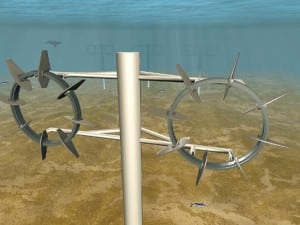
PG&E mounts tidal power project / GE F-class turbine breaks record / Iowa welcomes ethanol-fed hog / NYPA upgrades pumped-storage plant / Bush blesses Browns Ferry 1 restart / Shearon Harris looks to live on / Nevada bets on solar thermal / Climate models questioned / POWER digest
-
 Coal
CoalGlobal Monitor (June 2007)
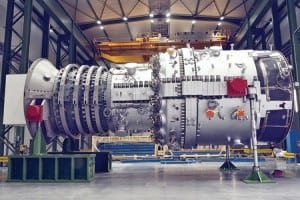
Siemens, E.ON to test world’s largest GTG / Midwest to add 76-MW peaker in Kansas / Tapping the sun near Phoenix / Georgia Tech developing 3-D PV nanocells / Wind farms with hydrogen backup? / BNSF , union come to terms / IPL to buy 200-MW wind project / India to improve environmental monitoring / POWER digest
-
 Coal
CoalGlobal warming, rising costs complicate capacity additions
If little else is clear about the future of the U.S. power industry, this much is: Electricity rates are going up across the country, and will continue to. None of the esteemed panelists at the CEO session of the ELECTRIC POWER 2007 Conference & Exhibition in Chicago last month actually said those words. But much […]
-
 Coal
CoalInvestment in generation is heavy, but important needs remain
Forecasting the direction of the U.S. electric power industry for 2007, much less the distant future, is like defining a velocity vector; doing so requires a direction and speed to delineate progress. In this special report, POWER’s first stab at prognostication, the editors look at current industry indicators and draw conclusions based on their more than 100 years of experience. To borrow verbatim the title of basketball legend Charles Barkley’s book: I May Be Wrong but I Doubt It.
-
Coal
Near-term capital spending in the North American power industry
Following the money invested in projects is a viable way to compare growth trends for power projects using the four major generation types: coal, natural gas, nuclear, and renewable.
-
 Wind
WindWind power: Disruptive or not?
Harvard Business School Professor Clayton Christensen coined the term "disruptive technology" in his best-selling 1997 book, The Innovator’s Dilemma. According to Christensen, a disruptive technology unseats a dominant technology by creating products that are so much cheaper or better in one or more ways that they quickly become the new mainstream standard, transforming an entire […]
-
-
 Wind
WindUnique challenges face wind power developers, buyers
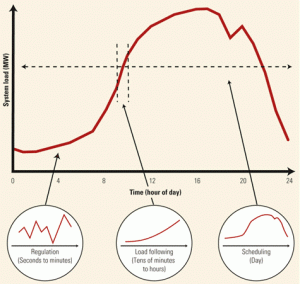
Utility resource planners are used to viewing new generation in terms of firm, dispatchable capacity. Dispatching a renewable resource such as wind requires a different perspective. Wind capacity can serve as a hedge against fossil fuel price risks and perhaps future emissions restrictions, but it requires a much more structured planning horizon. Integrating wind farms into their portfolios may be the most difficult challenge utilities face today.
-
 Gas
GasWind farmers: Heed the lessons of the merchant gas-power business
The wind energy business is beginning to look as frenetic as the merchant gas-fired power business in the late 1990s—with some critical differences. If the 10 issues listed here are addressed soon, wind power may avoid a crash and burn similar to the one that beset the gas turbine business.
-
 Legal & Regulatory
Renewable contracts merit longer terms
The length of term allowed for power sales contracts is a critical determinant of the ability of states to meet their increasingly ambitious renewable power targets. Many utilities advocate limiting terms to 10 or perhaps 15 years for renewable energy contracts, emphasizing the "flexibility" that shorter terms offer. In contrast, contract terms of 20 or […]
-
 Gas
GasGlobal Monitor (July/August 2006)
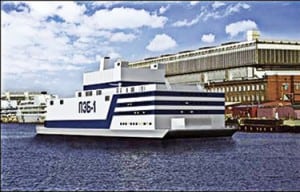
Russia’s new nuclear navy;Russia’s old nuclear navy; First LMS100 fired up by Basin Electric;More Jenbacher gensets to Hungary; A baseload-size wind farm?; EEI bestows Edison Awards; POWERnotes
-
 Wind
WindGreener than thou
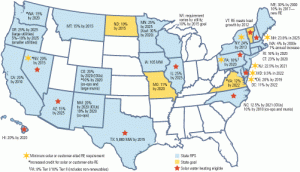
U.S. wind power is on a roll, with wind farms sprouting like weeds. But in the near future, utilities may end up paying higher prices for wind capacity because state regulators are, in effect, imposing an artificial floor on national demand for generation fueled by renewable resources. At last count, at least 20 states had […]