
Legal & Regulatory
-
Legal & Regulatory
Japan, Critical Materials, and Weak Links in Supply Chains
The devastation in Japan has focused new attention on supply chain issues and the impact of the partial collapse of that country’s manufacturing infrastructure on both Japanese imports and exports.
-
Legal & Regulatory
John Hanger, Pa.’s Former Environmental Chief, Talks About Challenges of Keeping Gas Drilling Safe
John Hanger, who led Pennsylvania’s Department of Environmental Protection until January, talked with ProPublica earlier this year about the challenges of trying to regulate the expanding drilling industry.
-
Legal & Regulatory
Is FERC Backstop Siting Authority Still Alive?
The U.S. Court of Appeals for the Ninth Circuit recently dealt another setback to the use of Section 216 of the Federal Power Act, which gives the Federal Energy Regulatory Commission (FERC) “backstop” authority to site electric transmission lines. Although enacted in 2005, this authority has never been used by FERC, and it can be questioned whether it ever will be used.
-
Legal & Regulatory
Flawed Rules May Sink Small Calif. Renewable Projects
In December 2010, the California Public Utilities Commission (CPUC) issued a decision with considerable fanfare that was intended to provide for the development of 1,000 MW of additional new renewable generation and provide California’s large investor-owned utilities (IOUs) with additional flexibility in complying with California’s Renewables Portfolio Standard (RPS) requirements. Unfortunately, it is likely to have the opposite effect.
-
Legal & Regulatory
Can a Stew of Power Generation Regulations Clear the Air?
Don’t get fixated on the Environmental Protection Agency’s moves against carbon dioxide. The real action is in the area of conventional air pollutants.
-
Legal & Regulatory
Will Critical Materials Become a Green Roadblock?
Critical minerals—such as rare earth metals—are important to many new energy technologies. However, the U.S. Department of Energy is concerned that foreign control of supply, particularly by China, could limit the ability of these technologies to develop fully, so the DOE is developing a strategy to keep the supply chain open. Meanwhile, some analysts say China is playing a losing game with its hold on the minerals.
-
Commentary
Got Remedies? NLRB Acting General Counsel Does, and Employers Should Beware
National Labor Relations Board Acting General Counsel Lafe Solomon is continuing his focus on remedies in unfair labor practice cases involving union organizing campaigns. On September 30, 2010, he issued a memorandum on Section 10(j) injunctions for discriminatory discharges during such campaigns. Now he has released another memorandum, this one targeting remedies regional offices should seek when they issue complaints in ULP cases involving campaign activity.
-
Legal & Regulatory
Proposed Combustible Dust Rule Sparks Debate
A high-stakes dustup is shaping up in connection with the U.S. Occupational Safety & Health Administration’s (OSHA’s) proposed new standard to regulate combustible dust. When and if enacted, this new OSHA regulation will definitely affect the way personnel handle coal at power plants that use it for fuel.
-
Legal & Regulatory
Renewables Face Chills and Thrills in Project Financing
The winter of 2010-2011 has been a cold one for financing renewable energy projects. That’s the weather report from a recent project financing meeting in New Orleans, a survey of developers and builders done by a large Minnesota construction company, and accounts from those in the financial trenches.
-
Legal & Regulatory
What Legal & Regulatory Issues Are at the Top of Your Mind?
All of our legal column writers have this issue off (they’ll be back in the March issue), so we are using this opportunity to invite readers to share their legal and regulatory (L&R) concerns.
-
Legal & Regulatory
Postmortem: U.S. Electric Transmission Siting Policy
Despite high-powered congressional legislation in 2005, the U.S. is still unable to site high-voltage interstate transmission lines in a timely fashion. Two new reports suggest ways out of the gridlock.
-
Legal & Regulatory
A Really Basic Checklist for Employee Benefits in Mergers and Acquisitions
As mergers and acquisitions in the power sector heat up again, questions arise about how employee benefits are affected by these complex business deals.
-
Legal & Regulatory
Solving the Renewable Integration Puzzle
In November, California voters overwhelmingly rejected an initiative that would have put the brakes on AB 32, the state’s ambitious greenhouse gas (GHG) emissions reduction law. Given the role that California has played in climate change policy, that such a vote took place only four years into the law’s implementation process and 10 years before the emissions reduction targets were to be met was a reality check on climate change policy for those on both sides of the issue.
-
Legal & Regulatory
Regulatory Options for Feed-in Tariffs
Feed-in tariffs (FITs) have been used by European countries to foster the growth of renewable generation resources, notably solar. These tariffs generally require electric distribution companies to purchase power produced by a specified class of generators at above-market rates. The object of the tariffs is to encourage development of the favored generation resources by ensuring the existence of a profitable market for their power production.
-
Legal & Regulatory
EPA’s Mercury Rule: Another Incarnation Coming
Much like the shape-shifting substance it regulates, the mercurial enforcement rule that governs mercury emissions from coal-fired power plants has changed unpredictably several times in recent years.
-
Legal & Regulatory
TREND: Smart Grid Complications
Despite a trendy moniker and lots of hype and interest, the smart grid has been facing some major setbacks of late, as regulators and customers begin challenging some of the claims for what interconnected smart meters will deliver in the way of tangible benefits.
-
Legal & Regulatory
Uranium Enrichment: Boom or Bust?
The prospects of a worldwide nuclear power renaissance have spawned many plans for increasing uranium enrichment capacity. Could those plans swamp the world in SWUs?
-
Legal & Regulatory
NRC Chairman Floats Plan for Long-Term Spent Fuel Storage
A sea change in thinking about how to deal with spent nuclear fuel in the U.S. appears to be on the policy and political horizon, rekindling battles last fought in the 1980s about how to pay for the disposal of nuclear waste and where to put it. Holes in the ground look increasingly unlikely.
-
Legal & Regulatory
Dodd-Frank: Legislation and Magical Misdirection
Here’s how, with almost no attention, recent financial reform legislation changes how business must deal with whistleblower employees and affects other seemingly nongermane issues.
-
Legal & Regulatory
QF Contracts and 21st-Century Economics
Many power purchase agreements entered into between qualifying facilities (QF) and electric utilities during the 1980s and 1990s have several years remaining on their terms. These contracts typically require the generator to comply with the Federal Energy Regulatory Commission (FERC) regulations promulgated pursuant to the Public Utility Regulatory Policies Act (PURPA). The foremost FERC requirement […]
-
Legal & Regulatory
Coal Ash Regulation: Playing the Name Game
What’s in a name? Would coal ash labeled as “special” hazardous waste be as easily recycled as that labeled nonhazardous waste?
-
Legal & Regulatory
Will Nuclear 2.0 Be Better, Faster, and Cheaper than Nuclear 1.0?
The nuclear renaissance has been in play for several years yet not a shovel of dirt has been turned. Why should anyone believe that Nuclear 2.0 will be an improvement?
-
Legal & Regulatory
FERC Proposes an Improved Path for New Transmission
In October of last year, the North American Electric Reliability Corp. (NERC) issued a study finding that maintaining electric reliability will require significant acceleration in the siting and construction of new transmission lines. The NERC study is indicative of growing concerns that changes to the current transmission planning process are necessary to maintain reliability and accommodate interconnection of the massive amounts of renewable resources expected to come online over the next 10 to 20 years.
-
Legal & Regulatory
Climate Change: Avoid Political Thickets
A federal judge recently dismissed a lawsuit in which the plaintiffs alleged that defendants’ production of chemicals and electricity had “added to the ferocity of Hurricane Katrina.” The judge’s reasoning reveals the inherent limitations of courts unilaterally initiating policies to address climate change issues.
-
Legal & Regulatory
TREND: Fire Safety Again Tops Nuclear Agenda
The U.S. Nuclear Regulatory Commission puts fire at the top of its safety concerns, calculating that fire constitutes half of all reactor safety risks, and lately fire safety has again become a major industry issue. For example . . .
-
 Legal & Regulatory
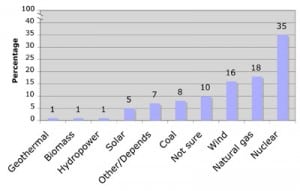
Regulators Embrace Nuclear—Awkwardly
A recent survey finds utility regulators contradicting themselves on the touchy subject of nuclear power. They say they like new nukes, but their actions belie their stated beliefs.
-
Legal & Regulatory
Energy Storage: Renewables’ Necessary Partner
Timing is everything in the world of electric power generation. The timing of the delivery of electricity is affected by both the users’ demand and the speed with which a variety of energy sources supply power to the transmission system. Modern grids require reliable energy sources to instantly meet the needs of their users.
-
Legal & Regulatory
Defining the Elephant: Smart Grid Status Check
There is no doubt that the year-plus since passage of the American Recovery and Reinvestment Act of 2009 (Recovery Act) has borne witness to a great deal of activity among the diverse groups of smart grid stakeholders.
-
Legal & Regulatory
Rethinking Revenue Assurance for Utilities
Should utilities take a new look at their approaches to maximizing profit margins?
-
Legal & Regulatory
Gridlock Continues for Grid Policy
Early last year, there were promising signs that electric transmission line construction would be facilitated by the convergence of the new administration’s emphasis on developing remote renewable generation resources, proposed legislative provisions expanding federal siting authority, and the granting by the Federal Energy Regulatory Commission (FERC) of generous cost-of-service returns on such investments. However, the stars did not align for transmission policy in 2009 as had been hoped, and the forecast is cloudy.