
Legal & Regulatory
-
 Legal & Regulatory
Speeding Forward with Integrating Plug-in EVs
Approximately 150,000 plug-in electric vehicles (PEVs) are already on the road in the United States, according to various reports. These vehicles include relatively wallet-friendly PEV options like the
-
 Legal & Regulatory
NIST Cybersecurity Framework Aims to Improve Critical Infrastructure
A year ago, on Feb. 12, 2013, President Obama issued Executive Order 13636, titled “Improving Critical Infrastructure Cybersecurity.” The Executive Order instructed the National Institute of Standards and
-
 Legal & Regulatory
Mexico Embarks on Historic Energy Reform
Mexico’s much-awaited constitutional energy reform, passed on Dec. 12 by the federal congress and a week later by the required majority of state congresses, could spark increased private participation in
-
 Legal & Regulatory
Obama Nominates Norman Bay to Head FERC
President Obama has nominated current Federal Energy Regulatory Commission (FERC) Director of Enforcement Norman Bay to head the agency, upon confirmation, replacing Jon Wellinghoff, who left his post in November and jumping him over Acting Chairman Cheryl LaFleur. Bay’s nomination is the second to replace Wellinghoff, who left to join Portland, Ore., law firm Stoel […]
-
 Legal & Regulatory
Okla. Asks Supreme Court to Review EPA Regional Haze Suit
Oklahoma has asked the U.S. Supreme Court to review a lawsuit that challenges the Environmental Protection Agency’s (EPA’s) authority to reject a state regional haze plan and replace it with a federal implementation plan (FIP). Last July, in a 2–1 decision, the U.S. Court of Appeals for the 10th Circuit upheld the EPA’s rejection of […]
-
 Legal & Regulatory
Legal Deadline Set for EPA’s Coal Ash Rule
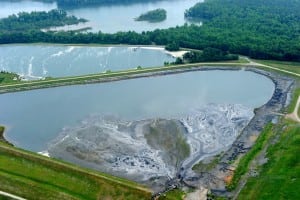
The Environmental Protection Agency (EPA) must issue a proposed revision of its Resource Conservation and Recovery Act (RCRA) Subtitle D rules regulating coal combustion residuals no later than Dec. 19, 2014, under a consent decree reached between the agency and environmental groups that was filed in federal court today. The U.S. District Court for the District of Columbia […]
-
 Legal & Regulatory
Obama in SOTU: “All-of-the-Above” Energy Strategy Is Working
President Obama spoke briefly about energy in his State of the Union address on Tuesday night, though he declared at the outset: “The all-of-the-above energy strategy I announced a few years ago is working, and today, America is closer to energy independence than we’ve been in decades.” That statement rejected recently expressed concerns from 18 […]
-
 Legal & Regulatory
NRC Delays Issuance of Final Nuclear Waste Confidence Rule
Issuance of the revised final Waste Confidence Decision and Temporary Storage Rule will be delayed until at least early October, the Nuclear Regulatory Commission (NRC) announced on Thursday. The NRC cited “time lost” and a “lapse of appropriations” during the October 2013 government shutdown, which has forced the federal regulatory body to “reschedule several public […]
-
 Legal & Regulatory
New Lawsuit Challenging EPA Carbon NSPS Highlights EPACT 2005 Conflict
The Environmental Protection Agency’s (EPA’s) proposed New Source Performance Standards (NSPS) for greenhouse gas (GHG) emissions from new power plants violates the Energy Policy Act (EPACT) of 2005, a suit filed in federal court by the state of Nebraska alleges. The state alleges, as have a number of Republican lawmakers, that the EPA relied on […]
-
 Legal & Regulatory
Colorado Legislature Kills Effort to Repeal Renewable Energy Mandate
The Democrat-controlled Colorado Senate on Jan. 15 blocked a bill that would have reversed the state’s controversial renewable energy mandate for rural electric cooperatives. Colorado has had a renewable portfolio standard (RPS) since 2004, when it became the first state in the U.S. to mandate a percentage of renewable generation in retail electricity sales, but […]
-
 Legal & Regulatory
EPA Publishes Draft Carbon Pollution Rules
The EPA published the latest version of its new source performance standards (NSPS) for carbon pollution from new power plants in the Federal Register on Jan. 8, setting in motion a 60-day public comment period. The action stems from the 2007 Supreme Court decision in Massachusetts v. EPA that defined greenhouse gases as an air […]
-
 Legal & Regulatory
Wind Production Tax Credit Expires with Uncertain Impact
The controversial federal production tax credit (PTC) bestowed on new wind farms of $0.023/kWh for the first 10 years of their operation expired on Tuesday, but the impact of that policy lapse isn’t immediately clear. Originally enacted in 1992, the federal renewable electricity PTC has been renewed and expanded numerous times—most recently by the American […]
-
 Legal & Regulatory
A Rising Tide of Regulation and the “Kick-the-Can” Gambit
A tidal wave of pent-up federal regulations could surge across much of the electricity industry in 2014. In recent years, Congress has been unable to enact new laws in energy, which has led a frustrated
-
 Commentary
How U.S. Power Generators Are Preparing for 2014
The business environment for generating companies worldwide continues to become increasingly complex, and not just as a result of regulations. Even in the U.S., the concerns and constraints faced by generators
-
 Legal & Regulatory
Europe Faces Capacity and Cost Challenges in 2014
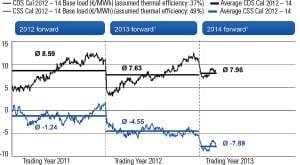
This is expected to be the year when modest economic growth at last returns to a recession-hit Europe. Recent depressed power demand from industry has already allowed the 27 countries of the European Union
-
Commentary
Fighting Bovine Flatulence
Cows get little respect these days. Except, of course, when cow is in the form of a two-inch-thick steak cooked medium-well and served still sizzling from the grill. Others prefer their beef served in a sack passed through a window. Either way, your favorite serving of beef is under attack. First came the revelation that […]
-
Legal & Regulatory
Hydropower Regulation: A Bipartisan Success Story
On August 9, 2013, President Obama signed into law the “Hydropower Regulatory Efficiency Act of 2013” (the “Act”). This legislation, passed with overwhelming support in the House and Senate, streamlines the regulatory approval process for certain hydroelectric power (“hydropower”) projects. Perhaps more importantly, the Act reflects bipartisan recognition of the benefits of hydropower. According to […]
-
 Legal & Regulatory
Beyond the Renewable Portfolio Standard
Renewable portfolio standards (RPSs) have been remarkably successful in boosting renewable generation, especially in the western U.S., where most states enjoy large areas of prime wind and solar potential
-
 Legal & Regulatory
Federal Court Orders EPA to Move on Coal Ash Regs
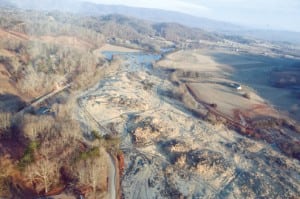
A federal judge in Washington, D.C., issued a formal order today giving the Environmental Protection Agency (EPA) 60 days to set a deadline for issuing revised coal ash regulations, agreeing with a coalition of environmental groups that the agency has failed to timely complete its review process in accordance with provisions of the Resource Conservation […]
-
 Legal & Regulatory
Federal Court Blocks New Jersey Plan to Subsidize New Plants
Following up on a similar decision in Maryland last month, a federal court threw out New Jersey’s attempt to spur construction of new power plants outside of PJM’s capacity auctions, saying that it was an unconstitutional state attempt to interfere with the wholesale power market. New Jersey’s Long-Term Capacity Pilot Project (LCAPP), enacted in 2011, […]
-
 Commentary
Carbon Dioxide and the Fundamentals of Heat Transfer
With the recent push for the regulation of carbon dioxide emissions from new and existing power plants (see “Turning the Heat Up on Carbon Emissions” in the October 2013 issue of POWER), the science behind this action needs to be revisited. The regulation of carbon dioxide emissions will apply to all fossil fuel energy sources; […]
-
Legal & Regulatory
Natural Gas and Electricity Don’t Mix (Yet)
The cost of producing electricity by natural gas and coal finished 2012 in a dead heat and future cost trends are very difficult to predict. One can read the projections (not predictions) by the U.S. Energy Information Administration and find evidence that coal is disadvantaged based on the rising cost of environmental compliance but the […]
-
 Legal & Regulatory
Federal Court Blocks Maryland Order to Build New CCPP
A federal court on Sept. 30 shot down Maryland’s drive to spur construction of a new combined cycle power plant outside of PJM’s capacity auctions. Ruling in favor of various entities that had sued to block the plan, the U.S. District Court for the District of Maryland found that the state’s order last year for […]
-
Legal & Regulatory
LNG Exports: Who Gets to Decide?
An abundance of North American natural gas, coupled with high foreign demand, has sparked interest in exportation of natural gas. However, liquefied natural gas (LNG) facilities are controversial. Some
-
 Legal & Regulatory
New Measures Pit Indian Generators Against Equipment Makers
Energy-hungry India’s power sector is financially hemorrhaging due to a number of critical issues relating to the availability of coal and gas, its loss-making state power distribution companies, and costly
-
Legal & Regulatory
Washington Think Tank Scopes Out State Shale Gas Regulation
U.S. states vary widely on how they are regulating the booming business of producing natural gas from shale formations, according to a study released this summer by the Washington environmental think tank Resources for the Future (RFF). “As the shale gas boom has taken off,” says RFF, “states have updated their regulations, each with varying […]
-
Legal & Regulatory
Oklahoma Requests Full Court Review of EPA Regional Haze Case
The state of Oklahoma and Oklahoma Gas and Electric (OG&E) on Tuesday asked the full 10-judge panel at the 10th Circuit Court of Appeals to review their challenge to the Environmental Protection Agency’s (EPA’s) implementation of a regional haze rule to limit emissions from power plants in the state. The move follows a decision by […]
-
Legal & Regulatory
PURPA at 35: At a Crossroads?
In March 2013, and for the first time in the 35-year history of the Public Utility Regulatory Policies Act of 1978 (PURPA), the Federal Energy Regulatory Commission (FERC) initiated an enforcement action in
-
Legal & Regulatory
The New Environment for the Gas and Electric Industries
By Kelly A. DalyFERC Moves on Natural Gas–Electric CoordinationBy Kelly A. DalyNatural gas–fired power generation has increased significantly in recent years. This trend generally is considered a positive
