Legal & Regulatory
-
 Legal & Regulatory
Behind-the-Meter Batteries Can Provide the Greatest Value, Study Says
Battery energy storage has exploded in deployment over the past several years, but the majority of it by capacity, especially in North America, is deployed at grid scale. That may be a problem, because a new study from the Rocky Mountain Institute (RMI) suggests the greatest value to the system lies with behind-the-meter batteries—distributing battery […]
-
 Legal & Regulatory
EPA Issues Final NAAQS Ozone Rule at 70 ppb [UPDATED]
The Environmental Protection Agency (EPA) on Oct. 1 released the final version of new National Ambient Air Quality Standards (NAAQS) for ozone, cutting the current limit of 75 ppb to 70 ppb. The move sets the stage for a battle with Congress, the states, and a range of industries that have warned the new ozone […]
-
 Legal & Regulatory
Europeans Praise the Clean Power Plan While Yawning in Reaction
By now, power industry watchers are familiar with how U.S. interests are reacting to the Environmental Protection Agency’s final release on August 3 of the Clean Power Plan. But what about the rest of the world—especially Europe, which has long been seen as taking a stronger stand on greenhouse gas emissions? Some key European officials […]
-
 Commentary
Power Industry Policy Flip-Flops
When I started working in the energy industry in 1999, I had a conversation one day with Adam, a researcher who was writing a report for utilities that were marketing “green energy” programs. At the time, customers’ ability to purchase solar- or wind-generated electrons was limited to fewer utilities, and those companies were looking for […]
-
Legal & Regulatory
California’s Bold Move Toward Default Time-of-Use Rates
Rate design is sexy again. On July 3, 2015, the California Public Utilities Commission (CPUC) issued its long-awaited decision altering California’s residential rate structure. Most of the focus on the CPUC’s decision has understandably been on the move from a four-tiered to a two-tiered rate structure and the introduction of a Super-User Electric Surcharge for […]
-
 Legal & Regulatory
EPA Finalizes Steam Electric Power Plant Effluent Guidelines
The Environmental Protection Agency (EPA) has finalized revisions to technology-based effluent limitations guidelines and standards, setting the first federal limits on the levels of toxic metals in wastewater discharges from steam electric power plants. The new rule sets stringent new requirements for the discharge of arsenic, mercury, selenium, and nitrogen in wastewater streams from flue […]
-
 Legal & Regulatory
Senators Cite Conflicting Polls and Studies During Environmental Hearing
An old saying often attributed to Mark Twain is, “Figures don’t lie, but liars figure.” Listening to the conflicting information presented by a variety of senators during a hearing on Capitol Hill Sept. 29, one has to wonder if Twain was covering a Senate hearing when he penned the phrase. The only witness at the […]
-
 Legal & Regulatory
Duke Energy Settles with Groups Over Edwardsport Operating Costs
Duke Energy Indiana reached a settlement agreement with some of the state’s key consumer groups related to operating costs at its Edwardsport integrated gasification combined cycle (IGCC) coal power plant. The deal was submitted to state regulators on Sept. 18 and is subject to Indiana Utility Regulatory Commission (IURC) approval. If approved, it would resolve […]
-
 Legal & Regulatory
“Keep It Going!” Biden Tells Solar Industry
Speaking at the Solar Power International (SPI) conference in Anaheim, Calif., on Sept. 16, U.S. Vice President Joe Biden hailed the nation’s progress in expanding its solar generation capacity and announced several new investments in solar power technology as part of the Department of Energy’s (DOE’s) Sunshot Initiative. In an enthusiastic and animated address to […]
-
 Legal & Regulatory
Emergency Stay of EPA’s Clean Power Plan Denied by Federal Court
The U.S. Court of Appeals for the D.C. Circuit on Wednesday rejected a request by 15 U.S. states to stay the Environmental Protection Agency’s (EPA’s) Clean Power Plan. In a one-page order, the three-judge panel dismissed the request filed on Aug. 13 by a coal company and the coalition of states led by West Virginia’s […]
-
 Legal & Regulatory
Pilgrim’s Woes Continue as NRC Increases Oversight
The Nuclear Regulatory Commission (NRC) said on Sept. 2 that it was increasing its oversight of the Pilgrim Nuclear Power Plant as a result of an inspection finding stemming from an unplanned shutdown in January. The action moves the plant into the Repetitive Degraded Cornerstone Column, indicating multiple problems in meeting one of the NRC’s […]
-
 Legal & Regulatory
NV Energy: Warren Buffett’s Plan for a Structural Power Shift
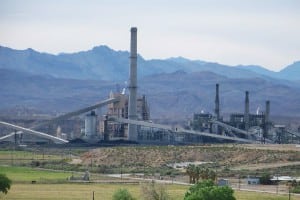
Warren Buffett bought Nevada’s NV Energy two years ago, a move widely seen as a play for solar and renewable generation. That’s working out. But as the company transitions away from legacy coal and high-priced renewable contracts signed years ago, large customers are rebelling, and the company faces a challenge to keep its big dog […]
-
 Commentary
Get Ready for MATS 2.0
On June 29, much of the power sector rejoiced when the U.S. Supreme Court struck down the Environmental Protection Agency’s (EPA’s) Mercury and Air Toxics Standards (MATS) rule, finding that the EPA had
-
 Commentary
Power Industry Wins with Final Clean Power Plan
Though most power generators and states might have preferred to not deal at all with a new rule regulating greenhouse gas emissions, the final Clean Power Plan (CPP), released August 3, gives most of the power
-
 Legal & Regulatory
Federal Judge Thwarts Implementation of “Expansive” EPA Final Waters of U.S. Rule
A federal judge on Thursday halted implementation of the Clean Water Rule that is controversial for its broad definition of “Waters of the U.S.” one day before it was to go into effect, saying it was likely that the Environmental Protection Agency (EPA) overstepped its authority when it promulgated the “exceptionally expansive” rule. Judge Ralph […]
-
 Legal & Regulatory
OIG: Solyndra Misled DOE to Get Solar Loan Guarantees
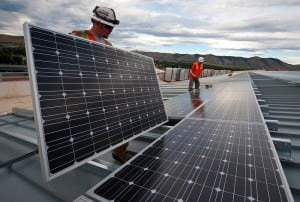
An official four-year-long investigation into the Solyndra debacle confirms that the bankrupt maker of cylindrical solar photovoltaic panels misled the Department of Energy (DOE) to get a $535 million federal loan guarantee, but it also reveals that the DOE didn’t properly vet those facts, missing opportunities to catch inaccuracies, possibly due to political pressure. The […]
-
 Legal & Regulatory
D.C. Public Service Commission Denies Exelon-Pepco Merger
The final hurdle for Exelon Corp.’s purchase of Pepco Holdings Inc. (PHI) became the ultimate stumbling block, as the Public Service Commission of the District of Columbia (DCPSC) could not be persuaded that the merger was in the public interest. The DCPSC—an independent agency established by Congress to regulate electric, natural gas, and telecommunications companies […]
-
 Legal & Regulatory
Longannet, UK’s Second-Largest Coal Plant, to Close
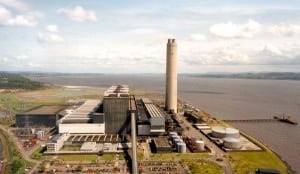
Making good on earlier warnings, ScottishPower said on Aug. 18 that it has no choice but to retire the 2,400-MW Longannet power plant in March 2016 because high transmission charges and carbon taxes make fossil generation uneconomic in Scotland. As with generators in the U.S., coal plants in the UK have been challenged by an […]
-
 Legal & Regulatory
Seventeen States Sue EPA for Mandating SIP Startup, Shutdown, Malfunction Changes
The attorneys general of 17 states are suing the Environmental Protection Agency (EPA) for invalidating agency-approved state implementation plans (SIPs) governing emissions from power plant startup, shutdown, and malfunction (SSM) operations. The states have asked a federal court to review the EPA’s June-issued final rule, which deems SIP provisions concerning SSM operations in 36 states […]
-
 Legal & Regulatory
Committed to “Ambitious Schedule,” EPA Wants to Reissue MATS Rule by April 2016
The Environmental Protection Agency (EPA) will issue revised Mercury and Air Toxics Standards (MATS) and legally required cost-benefit analyses by April 15, 2016, court documents show. In an Aug. 10 motion filed with the D.C. Circuit for White Stallion Energy Center v. EPA (12-1100), the EPA said it intends to seek remand without vacatur (which […]
-
 Commentary
The Clean Power Plan Is Final: Time to Find the Candles?
On August 3, 2015, the Environmental Protection Agency (EPA) released a much-anticipated suite of regulations, featuring the final Clean Power Plan’s guidelines for carbon dioxide (CO2) emissions from existing power plants under Clean Air Act section 111(d). This package has sparked great interest, and early reactions run the gamut from enthusiastic support to entrenched opposition. […]
-
Commentary
Power Industry Wins with Final Clean Power Plan
Though most power generators and states might have preferred to not deal at all with a new rule regulating greenhouse gas emissions, the final Clean Power Plan (CPP), released August 3, gives most of the power industry most of what it asked for in terms of revisions to the 2014 proposed plan. In any regulatory […]
-
 Legal & Regulatory
Ameren Scraps Planned Missouri Nuclear Unit, Cites Falling Renewable Costs
Ameren Missouri has dropped plans to build a second nuclear unit at its Callaway Energy Center, citing shaky economics in the context of cheaper renewables, low demand, and other factors for its decision. “While we continue to believe nuclear power must be an important clean energy source for our company and country, as evidenced by […]
-
 Legal & Regulatory
Reactions to Clean Power Plan: From Excitement to Anger
Reaction from utilities, environmental groups, and governmental leaders following the August 3 release of the Environmental Protection Agency’s (EPA’s) final Clean Power Plan rule was mixed. Some, such as Duke Energy CEO Lynn Good, pointed to the progress that has already been made in recent years to reduce carbon dioxide (CO2) emissions, noting that the […]
-
Legal & Regulatory
[UPDATED] EPA Issues More Ambitious But Flexible Final Clean Power Plan
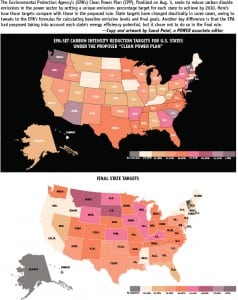
Editor’s note (Aug. 3): Adds compliance cost details, key changes The Environmental Protection Agency’s (EPA’s) final Clean Power Plan will seek to tamp down the nation’s carbon dioxide (CO2) emissions from the power sector by 32% from 2005 levels by 2030—about 9% more ambitious than its original proposal. The first-ever final national standards to limit […]
-
 Legal & Regulatory
SaskPower’s Boundary Dam Carbon Capture Project Wins POWER’s Highest Award
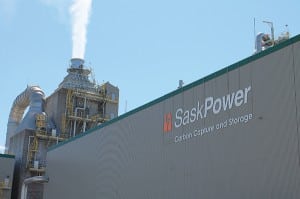
Courtesy: SaskPower There was no debate among our editorial team when it came to selecting the most interesting and worthy project worldwide for this year’s top award. Boundary Dam Power Station Unit 3 is the world’s first operating coal-fired power plant to implement a full-scale post-combustion carbon capture and storage system. It did so more […]
-
 Legal & Regulatory
Colorado Energy Nations Boiler 5 Upgrade Project
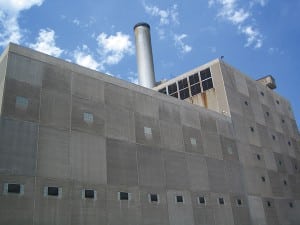
Courtesy: Colorado Energy Nations, GDF SUEZ Energy NA, and Behrent Engineering POWER’s 2015 Reinvention Award (formerly known as the Marmaduke Award) goes to an industrial cogeneration plant that reinvented its largest unit for greater fuel and operating flexibility. This project is exemplary for the owner’s foresight, maximizing local engineering resources, a stellar safety record, and […]
-
 Legal & Regulatory
Ex-Im Bank Reauthorization Stalled, Even as House Prepares to Adjourn
Though the U.S. Senate voted 64–29 this week to renew the charter of the Export-Import Bank of the United States (Ex-Im), the House may adjourn for its summer break without taking action on the issue. Congress let the Ex-Im bank’s charter lapse for the first time in its 81 years of continuous operation on June […]