
Environmental
-
Hydro
Trend Shows Growth of Renewables on Contaminated Lands
Renewable energy projects installed on potentially contaminated lands, landfills, and mine sites have increased by 40% since 2008, a new list released last week by the Environmental Protection Agency (EPA) shows. Solar photovoltaic (PV) systems make up the bulk of about 184.7 MW installed at 60 sites in 25 U.S. states.
-
Environmental
Why the “War on Coal” Is Mostly Hot Air (So Far)
It’s never easy sifting honest debate from rhetoric during an election season. This year, it’s the debate over the future of coal that’s succumbed to some political opportunism. -
 Environmental
Hazy Timetable for EPA’s Proposed Tighter PM2.5 Standards
On June 15, in response to a court order, the U.S. Environmental Protection Agency (EPA) proposed new lower limits on particulate matter (PM) emissions that are scheduled for release in mid-December, although that deadline may be missed. Even with implementation delays, now is a good time to start paying closer attention to the requirements of the proposed standard.
-
 Coal
CoalEMO Technology Promises Improved Mercury Removal
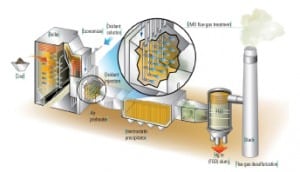
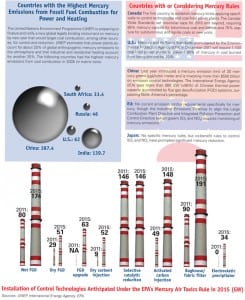
The latest Environmental Protection Agency mercury control limits in the Mercury and Air Toxics Standards present a significant technical challenge to the power industry. Shaw offers a cost-effective process that promotes mercury oxidation and removal in fossil fuel combustion applications that can potentially achieve consistent mercury oxidation above 95%. Shaw’s E&I Group EMO technology provides the industry with an alternative to halogen salt addition and activated carbon injection that can also be used to augment the performance of existing Hg control applications and strategies
-
Water
Evaluating Technologies to Address Proposed Effluent Guidelines
Upcoming revisions to U.S. federal effluent guidelines are anticipated to include new discharge limits for mercury and selenium in flue gas desulfurization wastewater, in addition to other potential revisions. Collaborative R&D is helping inform the rulemaking and is evaluating the cost and performance of technology options that might be used to meet the new targets.
-
 Coal
CoalEPA Stalls on Coal Combustion Residuals
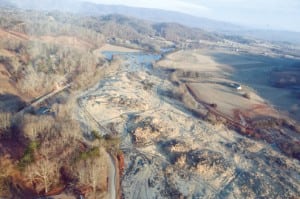
In 2010, the U.S. Environmental Protection Agency (EPA) proposed federal rules regulating coal combustion residuals (CCRs) for the first time to address the risks posed by coal-fired power plants’ disposal of such waste byproducts. The need for new regulations remains a topic of debate, heightened by the EPA’s reticence to release the rule. The EPA says that it will release the new rule by the end of this year–over two years late.
-
 Water
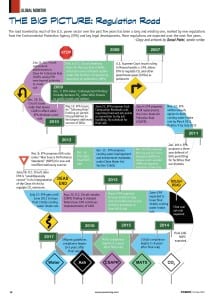
WaterTHE BIG PICTURE: Regulation Road
To view a larger version of this graphic, download the file here.
-
Coal
House Passes Legislative “Stop the War on Coal Act” Package, Takes Aim at Carbon, Coal Ash Rules
In its last legislative act before the November election, the U.S. House of Representatives on Friday passed by a vote of 233 to 175 the controversial "Stop the War on Coal Act," a legislative package of measures that seeks to bar the Environmental Protection Agency (EPA) from promulgating carbon emission rules, calls for an analysis of the cumulative economic impacts of certain environmental rules, and would create a state-based program to regulate coal ash.
-
Coal
Reactions to Federal Court Striking Down CSAPR
In a landmark ruling that has been seen as a major victory for thermal generators, the U.S. Court of Appeals for the District of Columbia Circuit vacated the Environmental Protection Agency’s (EPA’s) Cross-State Air Pollution Rule (CSAPR) in August, finding that it violated federal law. The EPA must now continue implementation of the Clean Air Interstate Rule (CAIR) until it can promulgate a replacement, which likely will not happen until at least 2014.
-
Coal
Coal to Gas Once More for Dominion
Dominion Virginia Power plans to convert its oldest coal-fired power plant, the 227-MW Bremo Power Station near Bremo Bluff, Va., to natural gas, the company announced earlier this month. The two-unit plant would be the ninth in its fleet to be closed or converted to alternative fuels.
-
Coal
CO2 Injection Begins at Fully Integrated Coal-Fired CCS Project
Injection of carbon dioxide has begun at one of the world’s first fully integrated coal-fired carbon capture, transportation, and geologic storage projects.
-
Coal
Congressional Briefs: Back from Recess
Congress has returned from its summer break. As the House prepares to vote on its Upton-Stearns "No More Solyndras Act," lawmakers also expect to focus on a bill that could prohibit finalization of any Environmental Protection Agency (EPA) power plant rules that curb greenhouse gas emissions while carbon capture and storage technology is commercially unavailable. House Democrats, meanwhile, called for hearings to examine the impacts of climate change on the nation’s generators.
-
 Coal
CoalChile’s Power Challenge: Reliable Energy Supplies
Droughts, unreliable gas imports, and protests against proposed projects have hampered the Chilean power sector and its largest economic driver, the copper-mining industry. Recent policies designed to foster more reliable supplies are a move in the right direction, but remaining obstacles are formidable.
-
 Water
WaterWater and Power: Will Your Next Power Plant Make Both?
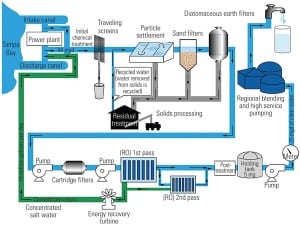
In much of the developing world, two essentials are often in short supply: potable water and reliable electricity. Some countries have invested heavily in desalination and combined cycle technologies to simultaneously solve both problems.
-
Coal
Federal Court Holds TVA Liable for Kingston Coal Ash Spill
A federal district court on Thursday ruled in favor of more than 800 plaintiffs when it held the Tennessee Valley Authority (TVA) liable for the December 2008 failure of coal ash containment dikes at its Kingston Fossil plant in Roane County, Tenn., that resulted in the spill of more than a billion gallons of coal ash sludge.
-
Coal
Carbon Dioxide Injection Begins at Fully Integrated Coal-Fired CCS Project
Injection of carbon dioxide began last week at one of the world’s first fully integrated coal-fired carbon capture, transportation, and geologic storage projects. The "Anthropogenic Test" conducted by the Southeast Regional Carbon Sequestration Partnership (SECARB) transports carbon dioxide via a 12-mile pipeline from a 25-MW post-combustion carbon capture facility at Southern Co.’s 2,657-MW Plant Barry in Bucks, Ala., and sequesters it within a saline Paluxy Formation at the nearby Citronelle Oil Field operated by Denbury Resources.
-
Environmental
Natural Gas Is a Much-Needed Tool in the Battle to Slow Global Warming
That natural gas is the cleanest burning fossil fuel isn’t news. But recent scientific studies are showing that it’s also a key tool in the efforts to reduce climate change.
-
Environmental
IEA Chief: Policy Uncertainties Could Halt Natural Gas Revolution
In an exclusive interview with GAS POWER, International Energy Agency Executive Director Maria van der Hoeven explained how natural gas is poised to revolutionize the world’s energy business—but only if producer and policy officials make the right choices.
-
Environmental
California Suspends Cap-and-Trade Provision for Electricity Imports
The California Air Resources Board (CARB) on Thursday said it would suspend, for 18 months, enforcement of part of its carbon trading rule as it applies to electricity imported to the state. The measure would help avoid a "negative" impact on energy supplies and reliability for the power-strapped state, the state air regulator said.
-
Environmental
Federal Court Remands EPA’s Disapproval of Texas Permitting Program
A three-judge panel of the U.S. Fifth Circuit Court of Appeals in New Orleans on Monday ruled 2-1 that the Environmental Protection Agency (EPA) overstepped its authority in disapproving Texas’s Flexible Permit Program and that reasons the agency offered for rejecting the program were "arbitrary and capricious."
-
Environmental
Report Ranks Nation’s Largest Generators In Terms of Air Pollutant Emissions
A report that examines and compares sulfur dioxide (SO2), nitrogen oxides (NOx), mercury, and carbon dioxide (CO2) emissions of the 100 largest power producers in the U.S. based on 2010 generation numbers says those companies produced 88% of the nation’s total power plant emissions of those pollutants.
-
Coal
Tactical Advantage
A three-judge panel of the U.S. Court of Appeals for the D.C. Circuit on June 26 unanimously rejected all pending legal challenges against the U.S. Environmental Protection Agency’s (EPA’s) interpretation of the Clean Air Act (CAA) that allows the agency to regulate greenhouse gases (GHGs). What is the EPA’s future strategy in its war on coal?
-
-
Legal & Regulatory
Proposed Cooling Water Rule’s Ripple Effects
The U.S. Environmental Protection Agency (EPA) has a long history of making waves with the electric power industry because of its efforts to regulate the way thermal power plants construct and operate their cooling water intake structures (CWIS). These structures divert billions of gallons of water into power plants’ cooling systems and can injure or kill billions of aquatic organisms.
-
 O&M
O&MPlant of the Year: AES Gener’s Angamos Power Plant Earns POWER’s Highest Honor
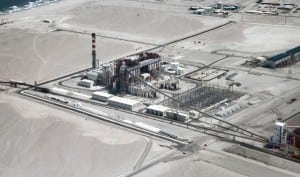
AES Gener recently completed construction of twin coal-fired, 260-MW units in the electricity-starved desert of northern Chile that may serve as models for future hybrid-fossil plant designs. For meeting an aggressive construction schedule, integrating a 20-MW battery energy storage system, embracing desalination, using the first-of-its-kind seawater cooling tower in South America, and employing innovative financing methods, the AES Gener Angamos plant has earned POWER’s 2012 Plant of the Year Award.
-
 Solar
SolarSmart Grid Award: Customers Motivate San Diego Gas & Electric’s All-Inclusive Smart Grid Vision
“If you build it, they will come” has proven a risky strategy for some smart grid projects. One of California’s largest investor-owned utilities faced the opposite challenge—customers whose behaviors necessitated a smarter grid. Customer involvement in and support for smart grid plans is a major reason SDG&E’s smart grid efforts continue to garner accolades, including the 2012 POWER Smart Grid Award.
-
 Coal
CoalNew Environmental Rules Keep Pressure on Coal-Fired Generation
New U.S. Environmental Protection Agency regulations affecting the nation’s coal power plants are routinely in the national news. The latest proposed rule focuses on the release of carbon dioxide into the atmosphere. With a substantial amount of coal generation expected to be shut down (up to 40 GW to 50 GW in the coming years by some accounts), the new regulations are increasing the likelihood that this lost capacity will not be replaced by new coal generation.
-
Commentary
Wind Energy Blown Away by Natural Gas
The environmental push for renewables and mandates to force them into existence are rightly facing some serious headwinds. The American Renewable Energy Production Tax Credit Extension Act of 2011 foundered in Congress, and more states are experiencing significant power rate increases to cover renewable energy production costs. While renewables are generally not ready for prime time in large quantity on today’s power grid, that doesn’t mean environment concerns ought to be trashed, especially when a more effective off-the-shelf solution is available.
-
 O&M
O&MWhy Coal Plants Retire: Power Market Fundamentals as of 2012
Announcements about coal plant retirements have become commonplace. Are new EPA rules completely to blame, or are there other power market pressures at play?
-
 O&M
O&MIn-Line Sorbent Milling Improves Dry Sorbent Injection Performance
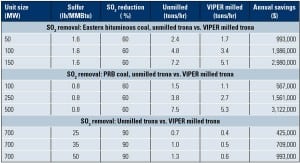
Complying with air emissions rules doesn’t always require construction of a scrubber or SCR. Finely ground trona has proven to be very successful at economically removing SO3, SO2, and HCl from stack gases.