Environmental
-
 Environmental
Geoengineering: A Practical Climate Work-Around or Just Plain Crazy?
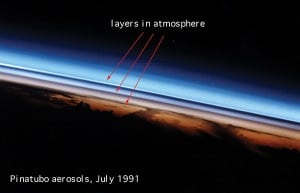
Faced with roadblocks to reducing greenhouse gas emissions via globally meaningful regulations or carbon pricing schemes, some scientists say it’s time to consider even more drastic human intervention. As it looks increasingly unlikely that the world will adopt a political and economic approach to reducing greenhouse gas emissions—primarily carbon dioxide—what was once regarded as a […]
-
 Environmental
Is China Considering Carbon Targets?
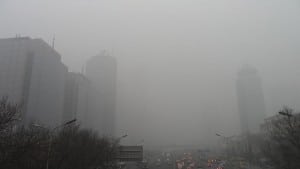
China, the world’s biggest emitter of greenhouse gases (GHGs) could limit its total carbon dioxide (CO2) emissions for the first time, possibly starting in 2016. He Jiankun, chairman of China’s Advisory Committee on Climate Change, reportedly told conference attendees in Beijing in June—one day after the U.S. Environmental Protection Agency proposed rules to slash carbon […]
-
 Environmental
Is Your Plant Ready for MATS?
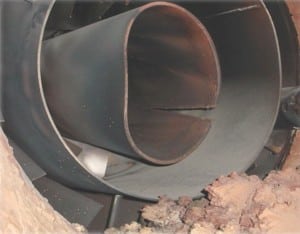
It has been more than two and a half years since the Environmental Protection Agency (EPA) issued national emission standards for hazardous air pollutants from coal- and oil-fired electric utility steam generating units (EGUs), and standards of performance for fossil fuel–fired electric utility, industrial/commercial/institutional, and small industrial/commercial/institutional steam generating units. Specifically, the rule created mercury […]
-
 Coal
CoalSupreme Court Chips EPA GHG Authority, Says Agency Has No Power to “Tailor” Laws to Policy Goals
A divided Supreme Court on Monday partly reversed a 2012 federal court decision, ruling that the Environmental Protection Agency (EPA) exceeded its authority under the Clean Air Act when it required permitting for stationary sources based on their greenhouse-gas (GHG) emissions. In a 5–4 ruling, the court’s right-leaning majority concluded that the agency may not […]
-
 Gas
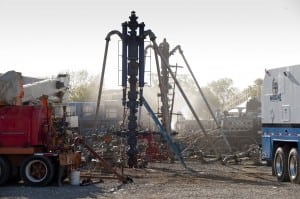
GasWhat China and Other Nations Can Learn from U.S. Shale Gas Fracking Experience
This week, the Bonn climate change conference concluded in Germany. During the talks, discussion focused on adaptation and long-term greenhouse gas emissions reduction goals to meet climate targets. These mitigation and adaptation strategies build on international momentum to tackle climate change, such as China’s announcement that by 2016, its first carbon emissions cap will come […]
-
 Nuclear
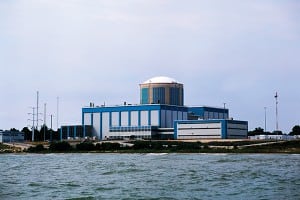
EPA’s McCarthy Says Carbon Emissions Rules Will Boost Nuclear
Environmental Protection Agency (EPA) head Gina McCarthy said on Tuesday that the agency’s proposed carbon emissions rules are specifically designed to support nuclear plants that are struggling with profitability. In Chicago to campaign for support from business leaders, McCarthy said the agency has focused on about 6% of the nation’s nuclear fleet that is in […]
-
 Commentary
How Much Energy Will the 2014 World Cup Consume?
Along with 3 billion other viewers around the world, I plan to tune in for the month-long World Cup to see whether the 22-year old Neymar can withstand the colossal pressure that has been put upon his shoulders to deliver a win for team Brazil. Every time I turn on my television set, I’m using World Cup-related energy. And […]
-
 Legal & Regulatory
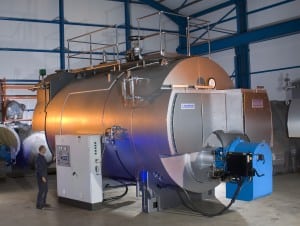
Canada Proposes National Emission Standards for Industrial Boilers, Stationary Engines
On the heels of the Environmental Protection Agency’s carbon emissions proposal for existing power plants, the Canadian government last week issued draft regulations to curb emissions from industrial boilers and heaters, stationary engines, and the cement manufacturing sector. The Multi-sector Air Pollutants Regulations (MSAPR) proposed on June 3 are a part of the federal government’s […]
-
 Legal & Regulatory
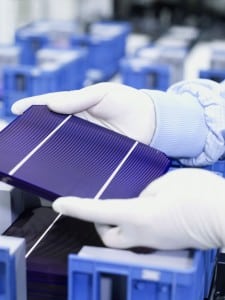
U.S. Sets New Anti-Subsidy Tariffs on Chinese Solar Product Makers
The Department of Commerce preliminarily ruled that China is subsidizing certain crystalline silicone photovoltaic (PV) products at a rate of 18.56% to 35.21%, marking another win for SolarWorld. Commerce announced its affirmative preliminary determination in a new countervailing duty (CVD) investigation on imports of PV cells, modules, laminates, and panels. The agency calculated a preliminary […]
-
 Legal & Regulatory
EPA’s Carbon Pollution Guidelines Incite Heated Reaction
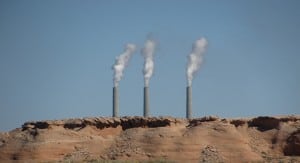
The Environmental Protection Agency (EPA) released its “Clean Power Plan” proposal today, which spurred a wide range of responses. Environmental groups applauded the guidelines while fossil fuel proponents decried the end of affordable energy. Power plants are the largest source of carbon pollution in the U.S., accounting for roughly one-third of all domestic greenhouse gas […]
-
Commentary
Who’s Talking About Climate Change?
Everyone, it seems. From Bloomberg Businessweek to Rolling Stone, from ELECTRIC POWER (EP) to Platts Global Power Markets conferences, this spring everyone was talking about climate change. The topic is no
-
Coal
POWER Digest (June 2014)
Australia Releases Emissions Reduction Fund White Paper. Australia’s Ministry of Environment on April 24 released its Emissions Reduction Fund (ERF) White Paper, formally setting out the final design of the
-
 Water
WaterPower Sector Link to Water Is Deep, Complex
The interlinkages between water and energy are complex and run deep, warns a United Nations (UN) World Water Development water and energy–themed report released this March. As global water demand (in terms
-
 O&M
O&MSite-Specific Factors Are Critical for Compliance with Final 316(b) Existing Facilities Rule
On May 16, 2014, the Environmental Protection Agency (EPA) is scheduled to release its long-delayed final 316(b) rule for existing facilities. The rule—which was supposed to have been issued Apr. 17 after
-
 O&M
O&MMISO Prepares for Hurricane Season
Todd Hillman As hurricane season begins this year, utilities across the Gulf Coast will have a new partner as they work to keep the lights on after extreme weather events. Starting in late 2013, the
-
 Legal & Regulatory
Lessons in Resiliency and Risk
Climate change is changing the odds of extreme weather events, Entergy’s Rod West told the audience at the opening keynote session of ELECTRIC POWER 2014. West, who serves as Entergy’s executive vice
-
 Renewables
Report: Power Plant Emissions Down Substantially
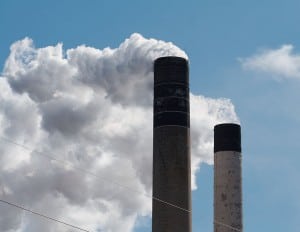
According to a report released on May 28, NOX and SO2 emissions in 2012 were 74% and 79% lower, respectively, than they were in 1990 when Congress passed major amendments to the Clean Air Act. Although power plant CO2 emissions have actually increased 13% from 1990 levels, the trend has been down in recent years, […]
-
 Legal & Regulatory
Final Nuclear, Coal, Oil, and Gas Effluent Guidelines Rule Delayed Until 2015
A final rule establishing national technology-based effluent limitations guidelines and standards to reduce discharges of pollutants from nuclear and fossil fuel power plants to U.S. waters won’t be issued until at least September 2015, the Environmental Protection Agency (EPA) has confirmed. This April, the agency and environmental groups Defenders of Wildlife and the Sierra Club […]
-
 Coal
CoalDuke Energy and EPA Reach Agreement on Dan River Coal Ash Cleanup
The U.S. Environmental Protection Agency (EPA) and Duke Energy have signed an agreement regarding cleanup of the coal ash release that occurred at the retired Dan River coal-fired power plant in North Carolina in February. As part of the deal, the EPA will oversee the cleanup and Duke will reimburse the agency for its oversight […]
-
Environmental
New York Mulls Requiring Utilities to Address Climate Change Risks
New York Attorney General Eric Schneiderman on Tuesday announced his office would propose legislation that would require electric and gas utilities to assess and document their systems’ vulnerability to climate change. Though Schneiderman hasn’t yet set a date for when his office will propose the state bill, the legislation is likely to establish a framework […]
-
 Legal & Regulatory
Federal Court Hands EPA Legal Victory on Fine Particulate Matter
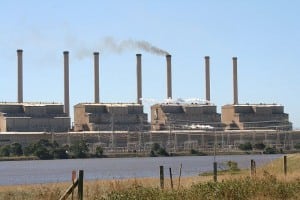
A three-judge panel of the U.S. Court of Appeals for the District of Columbia last week upheld the Environmental Protection Agency’s (EPA’s) primary National Ambient Air Quality Standards (NAAQS) for fine particulate matter (PM2.5), dispensing to the agency its third major legal victory on air pollution in a month. The EPA in December 2012 issued […]
-
Coal
State Officials to EPA: Allow Energy Efficiency for Compliance with Existing Power Plant Carbon Rule
The Environmental Protection Agency (EPA) should allow states to use energy efficiency programs as a way to comply with its forthcoming rule that will regulate carbon dioxide emissions from existing power plants, state energy officials, regulatory utility commissioners, and clean air agencies from more than 45 U.S. states urged the agency on Thursday. In a […]
-
 Legal & Regulatory
Coal and Nuclear Nearly Invisible at Platts Global Power Markets
Gas, wind, and solar are it for any new generation in North America for the next five to 10 years (with a few one-offs), speakers at this year’s Platts Global Power Markets conference agreed. The annual event for those involved in power project development, financing, and litigation was held in Las Vegas Apr. 7 to […]
-
 Coal
CoalEPA Breaches Legal Commitment to Issue Final 316(b) Cooling Water Rule
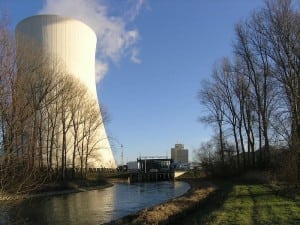
The Environmental Protection Agency (EPA) failed to issue a final rule governing power plant cooling water by April 17 as agreed with environmental groups. In court papers, the agency instead stated its intention to complete the rulemaking by May 16, 2014. The agency secured more time under a modified settlement agreement with a coalition of […]
-
 Renewables
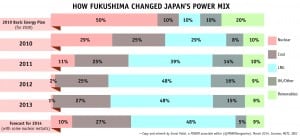
Japan’s Cabinet Formally Drops Zero-Nuclear Ambitions, Adopts New Basic Energy Plan
In a stark departure from the zero-nuclear future proposed by a previous administration, the cabinet of Japan’s Prime Minister Shinzo Abe Friday endorsed restarting the country’s idled nuclear reactors as it develops more renewables. The cabinet on Friday officially adopted the first Basic Energy Plan since the Fukushima disaster, a 78-page document (in Japanese) that […]
-
 Legal & Regulatory
Industry Leaders, Experts Testify on How to Keep the Lights On
Ten witnesses from federal and state regulatory agencies, a public power entity, environmental groups, and power companies today outlined a number of threats to the bulk power system’s reliability in a Senate hearing to assess whether enough was being done to keep the lights on. General measures to address day-to-day issues affecting reliability—such as tree […]
-
 Coal
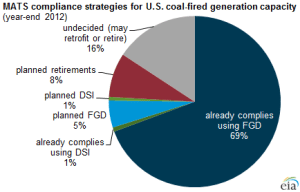
CoalEIA: 70% of U.S. Coal Fleet Is Ready for MATS
At least 70% of U.S. coal-fired generating capacity has already installed environmental control equipment to comply with the Mercury and Air Toxics (MATS) Standards, the Energy Information Agency (EIA) reports. The Environmental Protection Agency’s rule will require coal generators of more than 25 MW to incorporate the maximum achievable control technologies (MACT) to control the […]
-
Coal
How Competitive Are You?
I spent the week before this issue went to press at IHS Energy’s CERAWeek in Houston, listening and talking to many of the attendees representing 55 countries during the annual event that examines strategic
-
 Renewables
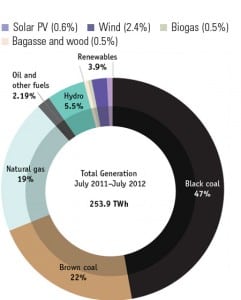
Australia’s Carbon Policy Predicament
On the energy front, Australia seemingly has it all. It is endowed with significant reserves of coal, natural gas, uranium, and thorium—as well as resources that excel by world standards for wind, solar