
Environmental
-
 Coal
CoalAEP Seeks Guarantees to Ensure Economic Viability of Ohio Fleet
American Electric Power’s (AEP’s) Ohio unit has asked the state’s Public Utilities Commission for permission to essentially charge customers for costs to operate nine unregulated coal-fired units, a move the company says will address market volatility and ensure the economic viability of Ohio’s generation. AEP Ohio on Oct. 3 proposed an “expanded” power purchase agreement […]
-
 Legal & Regulatory
World’s First Post-Combustion CCS Coal Unit Online in Canada
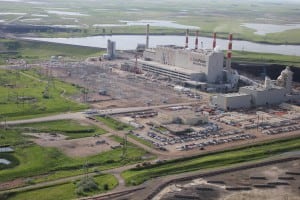
The first full-scale commercial post-combustion carbon capture and sequestration (CCS) project at an operating coal-fired power plant is now online in Estevan, Saskatchewan, roughly 10 miles north of the U.S. border. The heart of the $1.4 billion project at Boundary Dam Power Station is the rebuilt 110-MW Unit 3, originally commissioned in 1970. The project, […]
-
 Gas
GasNERC’s Polar Vortex Review Bares Natural Gas Dependency, Equipment Vulnerabilities
Despite record low temperatures and widespread generation outages during the polar vortex, bulk power system reliability was maintained, says the North American Electric Reliability Corp. (NERC) in a newly released analysis of the extreme cold weather event that engulfed most of the nation this January. The Jan. 6–7, 2014, weather condition that resulted in temperatures […]
-
 Infographics
THE BIG PICTURE [INFOGRAPHIC]: A Generation Freeze
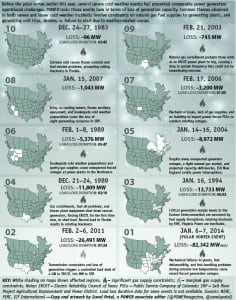
Before the polar vortex earlier this year, several severe cold weather events had presented comparable power generation operational challenges. POWER ranks those events here in terms of loss of generation capacity. Common themes observed in both severe and lesser cold weather incidents involve constraints on natural gas fuel supplies to generating plants, and generating unit […]
-
 Legal & Regulatory
A U.S. Power Industry Regulatory Update
The U.S. power sector has seen a number of developments on the regulatory front in recent months. Here’s where major federal rules stand today. (For a more dynamic and graphic version of this article, see http://powermag.com/long-form-stories/bw-power/ .) GHG Rules New Power Plants. The Environmental Protection Agency (EPA) in September 2013 revised a 2012 proposal to […]
-
 Coal
CoalTrianel Coal Power Plant Lünen, North Rhine-Westphalia, Germany
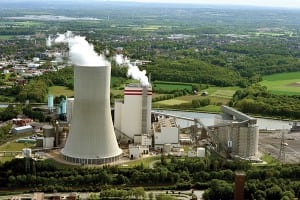
Germany’s energy transition— Energiewende —has made a lot of headlines. Whether you agree with the country’s energy policy or not, there is no denying that it has spurred the growth of renewables. Even
-
 O&M
O&MNon-Carbon Reagent Injection for MATS Compliance
The upcoming implementation of the Environmental Protection Agency’s (EPA’s) Mercury and Air Toxics Standards (MATS) is putting pressure on coal-fired power plants to develop and implement compliance
-
 Hydro
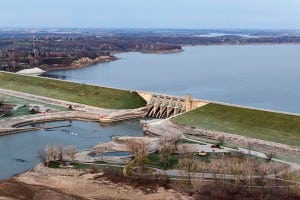
HydroA New Day for North American Hydropower?
Can hydropower get some love? Even fans of renewable energy can be forgiven for having forgotten about a resource that—up to now—has produced more electricity than wind, solar, biomass, and all other
-
 Coal
CoalPoland Mulls Energy Future
Resource-rich Poland’s push to prioritize coal as its main energy source and to cultivate a nuclear power program to boost energy security at the expense of climate objectives has provoked its portrayal
-
Commentary
Collaborating to Build a Cleaner Energy Infrastructure
Kelly Speakes-Backman Every day there is increasing evidence that we need to accelerate our nation’s transition to a cleaner energy infrastructure. The American Climate Prospectus released by the Risky
-
 Coal
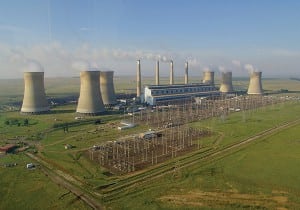
CoalCamden Power Station, Mpumalanga Province, South Africa
Eskom, South Africa’s largest utility, was established in 1923 as the Electricity Supply Commission and was converted into a public company, wholly owned by the government, in July 2002. Eskom produces about
-
 Renewables
New Carbon Targets, Other Measures Proclaimed at UN Climate Summit
Several countries and companies at the United Nations (UN) Climate Summit 2014 in New York City pledged action to address climate change by slashing carbon emissions, mobilizing funding, or putting a price on carbon. The one-day event on Tuesday was designed to raise political momentum and spur transformative action ahead of COP 21, the December […]
-
 Coal
CoalCoal Ash Continues to Challenge Duke Energy
On Sept. 23, Duke Energy told the Public Service Commission of South Carolina that it intends to excavate a portion of coal ash at the W.S. Lee Steam Station located in Anderson County. The company has been dealing with a coal ash release from its Dan River Steam Station that occurred on Feb. 2, and […]
-
 Legal & Regulatory
EPA: Malfunctions Will No Longer Shield Plants from Emissions Penalties
Affirmative defense provisions can no longer insulate generators from monetary penalties for Clean Air Act violations that result from facility startup, shutdown, and equipment malfunction, the Environmental Protection Agency (EPA) has proposed. In a supplemental notice of proposed rulemaking (SNPR) published on Sept. 17 in the Federal Register, the agency proposes to revise its February […]
-
 Legal & Regulatory
Seven Coal-Fired Units to Be Retired as Result of Settlement
Consumers Energy—Michigan’s largest utility—reached an agreement with the U.S. Environmental Protection Agency (EPA) and the U.S. Department of Justice that will result in more than $2 billion being spent on upgrades at its power plants and the closure of seven coal-fired units, according to the company. The settlement resolves claims that Consumers Energy violated the […]
-
 Legal & Regulatory
Congressional Watchdog Foresees Greater Coal Retirements, Fewer Retrofits Through 2025
Power companies will retire more coal-fired generating capacity and retrofit much fewer units with environmental controls than estimated just two years ago, the Government Accountability Office (GAO) reveals in a new report. The report released on Tuesday finds that in response to shifting market conditions and four Environmental Protection Agency (EPA) rules (not including the […]
-
 Legal & Regulatory
EPA Extends Clean Power Plan Public Comment Period
The Environmental Protection Agency (EPA) has extended the public comment period for its proposed rule to limit carbon dioxide emissions from existing power plants by 45 days. Janet McCabe, acting assistant administrator for the EPA’s Office of Air and Radiation, today told reporters in a press call that the EPA’s comment period for its Clean […]
-
 Legal & Regulatory
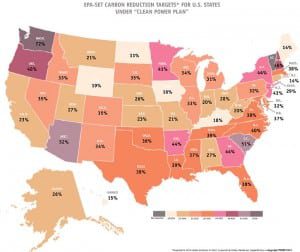
Six States Sound Off on EPA’s Clean Power Rule
Regulators from six states shared starkly different views on the Environmental Protection Agency’s (EPA’s) proposed carbon rules for existing power plants at a House hearing on Tuesday. Some state-level officials said the EPA’s overall emission targets and suggested means to achieve them are based on unworkable and unrealistic assumptions about how state and regional power […]
-
 Legal & Regulatory
Fracking Fissures: Will Politics Impede Production?
They call themselves “Fractivists.” Environmental and community activists fearful of relatively new natural gas and oil drilling technologies that have transformed the U.S. energy economy have launched a high-profile, highly hyped campaign to shut down new natural gas production. But their prospects of success look dodgy. Ground Zero in the debate over fracking—shorthand for the […]
-
 Legal & Regulatory
EPA Approves Nation’s First Underground Injection Permits for Carbon Sequestration
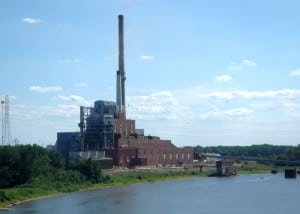
The Environmental Protection Agency (EPA) on Tuesday granted the nation’s first four Class VI underground injection permits for carbon sequestration to the federally backed FutureGen 2.0 carbon-capture-and-storage (CCS) project. The Department of Energy formally committed $1 billion to the $1.68 billion project being developed by the FutureGen Industrial Alliance, a coalition of coal producers, users, […]
-
 Legal & Regulatory
Stricter EPA Ozone Pollution Standards May Be Forthcoming
Revised national ambient air quality standards (NAAQS) for ozone that are expected from the Environmental Protection Agency (EPA) this December will likely be stricter. Agency staff from the Office of Air Quality Planning and Standards in a 597-page final policy assessment released on Aug. 29 recommend revising the standard to within a range of 60 […]
-
 Renewables
10 Energy Takeaways from the U.S.-Africa Summit
The Aug. 4–6 U.S.-Africa Leaders Summit shed light on the power plights faced by sub-Saharan African countries, but it also highlighted their massive power potential and the array of solutions under consideration to resolve Africa’s energy crisis. Here are a number of key insights gleaned from discussions at the summit—the first a U.S. president has […]
-
 Coal
CoalCommercial-Scale Carbon Capture Project Starts Construction in Texas
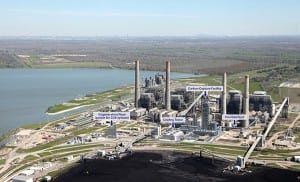
Construction on a $1 billion commercial-scale carbon capture and storage (CCS) system—one of the world’s largest to use post-combustion capture technology—began this July at NRG Energy’s W.A. Parish Unit 8 near Houston. The facility is expected to be operational by the end of 2016. Formerly known as the NRG Energy Parish CCS Project, it is […]
-
 Environmental
EPA’s New 316(b) Rule and the Opportunity of Social Costs
Though “social costs” may be a new term of art in the power industry, it is about to become a critical one. Here’s what you need to understand about the concept in general and how it applies to the recently finalized cooling water intake rule. The U.S. Environmental Protection Agency’s (EPA’s) recently released rule regarding […]
-
 Legal & Regulatory
Nation’s First Comprehensive Coal Ash Bill Awaits Enactment in North Carolina
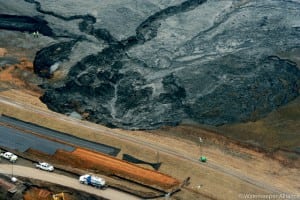
North Carolina’s Legislature last week became the first in the nation to approve a sweeping coal ash bill, but the state’s governor isn’t fully endorsing it. Both the House and the Senate on Aug. 20 approved the Coal Ash Management Act (S.B. 729), a measure that became an urgent legislative priority after Duke Energy’s February […]
-
 Legal & Regulatory
Power Plant Pollution Control Is Focus of Conference
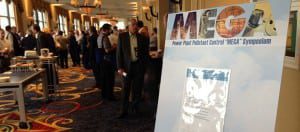
Strategies for compliance with the Mercury and Air Toxics Standards led the list of topics covered during the Power Plant Pollutant Control “MEGA” Symposium held Aug. 19–21, in Baltimore, Md., but carbon dioxide (CO2) control solutions and sessions dealing with water problems weren’t far behind. The conference—hosted by the U.S. Department of Energy, the Electric […]
-
 Nuclear
NRC Issues Final Rule to Replace Waste Confidence Decision, Ends Licensing Suspension
The Nuclear Regulatory Commission (NRC) today issued a final rule on continued spent nuclear fuel storage and terminated a two-year suspension of final licensing actions for nuclear power plants and renewals. The federal regulatory body’s new rule revises the Waste Confidence Decision—which the D.C. Circuit vacated in June 2012—and renames it the “Continued Storage of […]
-
 Coal
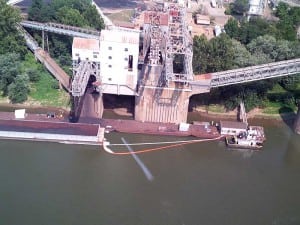
CoalUPDATED: Duke Energy Deals with New Spill in Ohio River
Duke Energy is scrambling to contain another major river spill—this time, of about 5,000 gallons of diesel. The company on Tuesday reported that the discharge of diesel oil #2 into the Ohio River inadvertently occurred at about 11:15 p.m. during a routine transfer of fuel oil used for boiler ignition sources at the W.C. Beckjord […]
-
Legal & Regulatory
RWE Plans More Coal and Gas Plant Closures
Europe’s third-largest power provider last week revealed it may be forced to shut down more conventional power plants compromising a total of 1 GW and terminate 470 MW in supply contracts if market conditions in Germany do not improve. RWE has blamed “political intervention” for “making [its] business challenging”—and specifically, the subsidized expansion of renewables […]
-
Coal
Is the U.S. Coal Fleet “Under Threat?”
The nation’s coal fleet is under threat, alleged Dr. Larry S. Monroe, chief environmental officer and senior vice president for research and environmental affairs with Southern Co. during the keynote plenary session at the Power Plant Pollutant Control “MEGA” Symposium on Aug. 19 in Baltimore, Md. Monroe was part of a four-member panel, which included […]