Environmental
-
 Coal
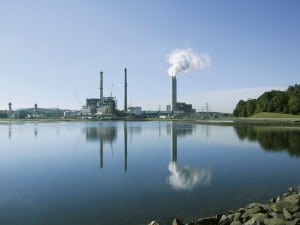
CoalDuke Announces Plan to Retire Asheville Coal Plant, Replace with CCPP
Duke Energy announced on May 19 that it will construct a new 650-MW natural gas–fired combined cycle power plant (CCPP) and retire its 375-MW Asheville coal power plant by early 2020. The plan also includes the addition of solar generation at the site as well as construction of a new substation and 40-mile transmission line […]
-
 Legal & Regulatory
Experts: More Nuclear Power Is Needed
“You can’t take a clean source of energy off the table.” That was the conclusion that a panel of four experts came to as they discussed the role that nuclear power should play in the battle to fight climate change. The panelists met on May 14 as part of the 62nd Annual Industry Conference and […]
-
 Environmental
NARUC Promotes State Coordination for Clean Power Plan Compliance
The National Association of Regulatory Utility Commissioners (NARUC) and the Eastern Interconnection States Planning Council have released a resource guide to help states overcome institutional barriers and coordinate on Clean Power Plan compliance. The Multistate Coordination Resources for Clean Power Plan Compliance guide—which was funded by the Energy Department—includes a multi-state planning checklist, a legislative […]
-
 Coal
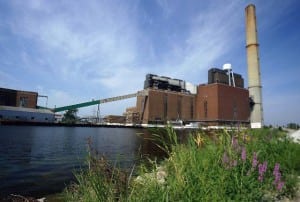
CoalConsumers Energy Shuttering a Third of Its Coal Fleet
Michigan utility Consumers Energy formally announced on May 11 that it was closing seven of its oldest coal-fired units, which together represent 32% of its coal capacity. The units, representing about 950 MW of total generation, will be shut down by April 2016. Consumers—the state’s largest utility—blamed impending federal air quality regulations in its 2015 […]
-
 Renewables
U.S. Senators: Biomass Should Not Be Compliance Method for Clean Power Plan
Biomass combustion should not be an approved compliance method under the Clean Power Plant because burning trees is not carbon neutral, both senators from Massachusetts told the Environmental Protection Agency (EPA) on Friday. In a letter to EPA Administrator Gina McCarthy, Sens. Ed Markey (D-Mass.) and Elizabeth Warren (D-Mass) said that treating bioenergy as having […]
-
 Nuclear
Fire in Main Transformer Forces Shutdown of Indian Point 3 Nuclear Plant
A fire in one of the Indian Point nuclear plant main electrical transformers resulted in the forced shutdown of Unit 3 at the facility on May 9. The fire started at 5:50 p.m. local time on Saturday and it was quickly extinguished by an automated sprinkler system, along with the action of trained onsite personnel. […]
-
 Legal & Regulatory
DGR Is Preferred Nuclear Waste Solution for Canada, Scary for U.S.
A Canadian joint review panel issued an environmental assessment report on May 6 for a deep geologic repository (DGR) for long-term management of low- and intermediate-level radioactive waste (L&ILW), concluding that the project is “not likely to cause significant adverse environmental effects.” Ontario Power Generation (OPG) proposed the DGR, intending to locate the facility at […]
-
 Legal & Regulatory
Legal Challenges to Clean Power Plan Begin to Take Shape
Attorneys general from three states—Oklahoma, Texas, and West Virginia—stepped forward on May 5 to present their objections to the Environmental Protection Agency’s (EPA’s) proposed Clean Power Plan. During testimony before the Senate Environmental and Public Works Subcommittee on Clean Air and Nuclear Safety, West Virginia Attorney General Patrick Morrisey presented three specific problems he sees […]
-
 Environmental
California Adopts Ambitious 40% by 2030 GHG Reduction Target
California will seek to reduce its greenhouse gases (GHG) by 40% below 1990 levels by 2030, a new executive action by Gov. Edmund Brown Jr. orders. Executive order B-30-15 issued on April 29 comes ahead of the United Nations Climate Change Conference in Paris later this year. California is one of 20 U.S. states (plus the District of […]
-
Commentary
Clean Air Act Section 111(d): The Case for Multi-State Compliance
This summer, the Environmental Protection Agency (EPA) will finalize its Clean Power Plan under Section 111(d) of the Clean Air Act, requiring existing fossil fuel–fired electric generating units (EGUs) to cut carbon dioxide emissions to 30% below 2005 levels by 2030. The rule will require states to meet specific reduction goals and also allow states […]
-
 Coal
CoalThe Carbon Capture and Storage R&D Frontier
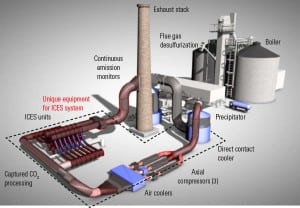
Given the costs and other concerns about currently available technologies for capturing and storing carbon dioxide from fossil-fueled power plants, interest in new technologies remains high. Here’s a look at some potentially promising approaches that are advancing the technology frontier. Frontiers represent the boundary between the known and the unknown. As researchers attempt to push […]
-
 Coal
CoalCCS Development, the Key to Coal Power’s Future, Is Slow
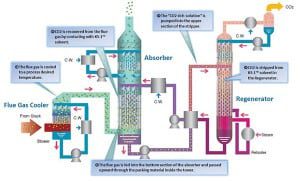
Advocates for the continued reliance on coal for baseload electricity cheered late last year when North America’s largest power-related carbon capture and sequestration (CCS) facility was commissioned. Since then, that pool of advocates is evaporating as prominent electricity industry decision-makers publicly distance themselves from coal and champion alternatives for a low- or no-carbon future. If […]
-
Legal & Regulatory
NERC: EPA’s Clean Power Rule Could Transform Coal Power Use
Implementation of the Environmental Protection Agency’s (EPA’s) proposed Clean Power Plan (CPP) could change the use of the U.S. coal-fired generating fleet from baseload to seasonal peaking—and pose grave implications for plant economics and operating feasibility, the North American Electric Reliability Corp. (NERC) suggests in new special assessment. The new report is the second […]
-
 Environmental
Clean Power Plan Achievable but Challenges Large, Say Experts
The Environmental Protection Agency’s (EPA’s) Clean Power Plan is feasible in its ultimate goals, but getting there will take a lot of work and some rethinking of how the targets are achieved, according to speakers at the Environmental Mega Session, Rebalancing the Electric System for Environmental Consideration, at the Electric Power Conference and Exhibition on […]
-
 Renewables
DOE Highlights Challenges to Energy Infrastructure in Quadrennial Energy Review
The U.S. energy infrastructure needs not just substantial investment for the future but also considerable rethinking about its role and functions in order to be positioned to deal with a rapidly changing energy landscape and evolving threats from cyber attack and climate change. That was the message from William F. Hederman, Jr., Department of Energy […]
-
 Legal & Regulatory
Maryland to Mandate Emergency NOx Reductions at Coal Plants
An emergency action proposed by Maryland regulators on Friday will require 14 coal-fired units in the state to minimize nitrogen oxide (NOx) emissions every day during the 2015 summer ozone season, starting as soon as May 1. The rule submitted on April 17 by the Maryland Department of the Environment (MDE) to the Joint Committee […]
-
 Coal
CoalPoll: Americans Are Not Too Worried About Climate Change, Still Favor Solar, Wind, and Nuclear
A Gallup poll completed last month found that only 32% of adults in the U.S. worry a “great deal” about global warming or climate change, while 45% worry “only a little” or “not at all.” The survey was taken via telephone interviews conducted during the first week of March using a random sample of 1,025 […]
-
Coal
White House Formally Submits Climate Pledge to Slash GHGs
The U.S. will seek to cut its greenhouse gas (GHG) emissions by 26% to 28% from 2005 levels by 2025, the White House said on March 31 in a target submitted to the United Nations Framework Convention on Climate Change (UNFCCC). The submission—otherwise referred to as an Intended Nationally Determined Contribution (INDC)—is a formal statement […]
-
Commentary
In a Word, Storage
What turns a trend from trendy to established? In the energy industry it can be any number of things, from a technology breakthrough, to a new market, to forces of nature. The shale gas boom in the U.S. is the most well-known example of a technology trend that has changed the economics for all power […]
-
 O&M
O&MKeeping Pollution Control Devices Online with Good Operating Practices
In order to comply with the Clean Air Act and subsequent regulations covering emissions, coal-fired utilities have installed multiple pollution control devices. Understanding key operating aspects of this equipment can help you avoid costly maintenance activities and forced shutdowns. Since the passage of the Clean Air Act in 1970, the regulatory environment for control of […]
-
 Legal & Regulatory
Proposed Ozone Rule May Be the Most Costly Regulation Ever
Estimates vary widely, but even the Environmental Protection Agency acknowledges that lowering the ozone standard will cost billions. How will it affect power companies? It could make approval of new projects much more difficult. Even in the annals of expensive environmental regulations and the hyperbole that often accompanies them, the numbers are eye-popping: $140 billion […]
-
 Legal & Regulatory
The State of U.S. Mercury Control in Response to MATS
As this month marks the compliance date for the Mercury and Air Toxics Standards (MATS), it’s a good time to take a step back from the many months of concern and consideration of options to see how coal-fired power plants are actually responding to the new rule. It’s also a good time to acknowledge that […]
-
 Coal
CoalIndustry in Turmoil: Coal Plants Shutting Down Around the World
Numerous announcements of plant closures during the past week are painting a grim picture for the future of the coal industry. On March 20, several news outlets reported that American Electric Power (AEP) had sent Worker Adjustment and Retraining Notification Act, or WARN, notices to workers at half a dozen coal-fired plants. Employees at the […]
-
 Environmental
IEA: For First Time in 40 Years, World Energy Sector GHG Emissions Stalled in 2014
Global emissions of carbon dioxide from the energy sector were unchanged from the preceding year—marking the first time in 40 years in which there was a halt or reduction in emissions of greenhouse gases that was not associated to an economic downturn, the International Energy Agency (IEA) said. The Paris-based autonomous organization said in a […]
-
Coal
Experts: EPA Clean Power Plan’s Legal Uncertainty May Have Lasting Impact
The Environmental Protection Agency’s (EPA’s) Clean Power Plan will certainly be challenged in court, but states and power companies must expend enormous resources developing and complying with state plans regardless of the outcome, witnesses testified on March 17 at a House hearing on the proposal’s legal and cost issues. The three-hour-long hearing at the House […]
-
 Coal
CoalTVA’s Draft Strategy Hints at Future Energy Efficiency Boosts, Coal Retirements
The Tennessee Valley Authority (TVA) may further reduce its coal-fired capacity and scrap its unfinished Bellefonte nuclear power plant, the utility’s long-awaited draft power generation strategy unveiled on March 9 shows. The federally owned corporation has been developing its 2015 Integrated Resource Plan (IRP), essentially a power planning roadmap to 2033, since fall 2013. The […]
-
 Coal
CoalFPL Seeks to Acquire and Phase Out Coal-Fired Power Plant
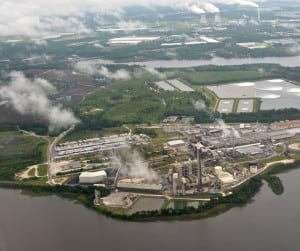
Florida Power and Light (FPL) wants to buy a 250-MW coal-fired facility in Florida to shut it down. The Juno Beach, Fla.–based company filed a petition with the Florida Public Service Commission (PSC) on Friday requesting approval to acquire the Cedar Bay Generating Plant for $520.5 million. FPL has had a long-term power purchase agreement […]
-
Legal & Regulatory
Illinois Mulls Low Carbon Portfolio Standard
A bipartisan group of Illinois legislators have introduced bills that propose a market-based solution to curb carbon emissions and ensure continued operation of the state’s nuclear power plants. The bills SB 1585 and HB 3293 introduced in the state Senate and House would enact the Illinois Low Carbon Portfolio Standard. That measure, like a renewable […]
-
 Legal & Regulatory
10 Industry Leaders Comment on the Future of Energy, Electricity, and the Grid
Here are selected thought-provoking (and even unexpected) comments made by presenters at the 10th annual MIT Energy Conference on Feb. 27 and 28 in Cambridge, Mass. Comments are summarized and paraphrased unless presented in quotes. For more on the event, see “Exelon: The Utility of the Future Views Change as Enabling, Not Disruptive” and the […]