
Commentary
-
Commentary
Regulating the Regulators: WVDEP Forced to Issue Permits to Itself
On November 8, 2010, the U.S. Court of Appeals for the Fourth Circuit issued its decision in West Virginia Highlands Conservancy, et al. v. Huffman. It’s an opinion that should be of great interest to government agencies and others who find themselves in a position of seeking to remediate water quality problems left by third parties.
-
Commentary
Four Obstacles Facing Coal Power
Republicans picked up more than enough seats during the mid-term elections to assume control of the House, but don’t expect any relief from the administration’s war on coal-fired power plants.
-
Commentary
Biomass Power Under Attack
Biomass energy has been an up-and-down industry for decades. As public awareness grows, it inevitably influences new tax legislation and environmental regulations. Two recent events have made the climate for development of this renewable resource even more volatile.
-
Commentary
Elner Shimfissle and Old Tom: In Praise of Electricity
Fannie Flagg’s fictional Aunt Elner Shimfissle reminds us of the power and the glory of electricity, a lesson we shall not forget.
-
Commentary
Regulating Smart Power: The Next Generation of Energy Regulation
The smart grid, a truly disruptive business force, will require a new regulatory paradigm and new approaches to the electric utility business model.
-
Commentary
Who Do They Think You Are?
The Scottish poet Robert Burns had it right. Using the power to see ourselves as we really are, and as others see us, is a key to leadership in business.
-
Commentary
Good Habit—Questionable Motive
Sometimes we do things for the wrong reason . . . that turns out to be exactly right.
-
Commentary
Ash Me No Questions
The Environmental Protection Agency is expected to select its approach for future regulations regarding coal ash storage later this year. One option would be to continue classifying the waste as nonhazardous and leave enforcement with the states. Another option—the worst case for the power industry—would be a determination that coal ash is a hazardous waste, which would result in increased federal oversight and lawsuits.
-
Commentary
U.S. Power Sector Must Embrace Low-Carbon Future
The U.S. electric utility sector is undergoing a transformation unparalleled in its history. Extraordinary challenges, driven by the urgency of climate change and other market forces, are compelling the industry to abandon its century-old business model of building large, fossil fuel plants to sell increasing amounts of electricity.
-
Commentary
Biomass: Short-Term Drawbacks, But Long-Term Climate Benefits
In recent months, two noteworthy letters have been sent to Congress by eminent scientists examining the merits—or demerits—of biofuels in the climate debate.
-
Commentary
The Nexus of Energy and Water
The age-old adage “water and electricity don’t mix” does not apply to 21st-century infrastructure planning. The two entities can no longer be viewed as separate commodities. The demands on both are intertwined, so solutions for meeting new and growing challenges associated with water scarcity and carbon regulations must also be integrated. Water is essential to […]
-
 Commentary
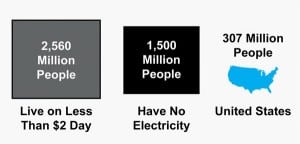
The Statistical Connection Between Electricity and Human Development
“Electricity use and gross national product [are] strongly correlated. The relationship…is so important that it should be considered in developing…energy and economic policies [which] seek to lower the real costs of electricity supply,” U.S. National Academy of Sciences, 1986
-
Commentary
How "Framing" Can Bamboozle Regulators
The plurality of regulatory proceedings originate with utilities seeking to improve their profitability. Profitability being part of the public interest, these submissions deserve our attention. But what if these filings are “framed” to divert our attention away from our public interest mission?
-
Commentary
Energy and Water: A Matter of Interdependence
Water resources represent essential inputs into energy production while, at the same time, energy availability is a key factor in effective water resource use.
-
Commentary
Why September Marks the New Year
While the New Year officially begins Jan. 1, in my mind, the year really begins the day after Labor Day. That’s when Washington again takes up its never-ending, seldom-succeeding task of pushing the policy boulder up the hill.
-
Commentary
The Hidden Agendas Behind Citizen Suits
The enforcement mechanisms of the environmental statutes in the 1960s were both cumbersome and ineffective.
-
Commentary
For Grid Expansion, Think “Subregionally”
When—not if—we pass climate legislation, we will put the U.S. on a path toward a low-carbon electric generation sector. As part of this shift, we’ll need more transmission, including lines to wind and solar power plants that are sometimes located far from today’s power grid. The question is: How do we plan for these new lines and how should we pay for them?
-
Commentary
Bill Gates and the Energy Research Dilemma
There is an idea that has been around for a long time, at least since the fall of 1973: All that stands between the U.S. and an abundant energy future is a lack of spending on research and development. It is as though the Knights Templar could find the Holy Grail, if only the Pope would commit just a few more resources to the hunt.
-
Commentary
Texas to EPA: Follow the Law
The EPA, determined to regulate U.S. carbon dioxide emissions under the Clean Air Act, found that the low limits set by the Act for any “regulated pollutant” led to, in the EPA’s words, “absurd” results. Undeterred, the EPA developed the “Tailoring Rule,” which reinterprets the Act to apply to only larger emissions sources. Texas eloquently rejected the EPA’s legal gymnastics.
-
Commentary
Nuclear Investment Means Jobs and Energy Security
A proven solution for immediate and long-term job creation came from President Barack Obama and his administration earlier this year: investment in U.S. nuclear energy. Bulldozers in Georgia are already on the move and making preparations for expansion of a nuclear plant that has achieved several approvals, and long-awaited jobs in the skilled labor sector could materialize there within months.
-
 Commentary
Kerry-Lieberman Trade in the Trivial
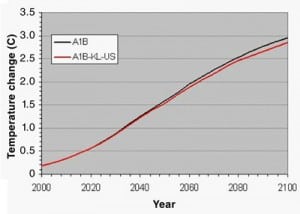
The recently unveiled Kerry-Lieberman global climate warming bill is an exercise in triviality. By century’s end, reducing U.S. greenhouse gas emissions by 83% will only result in global temperatures being one-fifth of one degree Fahrenheit less than they would otherwise be. That is a scientifically meaningless reduction.
-
Commentary
Cape Wind: Never Again
Cape Wind was a momentous clean energy victory, but if climate change advocates truly take the immense scale of the energy and climate challenge seriously, we must ensure that this is the last time that a new zero-carbon energy source faces such prolonged NIMBY opposition
-
Commentary
Econ Boffins: Scrap CO2 Emissions Reductions
A group of 14 international academics from a variety of fields, under the auspices of the London School of Economics and Politics, have produced a paper calling for a new approach to the failed Kyoto Protocol model for dealing with global warming, scrapping the notion of emissions reductions.
-
Commentary
WTE: Next-Generation Sustainable Energy
It is clear that energy use will expand in the future as our population and society’s standard of living increase. Meanwhile, the push toward a sustainable lifestyle requires that all resources be utilized efficiently and sparingly. The National Academy of Sciences has identified paradigm shifts from current processes to an ideal vision centered on renewable energy and an atom economy—defined as maximum incorporation of starting materials into final products. These seemingly disparate paths converge if one considers energy production from municipal solid waste (MSW).
-
 Commentary
The Politics and Perils of Pork
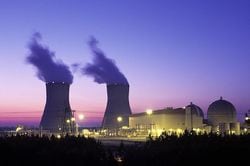
An "emergency war supplemental" appropriation bill that Congress was considering at this writing has implications for the power industry: The measure includes $9 billion each for new loan guarantees for nuclear power and renewable energy projects.
-
Commentary
Power Industry Flip-Flops on Support of Carbon Controls
I recently had the privilege of moderating the Power Industry Executive Roundtable, part of the annual ELECTRIC POWER Conference & Exhibition opening ceremonies. Usually, the power industry executives have predictable views of important issues, but not this year.
-
 Commentary
The Second Wave of the Smart Grid
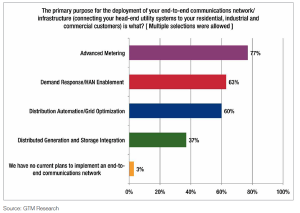
Now that U.S. utilities have taken federal stimulus funds and seamlessly built out two-way advanced metering infrastructure (AMI) connecting utility control centers and end users (ok, not completely, but let’s assume that the “stall-ulus” becomes a true stimulus), the question becomes, what’s next? At the moment, this new “comm layer” or “platform” has utilities planning in two directions: upstream and downstream from the smart meters.
-
Commentary
"Cap and Innovate" for Electric Utilities
The Kerry-Graham-Lieberman bill is a very important step forward in the climate debate. We need federal action on climate legislation now. And we need to get it right.
-
Commentary
New Breed of Hacker Targeting the Smart Grid
In recent months, U.S. utilities, manufacturers, and technology firms received $3.4 billion as part of the economic stimulus package. These funds have been allocated to help modernize the country’s electric power system and increase energy efficiency. However, as these "smart-grid" grants continue to be awarded, questions are being raised about how to safeguard smart meters and other critical infrastructure from cyber attacks.
-
Commentary
How Green Is Green Power?
The demand for "green" electricity — electricity produced from renewable sources like wind, solar, hydropower, geothermal, and biofuels — is at an all-time high in the U.S. Over the past decade, solar and wind capacity have increased dramatically due largely to mandatory renewable portfolio standards (RPS), which have now been adopted by 27 states.