
Commentary
-
 Commentary
Changing of the Guard
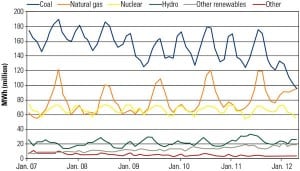
Preliminary data published by the Energy Information Administration shows that the amounts of power generated by coal and natural gas in April were virtually equal. Was this a one-time event or an indicator of a future trend?
-
Commentary
Stopping the EPA: The Long Game
The D.C. Court of Appeals recently declined to examine the science behind the EPA’s Endangerment Finding that is the foundation beneath the its greenhouse gas rules. The next step is to challenge the EPA’s science.
-
Commentary
Green Jobs Count: Fewer Than Before, Sillier Than Ever
The Bureau of Labor Statistics has released another report on green jobs. According to the BLS, an oil industry lobbyist could be considered as having a green job. The report’s definitions still lack common sense.
-
Commentary
A Call for Visionary Leadership in Energy
Along with the global economy, there are significant signs indicating how radically the energy business has changed in the past few years.
-
 Commentary
Putting Clean Tech on a Path to Subsidy Independence
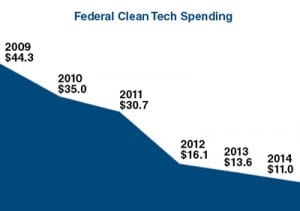
Is the clean energy technology sector doomed because federal spending is sharply dropping?
-
Commentary
Jobs, Jobs, Jobs, and Blather
We are hot and heavy into election season, and there is a lot of buzz about “jobs.” We hear about job-killing regulations (mostly from Republicans) and the wonders of green jobs (mostly from Democrats). All this, of course, is aimed at tying favored policy options to something the average voter can understand, the need for […]
-
Commentary
Incentives Provide Boon to Hydropower Industry
The U.S. hydropower industry has undergone a renaissance in recent years. One of the major drivers of the industry’s growth, the establishment of the production tax credit (PTC) for hydro, has seen strong policy support from our elected officials in Washington, D.C. More than any other federal policy, tax incentives, particularly the PTC, have sparked a level of growth in the industry not seen in nearly two decades.
-
Commentary
Climate and Energy Policies: Two Sides of the Same Coin?
In a 2006 statement, former UK Prime Minister Tony Blair said, “We must treat energy security and climate security as two sides of the same coin.” Are energy security and climate change best addressed by reducing fossil fuel combustion, as he suggested?
-
Commentary
The End Game
The Obama administration often says that there is room for coal in our future fuels mix. However, the administration’s actions lead me to believe President Obama has something much more profound in mind.
-
 Commentary
Climate Science From the Onion?
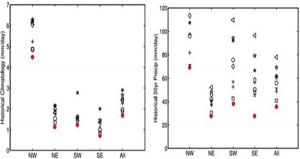
The already low quality of scientific publication has now reached rock bottom. The Onion recently reported on three scientific studies that put illustrate how far quality scientific inquiry has fallen.
-
Commentary
More Reasons to Question Whether Gas Is Cleaner Than Coal
Is natural gas as clean a fuel as we are led to believe? A recent study by a Cornell University professor concludes that leaks of natural gas into the atmosphere may make coal the better choice.
-
Commentary
Mergers: Are Promoters Ahead of Regulators?

Section 203 of the Federal Power Act requires certain mergers and acquisitions to be “consistent with the public interest.” Since its 1996 Merger Policy Statement, the Federal Energy Regulatory Commission has applied this standard by assessing a merger’s effect on competition, rates, and the effectiveness of regulation. Does its approach need updating?
-
Commentary
Evaluating CPV Warranties
Utility-scale solar generation projects require significant upfront expenditures on photovoltaic panels and other equipment. The success of such projects largely depends on whether the system performs as promised by the manufacturers. This puts a premium on properly evaluating and effectively negotiating equipment warranties.
-
Commentary
Workplace Drama: Listening Mistakes and Solutions
One of the most important communication skills for leaders and managers is listening. In your professional life, listening is at the heart of effective leadership, and in your personal life, listening is an act of love.
-
Commentary
Ensuring the Best Use of Federal Energy Subsidies
The U.S. uses a combination of direct expenditures, tax breaks, loan guarantees, and research funding to promote various energy goals. We could rely solely on the free market and avoid using federal subsidies, but we do not do that now and appear unlikely to do so in the future.
-
Commentary
Natural Gas: Secure Supply for Today and the Future
Ten years ago, I could not have written this column. The natural gas industry was different—limited domestic supply resulted in unstable prices. However, recent advancements in drilling technology have enabled the industry to discover, access, and produce abundant sources of natural gas in America. Because the industry has changed, the country’s energy future is now […]
-
Commentary
Watts Up? Who Killed Climate Change?
What killed global warming as the president’s number one priority?
-
Commentary
How Liberty Can Fuel Energy Production
Freedom, opportunity, prosperity, and a civil society have made America exceptional. But without energy—secure and affordable energy—many of our great accomplishments would not have been possible.
-
Commentary
The Insanity of It All
Moving into the election season, President Obama has again pointed to the number of green jobs supposedly created by his administration in a recent campaign advertisement, although the claims are not supported by available data. Now, other government authorities are using the same poor data as an excuse to increase spending.
-
Commentary
EPA Makes the Best Case for State Regulation
A lot of attention has focused recently on federal regulation of hydraulic fracturing through the Environmental Protection Agency. But EPA’s ineptitude in air regulation makes a case for state-by-state regulation of oil and gas drilling.
-
Commentary
Another Billionz Update: NOAA Discovers Inflation
Is a changing climate producing greater economic losses from weather events? Or could it be a simple matter of inflation?
-
Commentary
Project Leadership for Project Management
We always talk about project management but rarely discuss project leadership. There’s a difference.
-
Commentary
It Can Happen Here
When the Soviet Union’s Chernobyl nuclear power plant exploded in 1986, the response of the Western nuclear industry was, “It can’t happen here.” And then there was Fukushima Daiichi disaster in 2011. Was one disaster worse than the other?
-
Commentary
Has the Dust Settled?
As our seasons transition, so may the fire and deflagration hazards from coal and combustible dust that once were visible and now may be out of sight. Yet often, what is out of sight presents the greatest hazard and risk.
-
Commentary
Welcome to GAS POWER
Whatever your role in gas-fired power, there’s one constant these days: You probably aren’t bored.
-
Commentary
Top 12 Energy Issues for ’12
With the 2012 election year upon us, it promises to be an interesting time for energy politics and policy. Here are 12 (really 13 because of some creative headline writing) issues that will keep the sector hopping this year.
-
Commentary
Taking Energy Independence Seriously
At year end 2011, as Americans emptied their wallets at the gas pump and crude oil reached almost $100 a barrel, OPEC kingpin Saudi Arabia reported an $81.6 billion 2011 budget surplus.
-
Commentary
The Broken Window
The expectation of millions of "green jobs" has disappeared from public debate. Today, the debate is narrowly focused on "jobs" and selecting the best approach to developing permanent jobs, regardless of color. Some look to the government to create jobs through regulation or subsidy, and others trust companies operating under free market principles to create permanent jobs.
-
Commentary
Clean Air, Jobs, and Power Reliability
The electric power generation system is the backbone of our economy. Recently, however, sudden outages or rolling blackouts have increased.
-
Commentary
How Much Should Government Subsidize Energy Projects?
How much taxpayer money should be used to support renewable and clean energy projects? And is federal government getting a good deal for its money? In a time of fiscal distress, with the government facing a huge debt and deficit, policy experts (and the public) are increasingly taking a closer look at these important issues.