
Business
-
-
Coal
Energy R&D: The Missing Link to a Sustainable Energy Future
Q: What do you get when you gather roughly two dozen top researchers from academia, government, and industry to speak on interdisciplinary energy-related issues for a week?
A: A lot of informative but crowded slides, high-octane brain power, fact-based analysis of where we are and we’re headed globally, informed questions, and surprisingly practical answers. -
Legal & Regulatory
TREND: Coal Industry’s Future Faces Challenges
What role will coal play as the nation moves toward trying to reduce greenhouse gases? The picture is mixed, as these news stories from around the country demonstrate.
-
Legal & Regulatory
Supremes Back Cost Reviews on Cooling Water
The Supreme Court backs restrictions on “once-through” cooling for new plants, while giving a pass to existing plants.
-
 Legal & Regulatory
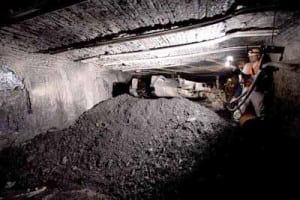
Coal Companies Peabody, CONSOL, and Arch Are Weathering the Economic Storm
Coal continues to demonstrate considerable financial muscle in the current economic downturn, despite anti-coal rhetoric and concerns about climate change.
-
Supply Chains
Uranium Prices: Up, Up, and Away?
Industry experts say raw uranium will face increased demand, reduced supply, and higher prices. Will the market bear out those predictions?
-
 Legal & Regulatory
Will Plug-in Hybrids Cause Blackouts?
Could demand from plug-in hybrid cars crash the grid? A DOE national lab addresses the issue.
-
Business
Of Prosperity and Pollution (supplement to Powering the People: India’s Capacity Expansion Plans)
Because India has large domestic coal resources (and virtually no other fuel sources); a strong incentive to deploy cheaper, well-proven generation technology; and needs to rapidly increase the availability of electricity to its citizens, the country will likely continue to rely on coal-based power in the long run.
-
 Legal & Regulatory
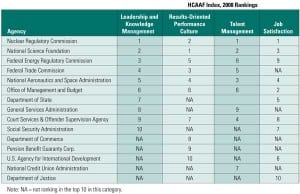
The Best and Worst of U.S. Government Employers
Working for Uncle Sam can be worthwhile or a life-sapping grind, depending on which agency employs you, according to a new survey by the U.S. Office of Personnel Management. Guess which agency ranked best. (Hint: It’s related to power.)
-
 Legal & Regulatory
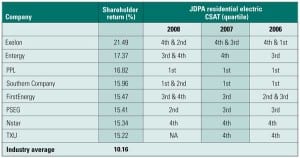
Utility Customer Satisfaction: A Faith-Based Initiative?
Does customer satisfaction play a meaningful role in guiding utility operations? Many utilities think it does, as do many regulators. The market apparently doesn’t. Data suggest that the jury is out on the question, and the intuitive answer may not match the empirical evidence.
-
-
 Coal
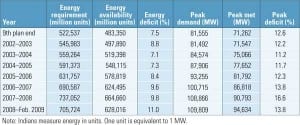
CoalPowering the People: India’s Capacity Expansion Plans
India has become a global business power even though hundreds of millions of its citizens still live in poverty. To sustain economic growth and lift its people out of poverty, India needs more — and more reliable — power. Details of government plans for achieving those goals demonstrate that pragmatism may be in shorter supply than ambition and political will.
-
Hydro
Renewable Project Finance Options: ITC, PTC, or Cash Grant?
Dozens of institutional investors in U.S. renewable energy projects pulled out of the market when the nation’s liquidity reserves dried up late last year. Some left the renewable market sector in search of more lucrative investment opportunities. Others found themselves unable to take advantage of the attractive tax credits because they themselves lacked profits against which to use the credits. The American Recovery and Reinvestment Act of 2009, approved February 13, changed the investor ground rules — again.
-
 Business
Fabulous Wealth and Fabulous Poverty
Mark Twain summed it up best when he described India more than a century ago as a place of “fabulous wealth and fabulous poverty.” Today, for all its surging economic growth, 300 million Indians still live below the poverty line.
-
Business
The Foreign Investment Factor (supplement to Powering the People: India’s Capacity Expansion Plans)
Recognizing that the long-term sunk cost, long project planning and construction timeframe, and high-risk portfolio make it difficult for private investors to raise funds whose maturity matches project completion dates, the Indian government has since 1991 allowed 100% foreign direct investment in the power sector.
-
Legal & Regulatory
Nuclear Loan Guarantees Have Failed
Nuclear loan guarantees in the 2005 Energy Policy Act have proven to be a failure: not just too little, but far too late.
-
HR
Let’s Trash Employee Performance Reviews
UCLA management guru Sam Culbert calls annual employee performance reviews “bogus” and not conducive to good company management. Get rid of them, he says.
-
Supply Chains
The Supply Chain and the Carbon Footprint
Few companies consider carbon in their supply chain decisions, says an Accenture study. Should purchasers require carbon reductions from suppliers as part of their business model?
-
Legal & Regulatory
Energy Earmarks in Spending Bill Hit $98M
North Dakota garnered most of the Department of Energy’s earmarks in March’s omnibus appropriations bill.
-
Legal & Regulatory
Regulators Face Worst of Times
It’s not easy being a regulator as the nation faces several daunting energy challenges—integrating renewables, carbon constraints, reliability, and security into an elderly grid that is barely able to keep up with its current mission of moving power from generator to load.
-
 Smart Grid
Is "Smart Grid" in the Eye of the Beholder?
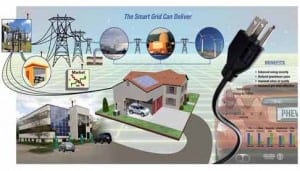
Congress looks at what “smart grid” means and comes up with mixed definitions. The one thing everyone agrees on: The smart grid is going to be expensive.
-
Commentary
The Communications Failures Lessons of Three Mile Island
The most lasting effect the Three Mile Island nuclear accident had on me was what it taught me about crisis communications—lessons that served me well over the 25-plus years that followed and especially after the September 11 terrorist attack on the United States.
-
 Business
2009 Electric Power Conference Preview
ELECTRIC POWER, the world’s most comprehensive conference covering power generation, will be presented at the Donald E. Stephens Convention Center in Chicago May 12 through May 14.
-
 Distributed Energy
In Search of Perfect Power
What do you do when your research institution is losing roughly half a million dollars annually as a result of multiple electricity outages — and electricity demand keeps rising? If you’re the Illinois Institute of Technology, you turn the challenge into a campuswide learning experience by teaming with the Galvin Electricity Initiative and other experts to design and construct a prototype Perfect Power System (PPS). Even during its implementation, the PPS promises to provide more reliable and sustainable electricity to the university at a lower cost than it had been paying.
-
-
Business
ELECTRIC POWER 2009 Exhibitor Preview
This year’s ELECTRIC POWER Exhibition will feature the latest technologies and services from approximately 500 companies. Get a preview of some of the exhibitor offerings here. For the entire offerings, you’ll have to visit the show floor in Chicago this May. (You’ll find all the event information here.)
-
HR
Flu Pandemic Could Cause Blackouts
No utility can fully prepare for power outages caused by severe weather, but there are things that power generators could do to prevent severe disruptions to power supplies that could easily result from a flu pandemic.
-
 Legal & Regulatory
SCR Coming to Diesel Vehicles
Power plant managers are familiar with selective catalytic reduction (SCR), a technology to reduce emissions of nitrogen oxides from fossil-fueled generating plants. Starting in 2010, SCR technology, using a urea reagent, will also be required on new diesel-powered vehicles in utility fleets, ranging from light-duty pickups to 18-wheelers.
-
HR
Trend: Power Industry Layoffs
Layoffs in the wake of the economic crash dive have begun to hit the power business. Here are some links to announcements related to layoffs that directly affect the people who make, distribute, and buy electricity:
-
Finance
Utilities Survive Credit Woes, So Far
So far, U.S. electricity generators have managed to survive the current credit slump and financial collapse, but their viability could suffer if the economy continues to deteriorate and credit markets remain tight.