
Business
-
Legal & Regulatory
TREND: Fire Safety Again Tops Nuclear Agenda
The U.S. Nuclear Regulatory Commission puts fire at the top of its safety concerns, calculating that fire constitutes half of all reactor safety risks, and lately fire safety has again become a major industry issue. For example . . .
-
Business
POWER Digest (June 2010)
AES Secures PPA with Electricity Vietnam for 1,200-MW Coal Plant. AES Corp. subsidiary AES VCM Mong Duong Power Co. Ltd. in April signed a power purchase agreement (PPA) with state power company Electricity Vietnam (EVN) for Mong Duong II, a proposed 1,200-MW coal-fired power plant. In support of this agreement, AES VCM has also entered […]
-
 Business
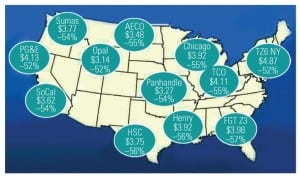
KEMA Conference Report: Competition Strengthens as Wholesale Power Prices Fall
Since the collapse of Enron and the wholesale power markets, the vitality of competition in retail markets for electricity has waned in most regions of the U.S., with the exception of Texas. At KEMA’s 21st annual Executive Forum in late March, 300 attendees converged on Dallas to discuss and debate the dynamics and changes now facing residential and commercial customers in most regions of the U.S. and Canada. Founded in 1927, KEMA is a global provider of business and technical consulting, operational support, measurement and inspection, and testing and certification for the energy and utility industry. A summary of the many presentations follows.
-
 Business
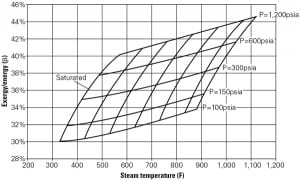
A Proposed Definition of CHP Efficiency
Many alternative approaches for determining a useful definition of combined heat and power fossil power plant efficiency have been proposed, although most fail to produce a universal definition. This follow-up report to our February story on plant efficiency shows how an exergy analysis supplies the elusive solution.
-
 Business
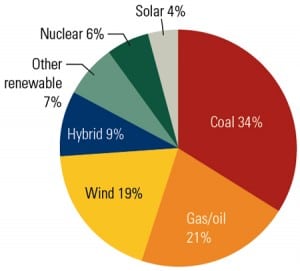
CERAWeek 2010: "Energy: Building a New Future"
For the past 26 years, Cambridge Energy Research Associates (CERA) has hosted an annual CERAWeek conference in Houston that is renowned for high-profile attendees from around the world. During the week of March 8, security was tight as oil ministers from the Middle East and CEOs from the largest oil and gas companies and electric utilities rolled into Houston to exchange ideas and forecasts. More than 1,200 delegates from 55 countries attended to hear more than 100 distinguished speakers discuss a business that seems to have renewed optimism about the future.
-
 Business
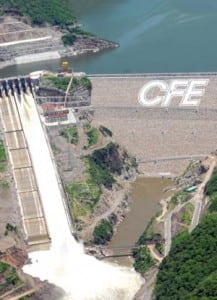
Power in Mexico: A Brief History of Mexico’s Power Sector
Mexico, one of the few countries in Latin America that has resisted the tide of liberalization, retains a monopolistic state player in the electricity market. In treading its own path by maintaining the government’s predominance in the sector, Mexico has an important question to answer: Is this path sustainable?
-
 Business
Power in Mexico: Mexico’s Generation Mix
Mexico enjoys considerable fuel diversity for powering its generating plants, and its goal is to become even more diversified.
-
 Hydro
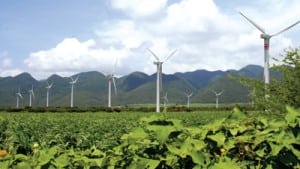
HydroPower in Mexico: Renewables Remain More Desired than Real
Mexico has already developed substantial large hydro and geothermal resources. However, without policy changes and government-sponsored financial incentives, unconventional renewable sources are taking the equivalent of baby steps.
-
 Business
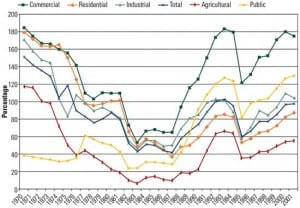
Power in Mexico: A Regulatory Framework with Little Flexibility
Mexico’s federal government retains almost total control over who builds and owns what electricity infrastructure. But if you know how to work within the strict constraints, it is possible to engage in profitable projects.
-
 Business
Power in Mexico: Three Keys to Success for the Service and Manufacturing Sector
NAFTA was both good and bad for Mexico. In both cases, it required a different approach to doing business, and the effects of that shift are still playing out.
-
Supply Chains
Trend: Natural Gas Is Hot, Hot, Hot
Despite the political kerfuffle over Obama administration loan guarantees for new nuclear generating plants, the ubiquitous hand-wringing about fossil fuels and climate change, and the hype about wind and solar renewable power generation, the new reality of natural gas may be a game-changer.
-
 Business
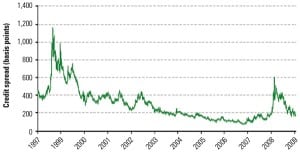
Power in Mexico: Risks and Rewards
State control of the electricity sector may mean fewer customers, but it also can mean clearer expectations.
-
HR
The Challenges of Employee Communications
Employee communications is one of the hardest management jobs. It puts the burden of truthfulness on both management and its employees.
-
HR
The Case for Transparency: Keep No Secrets from Employees
Do your employees really know what’s going on with your company? Don’t be worried that they can’t handle the truth. Here’s why it works to create a culture of corporate transparency—starting now.
-
Supply Chains
Kazakhstan and Uranium: It’s About Transparency
Kazakhstan is a leading supplier of uranium fuel to the former Soviet Union and has global ambitions. A transparent uranium market and honest leaders must come first.
-
Legal & Regulatory
Rethinking Revenue Assurance for Utilities
Should utilities take a new look at their approaches to maximizing profit margins?
-
HR
Knowledge Management Protects Against Mission-Critical Knowledge Loss
The cost of poor company knowledge management is high and getting higher. Managing knowledge in an era of compartmentalization and specialization is more difficult when organizations face layoffs, looming retirements, and the scarcity of trained, qualified workers.
-
Business
POWER Digest (April 2010)
Siemens Hands Over 870-MW Dutch Gas Plant. Siemens Energy on Feb. 12 handed over the 870-MW Sloecentrale combined-cycle power plant to the joint venture of Dutch company Delta Energy and Electricité de France. The natural gas – fired plant in the Dutch town of Vlissingen-Oost reportedly has an efficiency of 59% and uses a state-of-the-art […]
-
 Nuclear
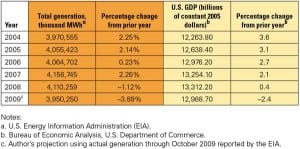
Benchmarking Nuclear Plant Staffing
The EUCG Nuclear Committee has collected benchmarking data of U.S. nuclear plant staffing for many years. A summary of this highly desirable data was gleaned from EUCG databases and is now, for the first time, made public through an exclusive agreement with POWER.
-
 O&M
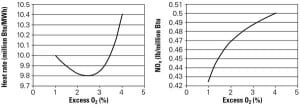
O&MA Primer on Optimizing Fleet Operations
The power industry needs a straightforward definition of "fleet optimization" and a game plan to achieve the promised economic gains of optimizing. This need has become more urgent because integrating nondispatchable renewable resources requires more complex optimization strategies. The bottom-up approach presented here applies well-understood optimization principles and techniques that will help power producers minimize their fleetwide cost of production, independent of the technologies used to generate electricity.
-
 Smart Grid
Smart Grid: On the Money
How much will a smart grid cost? It’s a question that has gained importance in light of massive cost overruns for one highly touted U.S. project.
-
 Finance
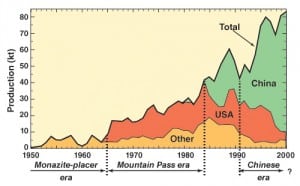
Rare Earth and Lithium Supplies Cloud Renewables
Ensuring an adequate supply of rare earth elements and minerals may be a hurdle in the renewable energy supply chain. The metals and their compounds are used in battery technologies, windmills, catalysts, and communications technologies. Add lithium (not a rare earth) to that mix, as Latin American politics could cloud the prospects for new lithium supplies.
-
Legal & Regulatory
Computing in the Clouds, Part II: It’s About Security
What do Gmail, YouTube, Twitter, and Facebook have in common? All are examples of cloud computing. All present serious data security challenges.
-
 Legal & Regulatory
Power Owners in Strong Position to Collect Liquidated Damages
Although law varies by jurisdiction, a recent case demonstrates arbitration panels’ willingness to uphold liquidated damages clauses in power plant engineering, procurement, and construction contracts.
-
HR
Protect Yourself from Toxic Colleagues
Just one person behaving badly at work can send company morale into a downward spiral. It’s time to call out those morale-and-productivity-busting personalities so managers can spot them and steer clear of the mess they make.
-
Finance
U.S. Wind Capacity Soars, Manufacturing Doesn’t
Wind generating capacity hit new highs in 2009, but that didn’t mean much for the wind power manufacturing sector, meaning fewer “green” jobs than the Obama administration hoped to see.
-
 Hydro
HydroPeru: The Potential to Become a Regional Energy Hub
Water and gas provide the energy for Peru’s power generation sector, and the country could generate considerably more, especially from hydro and wind. While the nation strives to extend electricity service to all its citizens, it’s also looking beyond its borders for potential future customers.
-
 Nuclear
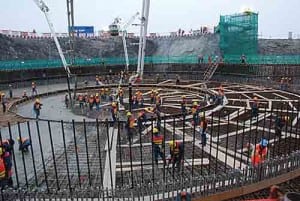
China Nuclear Plant Construction Gets Boost—With Technology Transfer
China’s nuclear power plant building spree got a little more frenzied this January, as the country kicked off its 21st project at Ningde 3.
-
 Nuclear
The Value of a Knowledge-Based Culture Grows in Lean Times
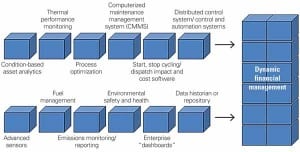
Given delays and cancellations of new generating capacity, pushing the existing power generation fleet is more important than ever. At ELECTRIC POWER 2009, multiple presentations explored the premise that an active knowledge management strategy — requiring a blend of digital and human elements unique to each power plant — will help you extract the most productivity from your assets.
-
Coal
Digital Plant Controls Provide an Essential Edge
It’s a digital world, and even aging power plants are experiencing the benefits of digital controls technologies. The following cover stories provide insight into the latest options and inspiration for your own plant controls projects.