
Business
-
 Gas
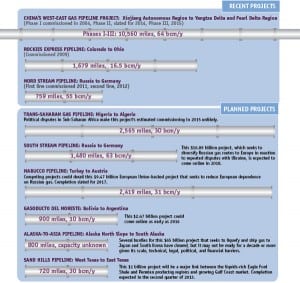
GasTHE BIG PICTURE: Stretching the Pipeline
Here are some of the longest pipelines recently built as well as noteworthy ones in the pipeline.
-
Legal & Regulatory
Align Generation Reliability and Fuel Supply Firmness
More and more electricity is generated by natural gas. This trend is likely to persist. Hydraulic fracturing technology is increasing domestic supplies and enabling natural gas prices to remain at historic lows.
-
 Coal
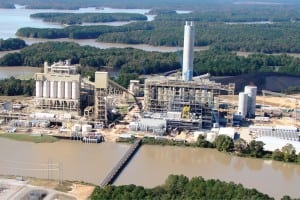
CoalTechno-Economic Considerations When Using Low-Grade Coal for Power Generation
The use of low-grade coal is becoming synonymous with circulating fluidized bed (CFB) power plants. Although CFB technology may often be a better choice than pulverized coal technology, that is not always the case. Owners and developers need to consider several technical and economic factors before making this decision.
-
 Gas
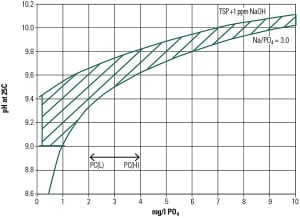
GasSelecting a Combined Cycle Water Chemistry Program
The lifeblood of the combined cycle plant is its water chemistry program. This is particularly true for plants designed for high pressures and temperatures as well as fast starts and cycling. Even though such plants are increasingly common, no universal chemistry program can be used for all of them.
-
Environmental
Chu’s Last Public Speech as Secretary of Energy
Dr. Steven Chu gave what was likely his last public speech as U.S. secretary of energy today on the last day of the ARPA-E Energy Innovation Summit. As usual for Chu presentations, it was a mix of data, vision, and humor. It fell to others to comment on the value and legacy of his service, especially to energy research and development.
-
Coal
ARPA-E Plays Matchmaker for Innovative Energy Research Projects
The Advanced Research Projects Agency-Energy (ARPA-E) may be the most important federal agency many in the power industry have never heard of. Whatever generation technology you are associated with, ARPA-E’s work will affect its future.
-
Environmental
Bipartisan Center Outlines 50 Policy Recommendations for More Secure U.S. Energy Future
Technological progress and policy interventions over the last decade have arguably enhanced U.S. energy security and put it in a stronger position to shape its own energy destiny, a new report from the Bipartisan Policy Center (BPC) argues. Among more than 50 energy policy recommendations outlined in the report to tackle significant challenges still faced by the nation’s energy sector are those calling for the establishment of a comprehensive national energy strategy.
-
Smart Grid
DOE Announces $20M in Funding to Enhance Energy Cybersecurity
The Department of Energy (DOE) last week announced the availability of up to $20 million for the development of tools and technologies to enhance cybersecurity of delivery control systems for electricity, oil, and gas in the U.S.
-
Coal
Obama Calls for Market-Based Climate Change Solution in SOTU
President Obama outlined a number of key energy-related measures in his State of the Union speech on Tuesday night, urging Congress to pursue legislation to mitigate climate change and calling for an expansion of clean energy and reduced red-tape for natural gas and oil permits.
-
Coal
Low Gas Prices Prompt Duke to Retire Coal Units Two Years Early
Citing low natural gas prices, Duke Energy announced on Feb. 1 that it would shutter its 1920s-built Buck and Riverbend stations two years before the coal-fired plants were slated for retirement. The company had chosen to retire the plants just before April 2015, which is the compliance deadline for recently enacted federal environmental rules.
-
Coal
Minn. Power Considers Fuel Switch, Coal Unit Retirement to Comply with Fed, State Mercury Rules
A newly announced resource strategy could require Duluth, Minn.–based Minnesota Power to convert its 110-MW Laskin Energy Center in Hoyt Lakes, Minn., to a natural gas peaking facility in 2015, install environmental upgrades at its 558-MW Clay Boswell Energy Center Unit 4 in Itasca County, and retire one of three coal-fired units at its 225-MW Taconite Harbor facility in Schroeder.
-
Business
White House Nominates Sally Jewell as Secretary of the Interior
Sally Jewell, who has been CEO of REI, a privately held outdoor recreation gear retail corporation organized as a consumers’ cooperative, has been nominated as the next secretary of the interior, the White House announced on Wednesday.
-
Business
“Dash to Gas” Foreshadows Problems Ahead, Says Report
The shift toward greater reliance on natural gas for power generation is not just a story of greater efficiency and lower emissions. There are also lurking risks to reliability unless the natural gas and electricity industries can plan carefully for the future.
-
Legal & Regulatory
Is FERC Cracking Down on Market Manipulators?
Last October, the Federal Energy Regulatory Commission (FERC) announced that it was seeking a record $470 million penalty against Barclays Bank for manipulating California energy markets for several years in the late 2000s. The amount includes a $435 million fine as well as disgorgement of $35 million in profits Barclays gained from allegedly illegal trading. In addition, FERC levied hefty fines against several individual Barclays traders.
-
Business
Getting Distributed Energy Resources Right
Rick Tempchin, executive director, Retail Energy Services for the Edison Electric Institute, talks about the impact of distributed energy resources on utilities and their customers.
-
Coal
Settlement Allows Mississippi Power to Request Higher Rates for Kemper Coal Plant
Mississippi regulators last week approved a settlement with Mississippi Power that will allow the Southern Co. subsidiary to seek higher customer rates for rising costs associated with its 582-MW Kemper integrated gasification combined cycle (IGCC) plant under construction in Kemper County. On the day following that ruling, the utility asked the state for permission to recover $172 million for the 2013 regulatory year.
-
Coal
MidAmerican Energy to Switch 674-MW of Coal Capacity to Nat. Gas, Other Fuels
A settlement agreement reached with environmental group the Sierra Club last week may mean that Iowa’s largest utility, MidAmerican Energy Co., will switch 674 MW of coal-fired capacity to natural gas or other fuels by April 2016.
-
Hydro
FERC Proposes Reforms to Diminish Barriers to Small Generator Interconnection
The Federal Energy Regulatory Commission (FERC) on Thursday proposed four reforms intended to reduce the time and cost to process transmission interconnection requests from generating facilities of 20 MW or smaller. The reforms would boost reliability by increasing energy supply and remove hurdles in the development of new renewable power sources, FERC said.
-
Business
Secretary of the Interior Ken Salazar to Step Down
Secretary of the Interior Ken Salazar is the latest key administration official who plans to step down after the beginning of President Barack Obama’s second term on Jan. 21.
-
Business
2012 Power Capacity Purchases Dominated by Merger and Acquisition Activity
More than 107 GW of operating capacity in the U.S. electric power market were bought and sold over 2012, mostly as a result of three large mergers or acquisitions, the Energy Information Administration (EIA) found in an analysis of power plant capacity purchases released on Wednesday.
-
Business
New Year Prompts Administrative, Congressional Shifts
The announced resignation of Environmental Protection Agency (EPA) Administrator Lisa Jackson may as soon as this week be followed by one from Energy Secretary Steven Chu. Last week, meanwhile, Senate Republicans announced new committee assignments.
-
Business
What the Gas Power Industry Sees for the Future
With gas supplies looking strong and a variety of factors exerting negative pressure on other generation resources, 2013 looks to be a solid year for gas-fired power.
-
Business
Michigan Community Rejoices over Proposed Combined Cycle Plant
Not everyone is thrilled to have a power plant go up in their neighborhood, but residents of a Michigan town in need of jobs and investment are celebrating theirs.
-
Business
Quarterly Status Report: Global Gas Power Projects
The fourth quarter of 2012 saw continued growth in gas power development, with at least 8 GW of new projects announced for the U.S. alone.
-
Business
Creativity Cuts Cost of Connecting with Utility Customers
When the Kissimmee Utility Authority needed to fire up its customer outreach, it was time to turn up the gas and get cooking.
-
Legal & Regulatory
Trend: The Nuclear Tortoise and the Natural Gas Hare
The pendulum has recently swung back against nuclear as gas-fired power has surged in response to low prices and abundant supplies. Can nuclear ever regain its edge?
-
HR
Outage Management with an Owner’s Engineer
Hiring an owner’s engineer may add some upfront expense to your O&M budget, but over the long term, it can reap big savings in successfully navigating planned and unplanned outages.
-
Legal & Regulatory
Coal Ash Recycling Stalls During Regulatory Struggle
As 2013 opens, the coal industry is waiting anxiously on a variety of proposals for regulating coal ash. A reclassification as hazardous waste could deal another blow to coal, but some industry observers suspect the worst is not yet to come.
-
Legal & Regulatory
Terror Threat to Grid Is Real, Says Suppressed Study
A 2007 study sponsored by the Department of Homeland Security confirmed some of the industry’s worst fears about the grid’s vulnerability to terrorist attack. That study has remained under wraps until recently–and its findings are even worse than you may suspect.
-
Legal & Regulatory
Avoiding Pitfalls in Combined Heat and Power
Combined heat and power offers many advantages for distributed generation. But leveraging them requires some careful planning and forethought.