
Business
-
Smart Grid
Industry-Backed Bipartisan Cybersecurity Bill Passes Senate Committee
The Senate Committee on Commerce, Science, and Transportation on Tuesday unanimously approved a bipartisan bill that bolsters efforts by the National Institute of Standards and Technology (NIST) to craft a cybersecurity framework.
-
 Smart Grid
Vehicle-to-Grid Aggregated Project Sells Electricity to the Grid
A technology developed by the University of Delaware (UD) and NRG Energy that provides a two-way interface between electric vehicles and the power grid earlier this year became an official paid resource on PJM Interconnection’s regional grid (Figure 4). One of the first of its kind, the project proves the so-called “vehicle-to-grid” (V2G) concept can sell electricity from electric vehicles.
-
Business
POWER Digest (August 2013)
UN Report on Global Renewable Energy Investment. The United Nations Environment Program (UNEP) released its report Global Trends in Renewable Energy Investment 2013 on June 11, finding that renewable energy investment at the global level was $244 billion in 2012. However, global investments in renewable energy fell 12% compared to 2011 due to dramatically lower […]
-
 Smart Grid
EPB Chattanooga Uses Smart Grid to Future-Proof Its Business Model
A municipal utility in the South may not be where you’d expect to find an exemplary smart grid implementation, but that’s just fine with EPB Chattanooga. Its leaders are raking in the kudos—including POWER’s 2013 Smart Grid Award—and their community is attracting new businesses in response to a fiber-optic-based system that has helped raise the profile of their city and bolster the sustainability of their utility.
-
Business
Challenges Facing Power Generators in ERCOT
Although nearly all energy experts agree that demand for electric energy in Texas will outstrip supply in the coming years, developers of new power generation facilities are facing significant headwinds. The cause of the problems is a unique mix of circumstances.
-
Environmental
Senate Confirms Gina McCarthy as EPA Administrator
The Senate last week confirmed Gina McCarthy as administrator of the Environmental Protection Agency (EPA) in a bipartisan vote of 59–40.
-
Smart Grid
New FERC Rule Creates New Opportunities for Energy Storage
A final rule issued last week by the Federal Energy Regulatory Commission (FERC) to foster competition and transparency in ancillary services markets creates new opportunities for energy storage technologies to help transmission customers self-supply their own Regulation and Frequency Response service requirements while opening up certain ancillary services markets to all generators selling at market-based rates.
-
Coal
A Dozen States File Suits for Documents Related to EPA’s “Sue and Settle” Tactic
Twelve attorneys general last week filed a lawsuit in federal court requesting for access to documents related to the Environmental Protection Agency’s (EPA’s) so-called "sue and settle" practice with advocacy groups.
-
Environmental
EPA’s McCarthy Moves Closer to Confirmation
Gina McCarthy moved closer to a Senate confirmation as Environmental Protection Agency (EPA) administrator after Sen. David Vitter (R-La.) confirmed he wouldn’t further block a long-delayed vote on her nomination.
-
Gas
EPA Rule Transparency, Natural Gas Pipeline Energy Bills Advance in House Committee
A bill approved by the House Committee on Energy and Commerce on Wednesday could prevent the Environmental Protection Agency (EPA) from finalizing new rules that cost more than $1 billion if the Energy Department determines they will hurt the economy.
-
Coal
Federal Courts Tackle Clean Air Act Liability, Cross-State Emissions
Last week, the U.S. Court of Appeals for the Seventh Circuit upheld an earlier district court decision that Clean Air Act liabilities do not transfer to new owners when a facility is sold, while the Third Circuit upheld an Environmental Protection Agency (EPA) rule to limit sulfur dioxide emissions from a Pennsylvania coal-fired power plant on request of New Jersey, a downwind state.
-
Environmental
Senators Introduce Bipartisan Nuclear Waste Administration Bill (Updated)
A bipartisan Senate bill introduced on June 27 seeks to break gridlock over a permanent nuclear waste repository by establishing a new nuclear waste administration and creating a consent-based process for siting nuclear waste facilities.
-
Business
Power Conservation to Preserve Reliability Urged in Ontario, N.Y., Calif.
Soaring power demand in New York, California, and Ontario over the past week forced grid authorities to institute conservation measures.
-
Legal & Regulatory
CBO Scopes Out Pros and Cons of a Carbon Tax
A recent report from the Congressional Budget Office confirms that a carbon tax would mean substantial revenues for the government. But the impacts would be many, varied—and unequal.
-
Legal & Regulatory
Turmoil, Confusion Continues at the National Labor Relations Board
The legal turmoil surrounding the National Labor Relations Board (NLRB) continues as a federal appeals court has struck down another pro-labor ruling by the board, while challenging its authority to act at all. At the same time, in a directly related matter, the membership of the board and whether it has a legal quorum continues, with Congress getting into the act.
-
Finance
Master Limited Partnerships: Useful Tool or Green Finance Gimmick?
A legal tax avoidance tool for small investors in the oil and gas industry is getting a lot of buzz among renewable energy financial gurus and advocates. But are “master limited partnerships” a path to new piles of money for green energy, or just a passing fancy? And should MLPs replace the current panoply of lucrative tax gimmicks available for renewables, or be available on top of such items as the production tax credit, investment tax credits, accelerated depreciation, and state and local renewable energy mandates?
-
Business
What Are (Our) Words Worth?
The wrong words at the wrong time can cost a lot of money. But creative uses for the right words can create value in unexpected places.
-
Legal & Regulatory
Management Views: Phil Sharp
MANAGING POWER talks to energy veteran and president of Resources for the Future Phil Sharp about the complexities of energy policy.
-
Legal & Regulatory
TREND: State Renewable Mandates Survive Attacks
Despite a broad-based assault across the country, state renewable portfolio standards have survived this round, with a few seeing expansion.
-
Business
Picking the Right Technology in an RPS Market
The complexities of operating under a broad renewable portfolio standard require careful analysis of the options when planning a new power plant. Here’s how one generator in California navigated the sea of conflicting priorities when it was time to upgrade.
-
Business
NERC Says Gas Availability Should Be Part of Reliability Assessments
Sounding the call for new perspective, the North American Electric Reliability Corp. says it’s past time to formally consider gas availability and gas supply constraints when assessing the reliability of the bulk power system.
-
Business
Natural Gas and Renewables Are Allies, Not Adversaries, Says Report
Though often cast as rivals for the same slice of the generation pie, gas and renewables, according to a new study of the ERCOT market, are natural allies for the long term.
-
 Solar
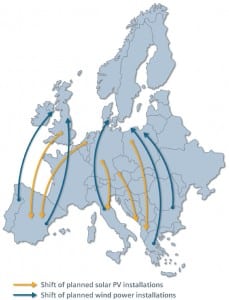
SolarPower Sector Laments Europe’s Uncertain Future Energy Policy
Energy policy in the European Union (EU) is in upheaval as concerns mount over the impact of energy costs on the competitiveness of the power industry.
-
Business
POWER Digest (July 2013)
Saudi Arabia and Egypt Sign $1.6 Billion Agreement to Link Electricity Grids. Under an agreement signed on June 1, Saudi Arabia’s majority state-owned utility, Saudi Electricity Co., and Egypt’s state power company, Egyptian Electric Holding Co., will share the cost of building a 3,000-MW undersea transmission cable to link their electricity grids. The $1.6 billion […]
-
 Smart Grid
Beacon Power Makes a Comeback
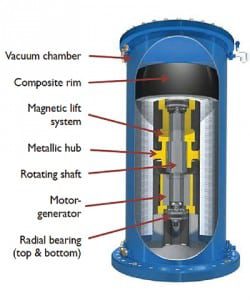
Beacon Power Corp. was founded in 1997 to develop flywheel-based energy storage technology. By 2007, the 100-kW/25-kWh Gen 4 flywheel system was commercialized and deployed in several projects. However, market conditions pushed the company into bankruptcy in late 2011. The company has since emerged, reinvigorated with new investment and a new name: Beacon Power LLC.
-
Coal
Your Guide to the White House Climate Action Plan
President Obama’s highly anticipated Climate Action Plan (CAP) released today outlines a wide variety of executive actions founded on three pillars: slashing U.S. carbon pollution through stringent rules for new and existing power plants while doubling renewables deployment and promoting fuel switching from coal to natural gas; preparing the U.S. for impacts of climate change; and leading international efforts to combat global climate change.
-
Nuclear
TVA Indefinitely Delays Bellefonte Nuclear Project
The Tennessee Valley Authority (TVA) last week indefinitely delayed new construction on its Bellefonte Nuclear Plant in Alabama, saying it had slashed the project’s budget by 64% and would reduce staff by 75%.
-
Coal
Energy and Water Spending Bill Proceeds with Deep Cuts for Renewables, ARPA-E
The fiscal year 2014 Energy and Water Appropriations Bill released by the U.S. House Appropriations Committee this week slashes $1.4 billion in funding to Department of Energy renewable energy and scientific research programs, including an 80% spending cut on the Advanced Research Projects Agency-Energy (ARPA-E) program.
-
Coal
House Energy Committee Advances Coal Ash Bill, Hears Moniz Testimony
The House Energy and Commerce Committee on Wednesday advanced a set of four bills that it said would "improve" environmental regulations and increase state authority, including legislation that would task states—not the Environmental Protection Agency (EPA)—with the responsibility to set up coal ash disposal rules.