
Articles By

-
Is There a Breath of Fresh Air in China Today?
Natural gas has significant potential to reduce air pollution worldwide, but getting there, especially in countries like China, may be more difficult than people think. -
How Much Gas Is There? (Take Two)
The “shale gale” blows on unabated, as new calculations for U.S. gas reserves point toward even greater resources than previously thought.
-
Coal
Oregon Utility Weighs Gas Power Options as Coal Exports Loom
It’s not all coffee and hydropower in the Northwest, as Oregon’s largest utility looks toward natural gas to help it navigate the shifting shoals of regulation and renewable mandates. -
Coal
Summer Power Burn: Are Generators Headed Back to Coal?
Last year’s stampede toward gas in the power sector is moderating for 2013, as higher gas prices cut into the economic incentives supporting coal-to-gas switching.
-
Wind
Gas Power Needs Wind Generation Too, Says Study
Gas-fired power is due to serve an important role in supporting intermittent renewable generation in the coming decades. But a new study suggests wind power may be able to return the favor—as a valuable hedging resource. -
Business
Disruptive Generation: Anxious Utilities Ponder the Threats
Cheap gas-fired power stands to upend more than the dispatch order if some new developments under way bear fruit, as utilities may soon be dealing with generation from home-based fuel cells. -
Nuclear
Disgruntled SONGS Employee “Leaks” Photo of Jury-Rig Repair to San Diego Media
The bad luck for Southern California Edison’s (SCE’s) crippled San Onofre Nuclear Generating Station (SONGS) continued this week. The local ABC affiliate in San Diego reported on April 30 that it had been given a photo of a makeshift repair to the water box in Unit 3 by a plant employee.
-
Gas
ISO-NE: Possible Summer Nat. Gas Constraints, but Supply Will Be Reliable
Natural gas pipeline maintenance this summer could affect natural gas supplies to some power plants in the six-state New England region, but forecasts suggest that summer electricity supplies will adequately meet consumer demand under normal weather conditions, ISO New England (ISO-NE) said on Monday.
-
Nuclear
NRC Cautions Operators to Watch for Moisture Degradation on Spent Nuclear Fuel Casks
An informational notice recently issued by the Nuclear Regulatory Commission (NRC) cautions nuclear power plant operators to look out for moisture degradation of structures and components used to store spent nuclear fuel in dry casks.
-
Gas
FERC’s Moeller to Address Natural Gas Issues at ELECTRIC POWER 2013
Federal Energy Regulatory Commission (FERC) hearings on issues related to natural gas and its use for electric power generation continue this month. The next hearing is set for May 16, two days after Commissioner Philip D. Moeller addresses the natural gas/electric power generation nexus in keynote remarks delivered to the 15th annual ELECTRIC POWER Conference in Chicago. POWER is a media affiliate of the conference.
-
Coal
Navajo Nation Signs New Navajo Station Lease
Navajo Nation President Ben Shelly signed a land lease extension on April 30 for the 2,250-MW Navajo Generating Station, but not before adding several amendments to the agreement. The early lease renewal with the Navajo Nation must be in place before plant owners could consider making future investment in expensive new air quality control equipment.
-
Nuclear
Decision to Close SONGS Nuclear Reactors Could Come by Late 2013
Edison International said that without a restart of Unit 2 at its San Onofre Nuclear Generating Station (SONGS), it could decide by the end of the year to retire both units at the California nuclear plant. The units with a combined generating capacity of 2,350 MW have been offline since early 2012, the result of unexpected erosion and tube leaks in their steam generators. Costs tied to the shutdown now total around $553 million, including $109 million spent on inspections and repairs and $444 million for replacement power.
-
Coal
Power Sector Is Critically Vulnerable to Drought, Hearing Panel Testifies
Drought is a serious vulnerability for the power sector, witnesses testified at a full committee hearing held last week in the Senate to assess the impacts of drought on the power and water sectors. Members of the panel invited by the Senate Committee on Energy and Natural Resources offered a number of possible solutions for federal agencies and power companies that could mitigate adverse effects from drought.
-
Nuclear
Senators Propose New Agency to Deal with Waste from Nuclear Power Plants
A bipartisan group of senators have introduced legislation that would effectively shift responsibility for the disposition of spent fuel from U.S. nuclear power plants from the Department of Energy (DOE) to a new agency created solely to deal with nuclear waste issues.
-
Nuclear
NRC Bars STP Units 3 & 4 COL on Foreign Control Claim
The Nuclear Regulatory Commission (NRC) ruled that a partnership between NRG Energy and Japan’s Toshiba Corp. to build two new ABWR reactors at the South Texas Project (STP) outside Bay City, Texas, through the holding company Nuclear Innovation North America (NINA) continues to be dominated by foreign control. Until NINA can come up with a different corporate ownership structure, the NRC said it could not approve the project’s combined construction and operation license (COL).
-
Nuclear
Dominion to Revert to ESBWR as Preferred Nuclear Reactor Technology for North Anna Unit 3
Dominion subsidiary Virginia Power may choose to use a GE-Hitachi Economic Simplified Boiling Water Reactor (ESBWR) instead of a Mitsubishi Nuclear Energy Services (MNES) Advanced Pressurized Water Reactor (APWR) for a third nuclear unit proposed at its North Anna site in Virginia, the company said in a Securities and Exchange Commission (SEC) filing on Friday.
-
Smart Grid
ComEd Says Smart Grid Efforts Reduced Power Interruptions
ComEd’s smart grid program finally has some good news to share. In a progress report to the Illinois Commerce Commission (ICC) this week, the utility said that 479 distribution automation (DA) devices installed in the first year of the program resulted in 82,000 fewer customer power interruptions in 2012.
-
 Coal
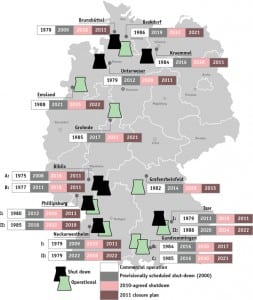
CoalGermany’s Energy Transition Experiment
Germany has chosen to transform its energy system within a few decades—an ambition that has evoked equal admiration and confusion. Has Europe’s largest economy embarked on a rational path to an energy future that will make it the bellwether for global acceptance of renewables, or will the complex array of current challenges encumber its grand transformation?
-
Legal & Regulatory
A Novel Managerial Challenge: Decommissioning Coal
The challenges of running a coal plant are many and varied. But putting one to bed for good can be just as big a job.
-
 Hydro
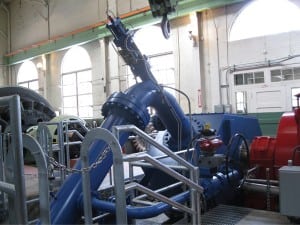
HydroSmall Hydro, Big Opportunity
Small-scale hydro generation stands to benefit from recent congressional action aimed at streamlining what historically has been a challenging federal approvals process. That action, along with technology innovations, could make it easier to develop hydro generating capacity in sources as diverse as navigable rivers, man-made conduits, and water distribution systems.
-
Legal & Regulatory
The CIP Merry-Go-Round: Say So Long to Version 4, Hello to Version 5?
With the ink barely dry on Version 4 of NERC’s critical infrastructure protection (CIP) standards, a new iteration is on the way, bringing with it some major changes in the way the standards will work.
-
 Nuclear
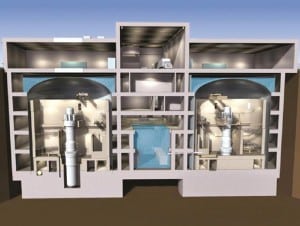
Are SMRs U.S. Nuclear Power’s Last, Best Hope?
Historic low prices for natural gas and slow demand recovery are the principal barriers to new nuclear power construction in the U.S. Small modular reactors (SMRs) may break through those barriers, but only if installed cost targets are met.
-
Legal & Regulatory
What Is Holding Back Offshore Wind?
The potential of offshore wind generation in the U.S. is being held back by a regulatory no-man’s-land.
-
News
Bait and Switch
The Boxer-Sanders “Climate Protection Act” and its sister bill, the “Sustainable Energy Act” are the latest, and perhaps the most onerous, in a series of legislative proposals that seek to tap the immense revenue stream promised by taxing carbon.
-
Business
Flavor of the Decade: What Energy Utilities Can Learn from Verizon
The experience of telecommunications giant Verizon shows why taglines that promise clear, relevant benefits to customers can be invaluable, as long as the company follows through.
-
 Business
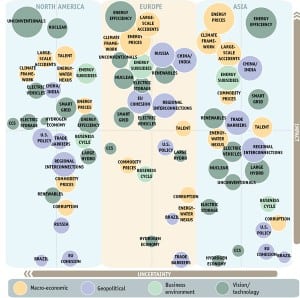
THE BIG PICTURE: Critical Energy Agendas
The global energy sector will need to invest half of current world gross domestic product over the next two decades in order to address a number of critical issues and expand and adapt the energy infrastructure, the London-based World Energy Council (WEC) says in its recently released World Energy Issues Monitor. Here are the most […]
-
Nuclear
mPower: It’s Now or Never
Christofer Mowry, president of Babcock & Wilcox mPower Inc. and CEO of Generation mPower LLC, a joint company of Babcock & Wilcox and Bechtel to design and build the mPower small modular reactor that won a competition for a Department of Energy cooperative funding agreement, discusses the machine and the market.
-
Commentary
Utility Mergers: Who Has a Vision?
Is bigger better for the energy business? Says a veteran energy lawyer, it depends more on why and how a utility choose to grow. Unfortunately, few regulators are thinking much about it.
-
 Coal
CoalIndia’s First Coal Mine–Integrated Supercritical Plant Synchronized
India’s Reliance Power in March synchronized the first of six 660-MW units of its Sasan Ultra Mega Power Plant (UMPP) in the state of Madhya Pradesh, readying it to supply power to 14 distribution companies across seven states. The plant (Figure 1) has been hailed as India’s first supercritical project to integrate a coal mine—an important achievement in a country that is battling chronic coal shortages. Though India has large coal reserves, domestic mining companies are struggling to keep up with demand needed to sustain its existing coal plants, which account for 55% of its generation.
-
Commentary
Partnering With the Right People
Finding the right people to work with is critical to success, but getting there is no accident.