
Articles By

-
News
EPA to Consider Regulating Coal Plant Carbon Emissions
The Environmental Protection Agency (EPA) on Tuesday agreed to reconsider a memorandum issued by the Bush administration’s EPA chief that directed agency officials not to consider carbon dioxide emissions when weighing applications for new coal power plants. The decision could portend the potential reversal of that Bush policy.
-
News
AEP, NV Energy, Consolidated Energy Postpone Fossil-Fueled Plants
The industry last week saw the postponements of several more fossil-fueled power plants. Subsidiaries of American Electric Power (AEP) reportedly delayed construction of two integrated gasification combined-cycle (IGCC) plants in West Virginia and in Ohio, NV Energy stalled plans for a 500-MW coal-fired facility in Nevada, and Consolidated Energy put off construction of a 109-MW pet coke power plant in Utah.
-
General
S.C. Republicans squabble over coal
By Kennedy Maize Here’s a delicious irony. In South Carolina, an iconic former Republican governor and the current Republican governor, who reportedly has presidential ambitions, are feuding over a coal-fired power plant proposed by the state government’s own electric utility. Most intriguing is that the former governor, oral surgeon Jim Edwards, 81, Ronald Reagan’s first […]
-
News
Senate Energy Committee Reviews Proposal for Federal Renewable Standard
The U.S. Senate Energy and Natural Resources Committee on Tuesday heard the testimony of five witnesses in its review of a draft federal renewable electricity standard that could require that 20% of the nation’s power be produced by renewable energy sources by 2021.
-
News
Sweden Abandons Nuclear Power Ban; Signals European Trend
Sweden has proposed to lift a nearly 30-year-old ban on nuclear power and annulled its nuclear phase-out. The country said on Thursday that nuclear power would be an important source of electricity while it acts on a new sustainable energy and climate policy.
-
News
Kentucky Utilities Fined $1.4 Million for Clean Air Violations at 700-MW Coal Plant
Kentucky Utilities (KU) last week agreed to pay a $1.4 million civil penalty and spend approximately $135 million on pollution controls to resolve violations of the Clean Air Act, according to the U.S. Department of Justice (DOJ) and the Environmental Protection Agency (EPA).
-
News
Granholm: Slash Coal Reliance to Stimulate Michigan’s Green Economy
Michigan’s Gov. Jennifer Granholm last week said in her state of the state address that she had directed the state’s Department of Environmental Quality to evaluate, along with the Public Service Commission (PSC), “feasible and prudent alternatives” before giving coal-fired power plants in Michigan the green light.
-
News
Report: Texas Deregulation Law to Blame for Soaring Power Prices, Transmission Troubles
A decade after Texas lawmakers passed sweeping legislation to deregulate the Lone Star State’s retail electricity market, a report by a coalition of 103 municipalities and other political subdivisions shows that Texas power prices have soared well above the national average—and more than in any other deregulated state. The report also alleges serious abuses in the wholesale power market and reduced profits for businesses as a result of deregulation.
-
News
New Transmission Worth $80 Billion Needed to Bring 20% Wind to Eastern U.S.
The Joint Coordinated System Plan (JCSP’08), the first step of a transmission and generation system expansion analysis of the majority of the Eastern Interconnection, estimates the electricity sector will need over $80 billion in new transmission infrastructure to obtain 20% of the region’s electricity from wind generation.
-
News
Exelon Defers Construction of $700 Million Gas-Fired Plant in Pa.
Exelon has halted construction of a 650-MW natural gas–fired power plant it planned to build to meet electricity needs in southern Pennsylvania because demand has tapered off on the back of a slow economy.
-
News
Russia, Germany to Float Mobile Power Stations by 2010
Two revolutionary mobile power stations, developed separately by companies in Russia and Germany, could soon be afloat. Russian investment management company United Industrial Corp. (Russian acronym OPK) said last week it is on track to launch the world’s first floating nuclear power station by 2010, while German power generation giant RWE could soon pilot a combined-cycle gas turbine “power barge,” deploying it at continental shores where electricity is most needed.
-
News
Approved Senate Stimulus Bill Includes $50 Billion in Nuclear, Coal Loan Guarantees
Talks have begun to resolve key differences between the U.S. House’s $819 billion economic stimulus plan and the $838 billion approved by the Senate this week. Among these differences are that the Senate bill includes $50 billion for loan guarantees for new nuclear reactors and clean coal plants.
-
News
Carbon Sequestration Partnership Begins Injection of CO2 in Central Appalachian Basin
A U.S. Department of Energy (DOE) team of regional partners has begun injecting carbon dioxide (CO2) into coal seams in the Central Appalachian Basin to determine the feasibility of CO2 storage in unmineable coal seams and the potential for enhanced coalbed methane recovery.
-
News
Texas PUC Assigns $5 Billion for CREZ Transmission Projects
The Texas Public Utility Commission (PUC) assigned approximately $5 billion of transmission projects to be constructed in Texas’ Competitive Renewable Energy Zones (CREZ) at an open meeting last Thursday.
-
News
Luminant and MHI Establish Nuclear Plant Development Joint Venture
Luminant and Mitsubishi Heavy Industries (MHI) on Monday announced they had established a joint venture to develop Luminant’s Comanche Peak Units 3 & 4 in Texas using MHI’s US-Advanced Pressurized Water Reactor (US-APWR).
-
News
Southern Montana Electric’s 250-MW Coal Plant on Hold, Not Dead
The 250-MW Highwood coal-fired power plant doggedly pursued by the Southern Montana Electric Generation & Transmission Cooperative (SME) has not been scrapped, as has been widely reported by other media sources. It has been put on hold while the cooperative pursues a more expeditious route to meeting power demand by building a 120-MW combined-cycle natural gas–fired plant and erecting at least 6 MW of wind turbines.
-
News
EPRI to Evaluate Retrofitting CO2 Capture Systems at Five North American Sites
Five electric utilities in the U.S. and Canada are hosting Electric Power Research Institute (EPRI) studies of the impacts of retrofitting advanced amine-based post-combustion carbon dioxide capture technology to existing coal-fired power plants. In addition to the five host site companies, 15 other companies and organizations, including six from Canada and one from Australia, have joined the project.
-
News
AREVA to Build New EPRs in France, India; Wins Major Uranium Deal
French nuclear giant AREVA has had a spate of good news lately. Last week, French President Nicolas Sarkozy announced that France would be going ahead with the construction of a second EPR. On Tuesday, the company said it had won a deal of more than €5 billion to enrich uranium from French power giant Électricité de France (EDF), and on Wednesday, it signed a major agreement in India to build two of six planned EPRs in Maharashtra state.
-
News
Global Wind Installations Surpass 120 GW in 2008
Last year, the U.S. passed Germany to become a world leader in wind power installations, while China’s total capacity doubled for the fourth year in a row, the Global Wind Energy Council (GWEC) said last week. Total worldwide installations in 2008 were more than 27,000 MW, dominated by the three main markets in Europe, North America, and Asia.
-
 Instrumentation & Controls
Enhancing Plant Asset Management with Wireless Retrofits
Wireless technology is a mostly untapped resource in the power generation industry that can have a significant impact on the way business is done. It enables a greater degree of connectivity among devices for enhanced monitoring and asset utilization and has led to the development of new applications that improve productivity, uptime, and overall business performance.
-
 Nuclear
Eastern Europe Prepares for Nuclear Revival
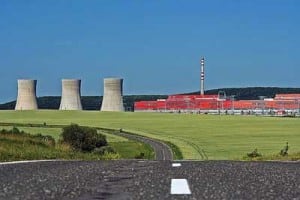
Despite hostilities that linger as a result of the 1986 nuclear nightmare at Chernobyl, Ukraine, and pressure from the European Union to shut down older-generation plants, Eastern European countries from the Baltic to Bulgaria are renovating existing nuclear plants or building new ones. If these projects become reality, the region will be able to secure its power supplies as well as cover the ongoing shortages in countries such as Greece, Macedonia, and Albania.
-
 Instrumentation & Controls
Wireless Technology Unlocks Possibilities
Modern wireless systems improve productivity, monitoring activities, and safety at power plants by enabling the right people to be at the right place at the right time. Wireless technology can put hard-to-access process and asset information at your fingertips, wherever you are, to enable more accurate and timely decisions.
-
 Solar
SolarNew Technologies Could Improve Solar Cell Efficiencies
Declining oil prices, supply issues, and dwindling financing may have battered solar energy in recent months, but the industry seems to have sparred well in the research arena. An assortment of institutions separately announced breakthroughs in their quests to boost the efficiency of solar cells. The technological advancements ranged in approach, from the development of an antireflective coating to the formulation of more efficient solar cell materials, but all point to promising possibilities for the industry.
-
 Coal
CoalNew Laser Technology Helps Reduce Coal-Slagging Headaches
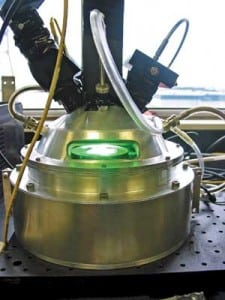
Laser-induced breakdown spectroscopy is starting to light the way for power plant operators who want to reduce coal ash deposition in their boilers.
-
 Business
An Energy-Generating Door
An energy-generating revolving door installed at Driebergen-Zeist railway station in the Netherlands is the latest experiment in eco-building. Dutch company Royal Boon Edam Group Holdings designed the manual door to match the newly refurbished station’s sustainable technology theme, while keeping in mind that the station — converted into a multifunctional area featuring restaurants and a tourist information and visitor center — holds 8,500 commuters at capacity.
-
 Business
HTS Cables Speed up the Electric Superhighway
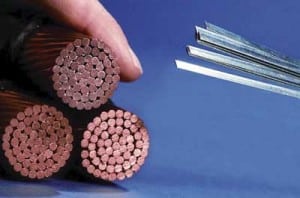
High-temperature superconducting cables deliver up to 10 times as much power as conventional electric power transmission cables. They are poised to help to reduce grid congestion as well as installation and operating costs.
-
 Coal
CoalSri Lanka Commissions Major Thermal Power Plant
The Sri Lankan government in December commissioned the first phase of the 300-MW Kerawalapitiya Thermal Power Plant, the nation’s biggest combined-cycle power plant project. The $300 million plant in the western part of the country commenced operations by generating 200 MW (Figure 7). In its second phase, it will expand to 300 MW. Per government estimates, power produced by the plant is priced at about 20 rupees or $0.18/kWh.
-
 Business
NERC Drives Development of Sustainable Compliance Programs
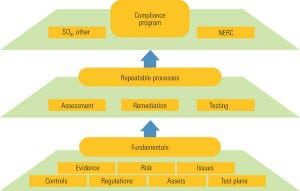
Compliance with reliability standards has moved beyond the "check the box" phase to one of regulations with real deliverables and fines for noncompliance. Utilities that aren’t vigorously evaluating and refining their compliance procedures today may find NERC’s 2009 audit cycle much more challenging.
-
 O&M
O&MFERC Focuses on Internal Compliance Programs
By now, most electric industry participants are aware of the mandatory reliability standards required by the Energy Policy Act of 2005 and managed by the North American Electric Reliability Corp. (NERC). Bulk-power system users, owners, and operators (known as NERC registered entities) are responsible for complying with the set of standards that are applicable to their operations in their specific region. Compliance is monitored by the NERC regions (Texas Regional Entity, Western Electric Coordinating Council, Reliability First Corp., Midwest Reliability Organization, SERC Reliability Corp., Florida Reliability Coordinating Council, Northeast Power Coordinating Council, and Southwest Power Pool) through spot checks, self-certifications, audits, and investigations.
-
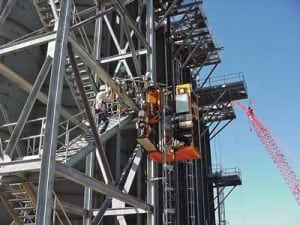 News
NewsUpward Mobility
The Max Climber 2000P-IPM rack and pinion personnel and material elevator by Beta Max Inc. uses little space while providing a safe and efficient means of access for workers performing maintenance work at high levels. The Max Climber 2000P-IPM easily attaches to scaffolding or a building exterior and is designed with a base system footprint […]