
Articles By

-
News
Federal Judge Dismisses Coal Facility NSR Lawsuit
A federal judge in Birmingham, Ala., on Monday dismissed all claims in an Environmental Protection Agency (EPA) lawsuit that alleged Southern Co. subsidiary Alabama Power built or made modifications to existing coal-fired power plants in Alabama that were in violation of New Source Review (NSR) regulations under Prevention of Significant Deterioration provisions of the Clean Air Act.
-
News
FERC: Negawatts on a Par with Megawatts
The Federal Energy Regulatory Commission (FERC) yesterday established a new rule that puts demand response (DR) on a par with power generation. The rule requires organized wholesale energy market operators to pay DR resources the market price for energy, known as the locational marginal price (LMP), when those resources have the capability to balance supply and demand as an alternative to a generation resource and when dispatch of those resources is cost-effective.
-
News
Xcel to Repower Black Dog Coal-Fired Units with Natural Gas
Xcel Energy wants to retire its last two coal-fired power plants (Units 3 and 4) at the Black Dog power plant in Burnsville, Minn., and replace them with natural gas–fired units. Black Dog Units 1 and 2 were converted to natural gas combined-cycle operation in 2002. Xcel says the conversion would be “more economical” than alternatives.
-
News
States Ask U.S. Supreme Court to Decide on Power Plant Emissions Issue
New York City and six states have asked the U.S. Supreme Court to decide on whether state and local governments have the right to sue private power companies under a common-law tort of public nuisance for their greenhouse gas (GHG) emissions.
-
General
A Short History of Nuclear Power in Japan
By Kennedy Maize Washington, D.C., March 14, 2011, 10:05 a.m. – Only France has been more resolute about relying on nuclear power than Japan. The reasons for both countries’ nuclear energy policies are generally the same: neither possesses much in the way of domestic energy resources. So nuclear power – including breeder reactors and a […]
-
General
Japan Nuclear Problems Escalate
By Kennedy Maize Washington, D.C., March 12, 2011, 10:30 a.m. EST – For those who covered both the Three Mile Island and Chernobyl nuclear disasters, there is an eerie symmetry with what is happening in Japan. In the prior cases – much different from each other and, most likely, very different from what is happening […]
-
General
What’s Happening in Japan
By Kennedy Maize Washington, D.C., March 11, 2011 – At this writing, 7:45 p.m. EST, it is hard to be optimistic about what is happening at Japan’s Fukushima 1 nuclear power plant. Matt Wald of the New York Times reports, based on Japanese accounts, that radiation levels in the control room are “1,000 times above […]
-
News
GE Hitachi Nuclear Energy’s ESBWR Receives NRC Final Design Approval
GE Hitachi Nuclear Energy (GEH) today announced its next-generation reactor model, the Economic Simplified Boiling Water Reactor (ESBWR), has received a positive final safety evaluation report (FSER) and final design approval (FDA) from the U.S. Nuclear Regulatory Commission (NRC). The FDA constitutes a finding by the NRC staff that the ESBWR design is safe and all technical issues have been resolved. It clears the way for the ESBWR to be built in countries around the world that recognize the FDA of a reactor design as acceptance by the “country of origin.”
-
News
Install Scrubbers or Switch to Natural Gas, EPA Tells Okla. Coal Plant Operators
A Federal Implementation Plan (FIP) proposed on Monday by the U.S. Environmental Protection Agency (EPA) asks three Oklahoma coal-fired power plant operators to install technology or switch to natural gas to control air emissions. The agency said the plants, built more than 30 years ago, did not meet regional haze requirements under the Clean Air Act.
-
News
North Anna, Comanche Peak COLs Delayed 18 Months
License applications for Dominion’s proposed North Anna reactor in Virginia and Luminant’s two proposed reactors at Comanche Peak, in Texas—the two U.S. facilities that have chosen Mitsubishi Heavy Industries’ (MHI’s) Advanced Pressurized Water Reactor (APWR)—will be delayed by more than 18 months. The Nuclear Regulatory Commission (NRC) said structural changes made by MHI to its reactor design require a lengthened review time.
-
News
TransAlta to Shutter Last Pacific Northwest Coal Plant
Alberta-based TransAlta and Washington State’s Gov. Chris Gregoire over the weekend reached an agreement to shut down the last coal-fired power plant in the Pacific Northwest. The first boiler of the company’s 1,460-MW plant in Centralia, Wash., will be closed in 2020 and the second in 2025.
-
News
NARUC Sues DOE for Continued Collection of Nuclear Waste Fees
The National Association of Regulatory Utility Commissioners (NARUC), the body representing the interests of state public utility commissions before the federal government, on Monday filed a lawsuit against the Department of Energy (DOE) for not suspending fees associated with the now-defunct Yucca Mountain nuclear spent-fuel repository.
-
News
NRC: 89 of Nation’s 104 Reactors Performed at Highest Safety Standards
Of the 104 nuclear reactors operating in the U.S., 89 made the Nuclear Regulatory Commission’s (NRC’s) highest performance category last year, said the federal body on Tuesday.
-
News
Minn. Committees Pass Bills to Lift Coal Plant Ban, Avoid N.D. Lawsuit
Committees in Minnesota’s House and Senate on Tuesday overwhelmingly passed matching bills that lift a four-year-old state law banning new coal-fired power plants of 50 MW or more. If the bills become law, they could also allow utilities in that state to import power from coal plants outside the state.
-
News
DOE’s Inspector General Critical of Clean Energy Loan Guarantee Program Recordkeeping
An audit of the Department of Energy’s (DOE’s) loan guarantee program for clean energy technologies completed last week by the agency’s inspector general found that the program could not always “readily demonstrate, through systematically organized records, including contemporaneous notes, how it resolved or mitigated relevant risks prior to granting loan guarantees.”
-
News
NRC Panel Deals Final Blow to Comanche Peak Expansion’s Opponents
The Nuclear Regulatory Commission’s (NRC’s) Atomic Safety and Licensing Board panel dismissed the last objection filed by anti-nuclear groups and a Texas lawmaker to block expansion of Luminant Energy’s Comanche Peak nuclear plant.
-
News
Judge Orders Immediate Suspension of 11.2-GW Brazilian Hydro Project
A federal judge in Brazil on Friday ordered immediate suspension of a license permitting construction of the controversial 11,233-MW Belo Monte dam complex. The license was recently issued by Brazil’s environmental agency, IBAMA, and it would have allowed dam-building consortium Norte Energia to begin clearing forestland on the margins of the Amazon’s Xingu River.
-
News
DOE Grants First Geothermal Loan Guarantee
The U.S. Department of Energy on Thursday finalized a $96.8 million Recovery Act–supported loan guarantee to Neal Hot Springs, a project sponsored by U.S. Geothermal, to construct a 23-MW geothermal project in Oregon’s Malheur County.
-
News
EPA Extends Mandatory Greenhouse Gas Reporting Deadline
The Environmental Protection Agency (EPA), which has finished developing greenhouse gas (GHG) emissions requirements for several industries as mandated by Congress, on Tuesday said it would extend the reporting deadline for companies reporting 2010 GHG data under the Mandatory Greenhouse Gas Reporting Rule from March 31, 2011, to an unspecified date in late summer.
-
News
AEP, FirstEnergy Withdraw State Applications for High-Voltage Line
American Electric Power (AEP) and First Energy Corp. will withdraw applications for state regulatory approval of the $2 billion high-voltage Potomac-Appalachian Transmission Highline (PATH) project following an announcement by regional grid operator PJM Interconnection that the project has been shelved.
-
News
California Senate Approves 33% RPS Measure
California’s Senate on Thursday voted 26-11 to require the state’s investor-owned utilities (IOUs) to get 33% of their power from renewable energy sources by 2020—up from the 20% currently required. The bill, whose increased renewable portfolio standard (RPS) was set by former Gov. Arnold Schwarzenegger in a 2009 executive order, now goes to the Assembly, where it is expected to pass.
-
News
New Hampshire House Votes to Withdraw State from RGGI
The New Hampshire House last week approved, by a veto-proof vote of 246-104, legislation that would withdraw the state from the Regional Greenhouse Gas Initiative (RGGI), a cap-and-trade program established in the Northeast. The bill is now headed to the Senate, where it is expected to pass.
-
News
Utility Pulls Out of North Anna Nuclear Expansion
Old Dominion Electric Cooperative’s (ODEC’s) announcement on Monday that it will withdraw participation in and ownership of a third-generation reactor planned for construction by Dominion Virginia Power at its North Anna Nuclear Power Station in Louisa County, Va., will not change its plans to build the potential project, Dominion said.
-
News
Explain Redactions in Yucca Mountain Safety Report, NRC Panel Tells Agency
The three-judge panel of the Nuclear Regulatory Commission’s (NRC’s) Atomic Safety and Licensing Board on Friday threw out a motion to shelve proceedings for the Yucca Mountain license case through May 20. The judges also asked the NRC to explain why it whited-out portions of a report assessing the safety of the Nevada nuclear waste repository that was released last week.
-
News
Morgan Country to Host FutureGen 2.0’s Sequestration Site
Morgan County, Illinois will host a sequestration site for carbon dioxide captured by the Department of Energy’s revamped $1.3 billion FutureGen pilot project. The FutureGen Alliance said on Monday that site best supported the overall mission of the project cost-effectively.
-
Legal & Regulatory
Will Critical Materials Become a Green Roadblock?
Critical minerals—such as rare earth metals—are important to many new energy technologies. However, the U.S. Department of Energy is concerned that foreign control of supply, particularly by China, could limit the ability of these technologies to develop fully, so the DOE is developing a strategy to keep the supply chain open. Meanwhile, some analysts say China is playing a losing game with its hold on the minerals.
-
 O&M
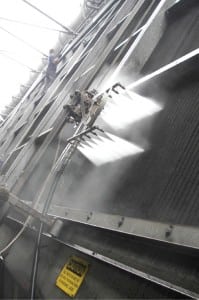
O&MImprove ACC Performance with Automated Pressure Washing
Beginning each spring and continuing through the fall, backpressure readings at Rosebud Operating Services Inc. indicated substantial drops in the condenser’s efficiency. Increased backpressure results in higher net plant heat rate and a corresponding measurable decrease in power generation.
-
 Business
Training Tomorrow’s Power Industry Workers
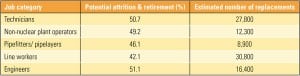
As U.S. electric utilities watch increasing numbers of older workers leave the workforce, they are left with a shrinking pool of experienced personnel. To meet this growing challenge, a number of educational programs are being offered to help younger workers take advantage of career opportunities in the electric power industry.
-
Supply Chains
Is Peak Coal the Latest Supply Threat?
We’ve heard—endlessly, it seems at times—about "peak oil," the idea that the world is rapidly running out of oil and will face catastrophic consequences. Now talk is emerging about "peak coal."
-
 O&M
O&MPlant Safety: Learn from the Mistakes of Others
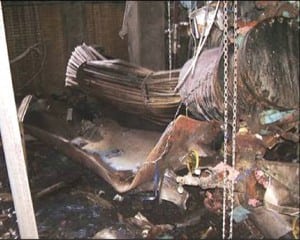
On January 27, the U.S. Chemical Safety Board (CSB) released a case study examining the causes of a heat exchanger rupture and ammonia release at the Goodyear Tire and Rubber Plant in Houston in 2008. Use these lessons learned to check your employee tracking system and to determine whether your plant has installed valves that […]