
Articles By

-
Legal & Regulatory
New Approach Needed for Renewable Integration
It is time for the renewable integration discussion to move beyond simply identifying the challenges of ensuring reliability in a nation increasingly served by intermittent renewable resources and toward developing real-world solutions to these challenges.
-
 O&M
O&MPulverizers 101: Part I
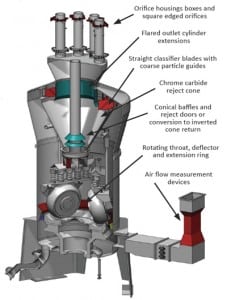
Pulverizers prepare raw fuel by grinding it to a desired fineness and mixing it with the just the right amount of air before sending the mixture to boiler burners for combustion. In Part I of three parts, we’ll examine the essentials of pulverizer capacity, what should be done after a coal pulverizer fire or other incident, and how to tune up pulverizer performance. In future articles we’ll discuss measuring pulverizer performance and performance optimization.
-
 Coal
CoalPlant of the Year: KCP&L’s Iatan 2 Earns POWER’s Highest Honor
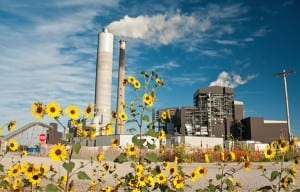
Kansas City Power & Light (KCP&L) began engaging stakeholders in 2003 to develop consensus on a regional energy plan designed to balance customers’ desire for low electricity costs with system reliability needs and environmental requirements. The culmination of that plan was the completion of Iatan 2, which entered service in August 2010. For executing an innovative energy plan that reduced overall fleet emissions, ensuring the region’s future electricity supply, and completing an approximately $2 billion project in time for the summer 2010 peak load by using innovative contracting and project controls, KCP&L’s Iatan 2 is awarded POWER’s 2011 Plant of the Year Award.
-
Coal
Is AEP Exaggerating Impact of Air Rules?
American Electric Power recently announced plans to retire over 6,000 MW of coal-fired generation in response to two looming Environmental Protection Agency air quality regulations. Is AEP exaggerating the impact of these regulations? Some members of Congress believe that to be the case. AEP disagrees.
-
 O&M
O&MMarmaduke Award: CFE Extends CTG Universidad Unit 2’s Life with Conversion to Synchronous Condenser
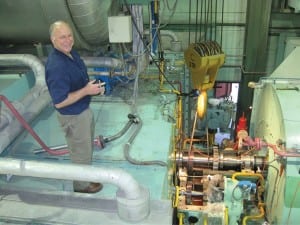
CTG Universidad is a two-unit combustion turbine plant commissioned in late 1970 by the Comisión Federal de Electricidad (CFE) on the north side of Monterrey, Mexico’s third-largest city and an important industrial center. By the 1990s, the two 14-MW turbines were obsolete, used sparingly, and slated for demolition in 2010. However, by 2002, portions of Monterrey began experiencing power restrictions caused by a lack of sufficient reactive power production, and that situation presented an opportunity for the plant. By repurposing an old combustion turbine for use as a synchronous condenser to provide local reactive power, CFE significantly reduced local power supply limitations. For that savvy plant repurposing, CFE’s CTG Universidad Unit 2 is the winner of POWER’s 2011 Marmaduke Award for excellence in power plant problem-solving. The award is named for Marmaduke Surfaceblow, the fictional marine engineer and plant troubleshooter par excellence.
-
Coal
House GOP Moves to Block EPA from Regulating Coal Ash as Toxic Waste
Continuing the House Republicans’ aggressive attack on Obama administration environmental proposals, a House subcommittee approved legislation in June to prevent the Environmental Protection Agency from regulating coal ash as a hazardous waste—one of two options the EPA is considering for tightening coal ash management regulations in response to a disastrous leak from a Tennessee Valley Authority ash impoundment in 2008.
-
 Smart Grid
Smart Grid Award: Vermont Electric Cooperative Takes Wise Approach to Smart Grid Projects
A cooperative in northern Vermont serving a largely rural area has proven that even small utilities can achieve great smart grid results by planning wisely. For improving service to its members by developing a grid modernization strategy before “smart grid” was a buzz phrase, Vermont Electric Cooperative is the winner of the first POWER Smart Grid Award.
-
General
Blue Ribbon Commission Delivers Nothing New on Nuke Waste
By Kennedy Maize Washington, D.C., July 30, 2011 — If you want “outside the box” thinking, don’t ask it from those who built the box. That’s the thought that came to mind when I read this week’s draft report from the group of Washington has-beens and hangers-on the Obama administration asked last year to formulate […]
-
News
FERC Order Aims to Remove Barriers to Transmission Development
The U.S. Federal Energy Regulatory Commission (FERC) finalized an order last Thursday that it says reforms its transmission planning and cost allocation requirements “to benefit consumers by enhancing the grid’s ability to support wholesale power markets and ensuring transmission services are provided at just and reasonable rates.”
-
News
Santee Cooper to Explore Potential V.C. Summer Nuclear Expansion Partnerships
South Carolina state-owned utility Santee Cooper last week said it had separately signed letters of intent with Duke Energy Carolinas and Florida Municipal Power Agency (FMPA) to negotiate partnerships in the two new nuclear reactors at the V.C. Summer Nuclear Generating Station that Santee Cooper is planning with South Carolina Electric & Gas (SCE&G).
-
News
EPA Delays Ozone Standard Reconsideration for Fourth Time
The Environmental Protection Agency (EPA) said on Tuesday it would not issue a reconsideration of the Bush administration’s ozone standard by the July 29 deadline, but it will finalize the standard “shortly.”
-
News
Entergy to Proceed with $92M Vermont Yankee Refueling
Entergy Corp. on Monday said it would move forward with fabrication of fuel and refueling of the Vermont Yankee nuclear power plant this October—even though the New Orleans–based company will then be embroiled in a federal court trial against the state of Vermont. The state is determined to shut down the nuclear plant as soon as a Legislature-approved permit expires in March 2012.
-
News
SWEPCO Reaches Settlement in Lawsuits Challenging Ultrasupercritical Power Plant
Southwestern Electric Power Co. (SWEPCO) on Monday said it has settled a series of lawsuits and other actions brought forth by an assortment of groups opposing construction of the 600-MW John W. Turk., Jr. power plant—the nation’s first ultrasupercritical pulverized coal power plant.
-
News
EU to Member States: Submit Nuclear Waste Disposal Plans by 2015
Fourteen of the European Union’s (EU’s) 27 member states that operate nuclear power plants must draw up national programs for the management of spent nuclear fuel—including concrete timetables and cost assessments—and submit them to the European Commission by 2015, at the latest, under a new EU directive adopted last week.
-
News
Work to Begin on DOE-Backed Carbon Sequestration Demonstration in Montana
The U.S. Department of Energy’s National Energy Technology Laboratory (NETL) and Montana State University (MSU) said on Tuesday they would begin work on a $67 million, eight-year project that will involve permitting, injecting, and monitoring one million tons of carbon dioxide (CO2) to be stored in deep porous rock formations in northern Montana.
-
News
AEP Freezes Commercial-Scale CCS Project on Lack of Climate Policy
Just a month after American Electric Power (AEP) announced it would shut down 6 GW of its coal-fired capacity by 2014 because of new federal emission rules, the Ohio-based utility on Thursday terminated a cooperative agreement with the Department of Energy (DOE) and brought a $668 million project to commercialize carbon capture and storage (CCS) to a screeching halt, citing an uncertain U.S. climate policy and the weak economy.
-
News
Georgia PSC Withdraws Cost-Sharing Proposal for Plant Vogtle Expansion
Georgia Power and Georgia’s Public Service Commission (PSC) on Monday agreed, after long negotiations, that the state agency will withdraw a proposed risk-sharing mechanism for the company’s $14 billion two-reactor nuclear expansion at Plant Vogtle, in Waynesboro, Ga., but it will retain the right to strike down costs as “imprudent” even after they have been verified and approved in the established semi-annual cost review process.
-
News
Cross-State Air Pollution Rule Could Cause Power Shortages, ERCOT, Texas Agencies Warn
Backlash against the U.S. Environmental Protection Agency’s (EPA’s) newly finalized Cross-State Air Pollution Rule (CSAPR) mounted in the past week as Texas state agencies, utilities, and regional grid operator the Electric Reliability Council of Texas separately warned that the state could face a generation shortage if the federal pollution rules were implemented as written.
-
News
Federal Court Rejects Entergy Bid to Keep Vermont Nuclear Plant Open
A federal judge on Monday threw out Entergy Corp.’s bid for a preliminary injunction to stop the state of Vermont from shutting down the Vermont Yankee nuclear plant in March 2012, when its original 40-year license expires. The ruling will force the company to decide whether it will buy $65 million of nuclear fuel to keep the plant running until a trial begins this September, or to shut down the plant.
-
News
Duke to Close 862-MW Coal Plant on MACT Rule Concerns
Duke Energy’s 862-MW W.C. Beckjord Station southwest of Cincinnati, Ohio, is the latest coal-fired power plant that will be shuttered as a result of the U.S. Environmental Protection Agency’s (EPA’s) recently proposed Utility Maximum Achievable Control Technology (MACT) rule.
-
News
PGE, Environmentalists Reach Agreement to Cap Emissions, Phase Out Coal at Boardman
Portland General Electric (PGE) and environmental groups on Tuesday reached a consent decree that will resolve alleged Clean Air Act violations at the 585-MW Boardman power plant—Oregon’s only coal-fired plant—by capping sulfur dioxide emissions and phasing out the use of coal by 2020.
-
News
EPA Proposes Secondary Standards for NOx and SOx
The U.S. Environmental Protection Agency (EPA) last week proposed secondary air quality standards for nitrogen oxides (NOx) and sulfur oxides (SOx), building on rules—like the recently finalized Cross State Air Pollution Rule—to reduce NOx and SOx emissions.
-
News
Biomass IGCC Project Gets Final Air Permit
Rentech Inc.’s proposed St. Joe Renewable Energy Center—one of the world’s first biomass integrated gasification combined cycle (BIGCC) projects—last week received a final air permit from the Florida Department of Environmental Protection and will now begin construction of the planned project.
-
News
DOI Approves Four Renewable Projects
The U.S. Department of the Interior (DOI) on Thursday announced approval of four new renewable projects on public lands, including two utility-scale solar developments in California, a wind energy project in Oregon, and a transmission line in Southern California.
-
News
FERC Declines Rulemaking, Tosses Smart Grid Interoperability Standards Back to NIST
On Tuesday, the Federal Energy Regulatory Commission (FERC) issued an order in which it said it found insufficient consensus on smart grid interoperability standards to require it to institute a rulemaking procedure. It urged industry participants to continue working with the National Institute of Standards and Technology (NIST) to develop such standards.
-
News
EPA Finalizes Cross-State Air Pollution Rule
On July 6, the Environmental Protection Agency (EPA) finalized the Cross-State Air Pollution Rule (CSAPR), which requires 27 states in the eastern U.S. to significantly improve air quality by reducing power plant emissions that contribute to ozone and/or fine particle pollution in other states. This rule replaces the EPA’s 2005 Clean Air Interstate Rule (CAIR).
-
News
Indiana Agency: Duke Shareholders Should Bear Brunt of Edwardsport Cost Overruns
The Indiana Office of Utility Consumer Counselor (OUCC) has said it is concerned that Duke Energy has not demonstrated any “budgetary constraints” on the Edwardsport integrated gasification combined cycle (IGCC) project under construction near Vincennes, Ind. And, in a reversal of position, the state agency representing utility ratepayer interests recommended that the Indiana Utility Regulatory Commission (IURC) should not approve the company’s request for cost recovery for more than $2.35 billion.
-
News
Xcel, Feds Settle Used Fuel Storage Lawsuits
Xcel Energy announced on Friday that it has reached a settlement with the federal government regarding costs incurred by Northern States Power Co. (NSP) and its customers because of the Department of Energy’s failure to begin removing used fuel from the company’s nuclear plant sites by a 1998 deadline. As a result, over $100 million will be returned to NSP customers in five states.
-
News
House Committee Approves Bill That Freezes EPA GHG Regulation
The Republican-led House Appropriation Committee on Monday approved an annual spending bill for fiscal year 2012 that would cut funding for the U.S. Environmental Protection Agency (EPA) to $7.1 billion—18% less than requested. The bill would also suspend existing federal rules that limit greenhouse gas (GHG) emissions from stationary sources, prohibit the agency from issuing any rules limiting GHG emissions from stationary sources, and from issuing permits containing provisions to limit GHGs emissions from stationary sources during the next fiscal year.
-
News
Québec Issues Draft Cap-and-Trade Rule, Eyes 2012 Start Date
The Canadian province of Québec last week issued draft rules for the operations of a greenhouse gas (GHG) cap-and-trade program based on guidelines from the Western Climate Initiative (WCI), of which it is a member. The draft regulation, now open for a 60-day public comment period, covers emissions of more than 25,000 tons of carbon dioxide per year, and it applies to power sector and industrial emitters. If the rules go into effect, the province could have a working cap-and-trade program by Jan. 1, 2012.