
Articles By

-
 Nuclear
China Begins Operation of Experimental Fast Reactor
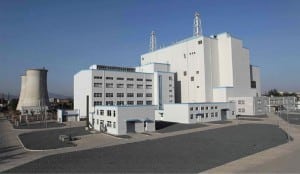
China in July flicked on its experimental fast reactor—the first built in the nation, and the first of many more to come. The China Experimental Fast Reactor (CEFR), whose development began in 1995, is a pool-type sodium-cooled reactor with a thermal output of 65 MW and an electrical output of 20 MW. The reactor is housed in a 44,000-square-meter (473,610-square-foot) building.
-
 Gas
GasGlobal Gas Glut
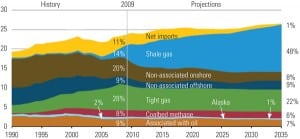
Marcellus Shale gas has increased recoverable natural gas reserves in the U.S. by about a third over estimates prepared a few years ago. Europe is also exploring shale gas as an alternative to problematic Russian gas supplies and low proven natural gas reserves. POWER contributors in the U.S. and UK examine the comparative economic value, public acceptance, and political implications of these massive shale gas reserves.
-
Nuclear
The Fukushima Fallout: Six Months After the Nuclear Crisis
(WEB EXCLUSIVE) Much has transpired during the nearly six months following the Great East Japan Earthquake—a 3-minute, magnitude 9.0 temblor that generated a series of tsunami waves as tall as 38.9 meters (130 feet), killed more than 25,000 people, and set off the worst nuclear disaster in 25 years.
-
Coal
Explosion Devastates Major Cypriot Power Plant
A brush fire that spread and detonated explosives stored at the Evangelos Florakis naval base in Mari on the southern coast of Cyprus on July 11 killed 13 people, injured 62 others, and severely damaged the Vassilikos Power Station—an oil- and gas-fired plant that supplied almost 60% of the island nation’s power. Cyprus, which was once considered an “economic miracle,” has been battling crippling power shortages that have beleaguered its financial and tourism sectors since the blast and left it on the verge of economic collapse.
-
 O&M
O&MThe New Water Lab
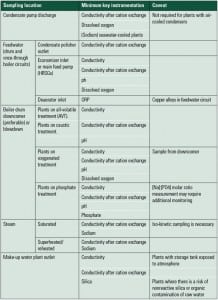
Recent advances in water laboratory instrumentation—from improved sample conditioning to advanced online instruments—have reached the market. Here’s a look at the equipment you’ll find in the best-equipped power plant laboratory this year.
-
 Nuclear
India’s Indigenous Nuclear Program Advances While U.S.-India Trade Stalls
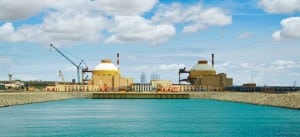
Since a landmark 2008 deal that lifted global sanctions and allowed countries to conduct nuclear trade with India, the nation struggling to keep up with domestic power demand has signed deals with the U.S., France, Russia, Canada, Mongolia, Kazakhstan, Argentina, Namibia, and, in August, South Korea, for construction of large nuclear power plants (in technical collaboration with foreign vendors) or for nuclear fuel.
-
 Coal
CoalBest Practices for Natural Gas Line Cleaning
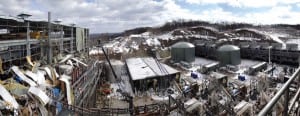
As barriers to new coal-fired generation expand and enthusiasm for nuclear plants wanes, the commissioning of natural gas–fired plants promises to increase. However, gas plants pose hazards, too. An explosion last year that was caused by unsafe use of natural gas to blow residue from a gas pipeline during commissioning of a gas-fired power plant has focused regulator and industry attention on finding safer alternatives for this task. Fluor shares its gas pipeline cleaning best practices.
-
 Solar
SolarSpanish Power Tower Supplies 24 Hours of Electricity
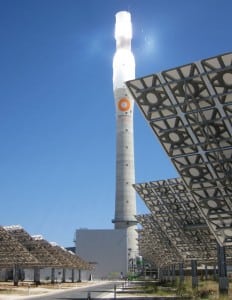
In Spain this June, a new 19.9-MW concentrated solar power (CSP) tower in Fuentes de Andalucía, Seville, reached the unprecedented milestone of storing thermal energy to its fullest capacity and supply power for an uninterrupted 24-hour period.
-
 Gas
GasWho Pays for Firming Up Variable Energy Resources?
The major economic hurdle for renewable power generation technologies continues to be substantial installation costs. But another cost is associated with continuous load-balancing, made possible by backstopping that variable generation with dispatchable generators that typically consume expensive fossil fuels. Bottom line: Who pays for the capacity firming or backstopping resources?
-
 Hydro
HydroCommercial Oscillating Water Column Marine Power Plant Commissioned
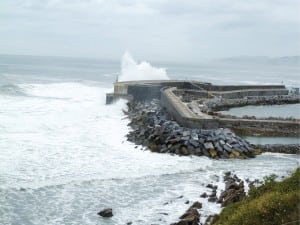
One of the world’s first breakwater wave power stations was commissioned this July by Ente Vasco de Energia (EVE), an energy agency in the northern Basque region of Spain. The €2.3 million ($3.3 million) project in Mutriku uses oscillating water column technology developed by Voith Hydro’s Wavegen, based in Inverness, Scotland. The technology is integrated into a concrete power station built on a breakwater or coastal protection project.
-
 News
NewsClose-Coupled Pumps for Low-Flow Applications
Moyno introduced the Moyno 2000 WA and WB close-coupled pumps designed for lower-pressure, lower-flow applications that do not require the full features and benefits of the Moyno 2000 GI pump. The Moyno 2000 WA (shown here) and WB models are ideal for municipal and industrial applications that require the transfer of highly viscous fluids and […]
-
Commentary
Demand Response Demands Response
What the summer heat wave, and one utility’s less-than-stellar response, teaches us about communicating with customers.
-
 News
NewsNovel Nanotube Applications for Power Generation
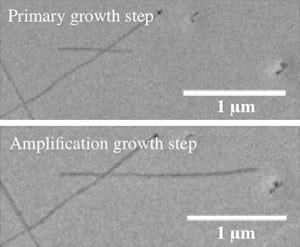
As it does for sectors such as global defense and transportation, nanotube technology holds great promise for the energy sector—and, in particular, for power generation. This July, researchers from the Massachusetts Institute of Technology (MIT) said carbon nanotubes showed potential as an innovative approach to storing solar energy, and Rice University scientists claimed they were closer to developing a unique wire that could transmit power with few losses.
-
 News
NewsGlycol Pumps for Gas Dehydration
Cat Pumps launched a new series of glycol pumps developed to supply triethylene glycol for natural gas dehydration systems. System reliability, especially of the pump, is essential to minimize production interruptions and costly equipment failures. The TEG triglycol pumps have been field-proven in the most rigorous dehydration systems, Cat Pumps says. The electric engine–driven TEG […]
-
Finance
TREND: Geothermal Heats up after Fukushima
While the vast power of one form of energy below Earth’s crust (tectonic plate shifts) doomed the Fukushima nuclear power plant in Japan last March, using another form—heat and steam—is getting renewed attention in the wake of the Japanese meltdown.
-
Coal
POWER Digest (September 2011)
Australia Pursues Carbon Tax. Australia’s Prime Minister Julia Gillard on July 10 laid out an ambitious plan to cut national greenhouse gas emissions by 5% of 2000 levels by 2020 by imposing a A$23 (US$23.4) per metric ton carbon tax, starting next year. If parliament approves the plan before year-end, the carbon tax will increase […]
-
 News
NewsEquipment Line for Industrial Gas Applications
Air Liquide America Specialty Gases equipment group recently announced the introduction of a comprehensive line of “industrial grade” equipment for use with gases commonly used in welding, cutting, and other industrial applications, as well as with liquid cryogenics. The equipment is ideally suited for use with Air Liquide brands of industrial gases such as ALIGAL, […]
-
Legal & Regulatory
Utility Managers Ponder Rules, Money, People
What’s on the agenda for the utility industry today and into the future? Platts and Capgemini asked the industry leadership in their latest survey. The answers revolve around regulation, finance, and human resources.
-
O&M
Advanced Coatings Protect Plant FGD Systems
Now that many flue gas desulfurization (FGD) systems are reaching middle age, corrosion repairs of structural and process vessels are becoming more common. Corrosion is caused by condensates of acids formed during the FGD process, which accelerate pitting and crevice corrosion, particularly in scrubbers where high sulfate solutions are present. Scrubbers lined with 2205 duplex stainless steel are among the most vulnerable to pit or crevice corrosion, from both chlorides and fluorides.
-
Commentary
Advancing America’s Nuclear Infrastructure
It is fair to say that 2011 is bringing some uncertainty into the nuclear energy industry. The tsunami and subsequent events at Fukushima present Japan and our industry with new challenges but also serve as a catalyst for continuous improvement. In the U.S., we are learning from these events and improving our operations, designs, and emergency response approaches to make our plants safer, more efficient, and more environmentally friendly.
-
News
Japan’s New PM Less Bent on Shedding Nuclear Than Predecessor
Japan’s new Prime Minister Yoshihiko Noda could push for use of existing nuclear reactors in Japan for a longer period than advocated by outgoing Prime Minister Naoto Kan.
-
News
DOI Approves 230-kV Line to Carry Solar Power to Calif. Grid
The Department of the Interior (DOI) last week approved a transmission line on public lands that will connect a 250-MW solar power project to the grid in California. The line will connect to the Imperial Solar Energy Center West Project in Imperial County.
-
News
Irene Puts Out the Lights for Millions
Utilities are scrambling to reconnect nearly two million customers in 14 East Coast states who have been without power for three or four consecutive days since Hurricane Irene pummeled the region.
-
News
Dominion: Virginia Quake May Have Exceeded North Anna’s Seismic Design Basis
The Nuclear Regulatory Commission (NRC) has sent a more proficient inspection team to Dominion’s quake-hit North Anna nuclear power plant in Mineral, Va., to further investigate effects of the Aug. 23 5.8-magnitude quake whose epicenter was only five miles away from the twin-reactor station in Mineral, Va., after Dominion told the NRC that initial reviews determined the ground motion resulting from the quake may have exceeded the plant’s design basis.
-
News
NRC Approves Changes to Emergency Preparedness Regulations
On Tuesday, the Nuclear Regulatory Commission (NRC) approved changes to emergency preparedness regulations affecting existing nuclear power plants, those that might be licensed and built in the future, and research and test reactors.
-
News
GenOn to Shutter Virginia Coal Power Plant
The City of Alexandria, Va., and Houston-based GenOn on Monday agreed to shutter the company’s 482-MW coal-fired Potomac Generating Station (PRGS) by Oct. 2012. Community groups had fiercely opposed the 1949-built plant’s continued operation, citing concerns about its age and emitted pollution, but the plant has been seen as a key facility that maintains reliability for Washington, D.C.
-
News
Rural Co-ops Get $900M in Federal Funding for Smart Grid, Transmission Upgrades
Rural electric cooperative utilities in 14 states will receive up to $900 million in loans from the U.S. Department of Agriculture’s (USDA’s) Rural Development’s Rural Utilities Service to help them upgrade, expand, maintain, and replace power infrastructure in rural areas of the U.S. The funding, announced on Monday, is expected to support construction of nearly 1,500 miles of line and improve 1,700 miles of existing line.
-
News
Germany Not to Depend on Idled Nuclear Plants for Winter Reserve Power
Germany will not rely on reserve power from any of the seven nuclear power plants (with a total capacity of about 8,800 MW) that it shut down in the wake of the Fukushima nuclear crisis for this and the following winter, the country’s energy regulator said today.
-
News
DOE Finalizes Partial $852M Guarantee for Parabolic Trough Project
The Department of Energy on Friday finalized a partial guarantee for a $852 million loan to support development of the Genesis Solar Project—a 250-MW parabolic trough concentrating solar (CSP) facility located on federal land in Riverside County, Calif., that is expected to increase the nation’s currently installed CSP capacity by about 50%.
-
General
New Study Debunks Drought-Driven Food Collapse
By Kennedy Maize Washington, D.C., August 25, 2011 — A year ago, a peer-reviewed report in Science magazine concluded that a warmer planet over the past decade has led to drought that has reduced plant production and threatened worldwide food security. Today, a new, peer-reviewed study in the same journal argues that the results in […]