
Articles By
-
Hydro
FERC Rule 1000: What Does It Mean?
The Federal Energy Regulatory Commission (FERC) has the responsibility for ensuring just and reasonable rates and preventing undue discrimination by public utility transmission providers. Last year FERC defined a new framework for public utilities and regional transmission organizations planning new transmission networks. The framework is provided in Order No. 1000—Transmission Planning and Allocation by Transmission Owning and Operating Public Utilities. The Final Rule was issued on July 21, 2011, and reaffirmed by Order No. 1000-A on May 17, 2012.
-
 Coal
CoalClean Air, Dirty Water
Efforts by power producers to meet clean air rules mean that wastewater effluent streams now face revised EPA regulations. A skirmish involving a New Hampshire power plant could set the tone for the next battle over regulations.
-
 Coal
CoalSafety Implications of Coal and Biomass Fuel Mixes
Practically everyone would agree that the energy policy of the U.S. is in a great state of flux. Not since the introduction of commercial nuclear power some five decades ago has our country come to such an energy crossroads. No matter what your political ideology, no one can refute that conventional coal-fired power plants are being paralyzed by recent and potential U.S. Environmental Protection Agency (EPA) regulations designed to cut the nation’s reliance on coal.
-
Nuclear
Fukushima Disaster Continues to Cloud Nuclear Outlook
With new reactors finally under construction, this should be an optimistic time for nuclear power in the U.S. But cheap natural gas, rising construction costs, and the Fukushima accident’s lingering pall have darkened the mood.
-
 O&M
O&MImproving Slurry Knife Gate Valves in FGD Applications
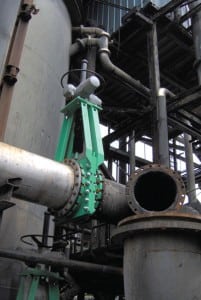
The primary considerations in slurry valve selection are reliability in function and design, abrasion resistance, and ease of maintenance. In addition, valves with a straight-through, unobstructed flow minimize the effect of abrasion and therefore reduce the need for maintenance.
-
O&M
Dusty Trail: The Movie
The season’s blockbuster includes white-hatted heroes, good-natured regulatory sidekicks, bar fights, and a lurking menace named Fugitive Dust.
-
Legal & Regulatory
When Successful Procurement Policies Fail
California is approaching a tipping point with respect to the near-term economic viability of existing non-utility generation. The procurement policies and practices implemented in response to the statewide energy crisis over a decade ago have evolved into market conditions that do not offer “uncontracted” existing resources with sufficient and stable enough revenue streams to recover going-forward costs. Continued adherence to these policies will subject such resources to an increasing risk of economic retirement, threatening long-term reliability and potentially costing electric consumers billions of dollars.
-
 Gas
GasGas Glut Drives Action in Combined Cycle Power
A diverse range of speakers reviewed the state of gas-fired generation at ELECTRIC POWER, but there was one constant: flexibility
-
 Coal
CoalOptimizing Catalyst Performance Lowers O&M Costs
Santee Cooper’s Cross Station has implemented a catalyst optimization program that reduces catalyst replacement cost while maximizing catalyst performance. This case study illustrates the economic advantages of taking a holistic approach to optimizing unit catalyst performance by controlling slag, fouling, sulfur trioxide, and ammonium bisulfate—key factors that lead to premature shortening of catalyst life. With catalyst costing $2 million a layer and up, there is plenty of economic motivation to find ways to improve its life.
-
 News
NewsFlue Gas Analyzer
Emerson has launched the latest solution for combustion flue gas analysis, the Rosemount Analytical 6888 in-situ oxygen analyzer. The 6888 analyzer provides accurate measurement of oxygen remaining in flue gases coming from combustion processes such as boilers, incinerators, kilns, process heaters, and industrial heating furnaces. By maintaining the ideal level of oxygen in the flue […]
-
News
Federal Court Rejects Challenges to EPA Industrial, Automotive GHG Rules
A three-judge panel of the U.S. Court of Appeals for the D.C. Circuit on Tuesday ruled that the U.S. Environmental Protection Agency (EPA) was "unambiguously correct" in its interpretation of the Clean Air Act (CAA) to regulate carbon dioxide emissions. The federal agency’s endangerment finding that greenhouse gases (GHG), including carbon dioxide, are a threat to public health and welfare, and its decision to set limits for industrial and automotive emissions of GHGs, was "neither arbitrary nor capricious," the court ruled. The court, however, found that it lacked jurisdiction to review the timing and scope of the GHG rules that affect larger stationary sources, including new coal-fired power plants.
-
News
Federal Appellate Court Finds for the NRC, Entergy in Vermont Yankee Licensing Case
The State of Vermont "repeatedly failed" to present to the Nuclear Regulatory Commission (NRC) objections that Entergy Corp., owner of the controversial Vermont Yankee Nuclear Power Station, lacked a necessary state water permit before the commission granted the reactor a 20-year operating license extension, a federal court ruled on Tuesday as it threw out the state’s legal challenge against the NRC.
-
News
Plan to Lower Hydroelectric Dam and Mitigate Flooding Vetted Fairly, Court Says
The U.S. Army Corps of Engineers properly followed permitting procedures when it verified that Puget Sound Energy (PSE) could lower a dam in the single narrow channel above Washington State’s landmark Snoqualmie Falls to mitigate flooding issues upstream, the U.S. Court of Appeals for the Ninth Circuit ruled on Tuesday.
-
News
FERC Finalizes Variable Energy Resource Integration Rule, Proposes Several Others
The Federal Energy Regulatory Commission (FERC) finalized a key rule that intends to facilitate the integration of variable energy resources (VERs) and proposed another that clarifies the reporting of transactions involving energy storage facilities. The body also announced in the past week that it would soon eliminate the current system used by public utilities to report required electricity data on a quarterly basis, as well as approve the North American Electric Reliability Corp.’s (NERC’s) revisions to the definition of the bulk electric system.
-
News
U.S., EU, Japan Push for WTO Review of China Rare Earth Export Restraints
International pushback against China’s export restraints on rare earth elements, tungsten, and molybdenum intensified on Wednesday as the U.S., the European Union (EU), and Japan asked the World Trade Organization (WTO) to establish a dispute settlement panel to vet the matter.
-
News
Federal Court Grants Stay on EPA-Promulgated Okla. FIP to Curb SO2 at Four Coal Units
A federal court on Friday granted a request by Oklahoma for a stay of the U.S. Environmental Protection Agency’s (EPA’s) final rule requiring the reduction of sulfur dioxide emissions at four electric generating units in the state pending a review of the rule.
-
News
Coal Units in New Jersey Face Shutdown or Conversion to Natural Gas
Owners of the 1962-built B.L. England Generating Station in New Jersey’s Cape May County will shutter the plant’s 113-MW coal-fired Unit 1 by 2013 and convert two other units to natural gas under the terms of an administrative consent order with New Jersey’s Department of Environmental Protection (DEP). The order fits in with New Jersey’s energy plan, which envisions a gradual phase-out of coal power.
-
News
NRC: FENOC’s Determination That Davis-Besse Shield Cracks Were Caused by Environmental Factors Is Sound
FirstEnergy Nuclear Operating Co.’s (FENOC’s) conclusion that cracks in the shield building at the Davis-Besse Nuclear Power Station in Oak Harbor, Ohio, were caused by environmental factors resulting from a blizzard in 1978 and aspects of the shield building’s design is sound, the Nuclear Regulatory Commission (NRC) said on Thursday.
-
News
Supreme Courts Denies Review of FERC Market-Based Rate Case
The U.S. Supreme Court on Monday denied review of a case in which several states and citizen groups contend that the Federal Energy Regulatory Commission’s (FERC’s) Order 697—issued in 2007 to improve market-based rate regulations—exceeds FERC’s authority under the Federal Power Act (FPA).
-
General
PRB Coal Leasing Scandal Redux
By Kennedy Maize Washington, D.C., June 26, 2012 – Pardon my déjà vu, but an article in Monday’s Washington Post, citing a study of how the Interior Department’s coal leasing program in the Powder River Basin is mismanaged, takes me back 30 years. The study by the Institute for Energy Economics and Financial Analysis claims […]
-
General
California Dreamin’ Becoming a Reality?
By Kennedy Maize Washington, D.C., June 25, 2012 – When it comes to electric infrastructure, no state is more dysfunctional than California. That observation, based on many years of observing the twists and turns of California electricity policy, is highlighted by the problems the state now faces with the possibility of the San Onofre nuclear […]
-
News
Design Flaw Led to Unusual Tube Wear at SONGS, NRC says
Unexpected steam generator tube wear that prompted the indefinite shutdown of Southern California Edison’s (SCE’s) San Onofre Nuclear Generating Station (SONGS) in January was caused by excessive tube vibration, company executives confirmed at a community meeting on Monday. Officials from the Nuclear Regulatory Commission (NRC) meanwhile pinned the tube failures on a flawed computer model used to design the steam generator components.
-
News
Permitting and "Intergalactic" Transmission Issues Among Biggest Obstacles for Offshore Energy
Though many have touted the vast promise of ocean energy, it has been slow to reach commercial scale, especially in North America. Today, offshore generating technologies are less of an impediment to commercial project fruition than permitting, financing, and transmission challenges, but small changes are beginning to brighten the outlook for the newest power industry sector.
-
News
Senate Rejects Resolution to Overturn MATS Rule
The U.S. Senate on Wednesday narrowly rejected a measure that would have overturned the Environmental Protection Agency’s (EPA’s) Mercury and Air Toxics Standards (MATS), voting 46 to 53 to defeat the resolution introduced by Sen. James Inhofe (R-Okla.).
-
News
CDWR to Replace Coal-Fired Power with Natural Gas Generation
In an effort to slash its greenhouse gas (GHG) emissions, the California Department of Water Resources (CDWR) last week said it would terminate a contract to buy power from a units of NV Energy’s Reid Gardner coal-fired power plant in Nevada and instead rely on power from Northern California Power Agency’s (NCPA) 255-MW Lodi combined cycle natural gas-fired plant, which is under construction.
-
News
SDG&E Switches on 500-kV Sunrise PowerLink
San Diego Gas & Electric (SDG&E) on Monday completed and put into service its 500-kV Sunrise Powerlink, a $1.9 billion transmission line linking San Diego to the renewables-rich Imperial Valley.
-
News
EPA Proposes Clean Air Standards for PM2.5
In response to a court order, the U.S. Environmental Protection Agency (EPA) proposed updates on Friday to its national air quality standards for harmful fine particle pollution, including soot (known as PM2.5). The agency says that 99% of U.S. counties are projected to meet proposed standards without any additional actions.
-
News
Soft Costs a Focus in Drive to Cut Solar Energy’s Price
The United States is in a "fierce race" to compete in global solar energy markets, and its success depends on innovation and deploying solar energy at scale, said Steven Chu, secretary of the Department of Energy. He spoke at the SunShot Grand Challenge summit and technology forum in Denver last week. Chu called on the solar industry to drive down costs to enable the technology to compete against natural gas at a price of around $4 per million Btu.
-
Business
Maryland Regulators Order Construction of Combined-Cycle Plant
Not all is well in the realm of PJM, as several states in its jurisdiction have chafed under perceived roadblocks for expanding generation capacity. In April, Maryland fired a shot across the ISO’s bow, as its Public Service Commission ordered the construction of a new gas-fired plant.
-
Waste to Energy
Trash to Gas = Cash
Municipal landfills across the country have been quietly harnessing their methane emissions for years. But as the appetite for natural gas grows and the price of oil skyrockets, some creative sanitation departments are starting to make some real noise.