Electric utilities and energy consumers have discovered the benefits of electrification as a way to decarbonize operations and take advantage of more intelligent power systems.
The push for decarbonization across a variety of sectors has supported the adoption of electrification in recent years. The U.S. Department of Energy (DOE) has called electrification an “economy-wide decarbonization strategy,” noting that the sector’s technologies “are often more energy-efficient than fossil fuels.”
The DOE notably has said “electrification is at the heart of carbon neutrality. If electricity can be generated using clean, renewable energy sources such as wind and solar—even with fossil fuels in the generation mix—switching to EVs [electric vehicles] and other electrification technologies can lower overall emissions.”
Energy industry executives who spoke with POWER noted the benefits of electrification are vast and varied, while also remarking that electric utilities, municipalities, industries, and the residential sector all need strategies for adoption.
“Electrification is a critical tool for decarbonization, but it is not a ‘one-size-fits-all’ solution. For municipalities and industrial enterprises, it offers a scalable way to reduce carbon intensity. However, as a pragmatist, I view electrification not as a total replacement of existing systems with a ‘hacksaw,’ but as a strategic integration,” said Bala Vinayagam, president of Qualitrol, a power generation equipment monitoring group. “It is a powerful means to reduce emissions, but its implementation must be balanced against the physical realities of the grid and regional climate demands. Electrification should be driven by economic value and operational benefits rather than mandates alone. This approach ensures that its adoption will be accelerated and sustained over the long term.”
Deep Patel, founder and CEO of Gigawatt, the parent company of Unbound Solar and Real Goods, told POWER: “Electrification is the fastest and cheapest way to modernize and expand the grid. By upgrading the grid with electrification technologies, it transforms into an interactive network instead of a heavy, reactive machine. This helps utilities with some of their biggest challenges, such as peak shaving, demand response, fast-response storage, and edge-level intelligence.”
EVs, Heat Pumps, and More
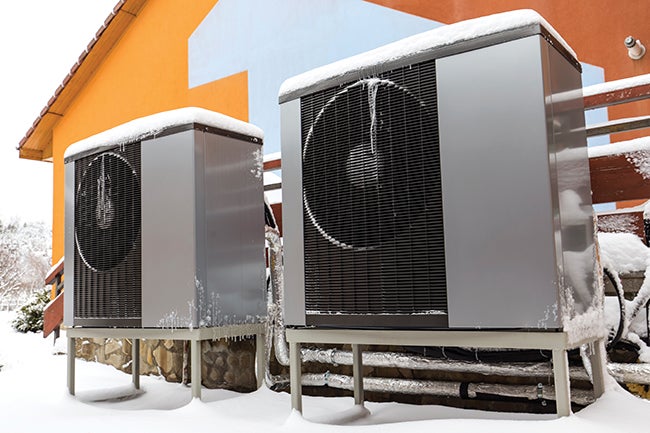
Examples of electrification include the use of EVs, along with switching from gas-fired heating and cooling systems to heat pumps (Figure 1). Industrial processes powered by fossil fuels such as coal and natural gas could instead use electric arc furnaces or induction heating. A building owner or homeowner could switch from gas-powered heating to electric heat, or swap a gas stove for an electric oven. Electric water heaters are another technology driving electrification.
 |
|
1. Heat pumps are known for being energy efficient. The technology uses electricity and refrigerant to provide heating and cooling. Heat pumps can replace gas-fired furnaces or heating oil systems. Source: Envato Elements |
Said Patel, “Electrification is not optional. It’s arithmetic. EV adoption is accelerating, data center demand is rising, and heat pumps are replacing gas heating, all while residential load volatility increases. As the demand side electrifies, the most efficient and effective way to meet this projected growth is through supply-side electrification. Just replacing an [internal combustion engine] vehicle with an EV or a gas furnace for a heat pump would simply shift distributed combustion to centralized fuel burning.
“While utilities need to lead the decarbonization of centralized generation, they cannot rely solely on [front-of-the-meter] electrification and transmission expansion to meet this demand growth. Permitting and build timelines are simply too slow to keep pace,” said Patel. “Utilities should include distributed solar and storage as a critical part of their decarbonization goals. These DERs [distributed energy resources] not only help to reduce peak strain and defer grid upgrades, they also give utilities flexible capacity at the grid’s edge. When these grid-support programs are voluntary and provide value and compensation to customers, such as improving customer resilience and bill control, they have a better rate of success.”
Patel added, “For example, batteries are proving to provide significantly more flexibility and grid support than traditional peaker plants. Software-enabled and standardized [behind-the-meter] batteries can act as frequency response assets and load balancing nodes when managed in aggregation in the cloud. Where customer-owned devices are involved, these capabilities rely on voluntary enrollment and well-designed incentive structures that respect customer priorities. Bottom line, aggregated distributed assets create dispatchable capacity that not only integrates with utility operations, but enhances resilience and flexibility.”
Getting electricity consumers, whether in the industrial or residential space, to embrace electrification has been a challenge, in part due to the costs associated with installing heat pumps, installing EV chargers, and upgrading electrical panels to handle an increased load.
“To drive electrification, governments should intervene by funding research and innovation, offering subsidies, enacting legislation, or providing other incentives to move electric vehicles and systems from early adoption to mass production. This is because their initial capital costs are typically much higher than alternatives, preventing widespread adoption,” said Mourad Chergui, senior product manager for Delta-Q Technologies. “Government support is often needed until electric systems become mature and widely produced. Although the total cost of ownership of electric systems [including acquisition, operation, service, and maintenance over the long term] is lower than that of alternative technologies, this alone is not enough to convince users to switch.”
Managing Electricity, Supporting Grid Flexibility
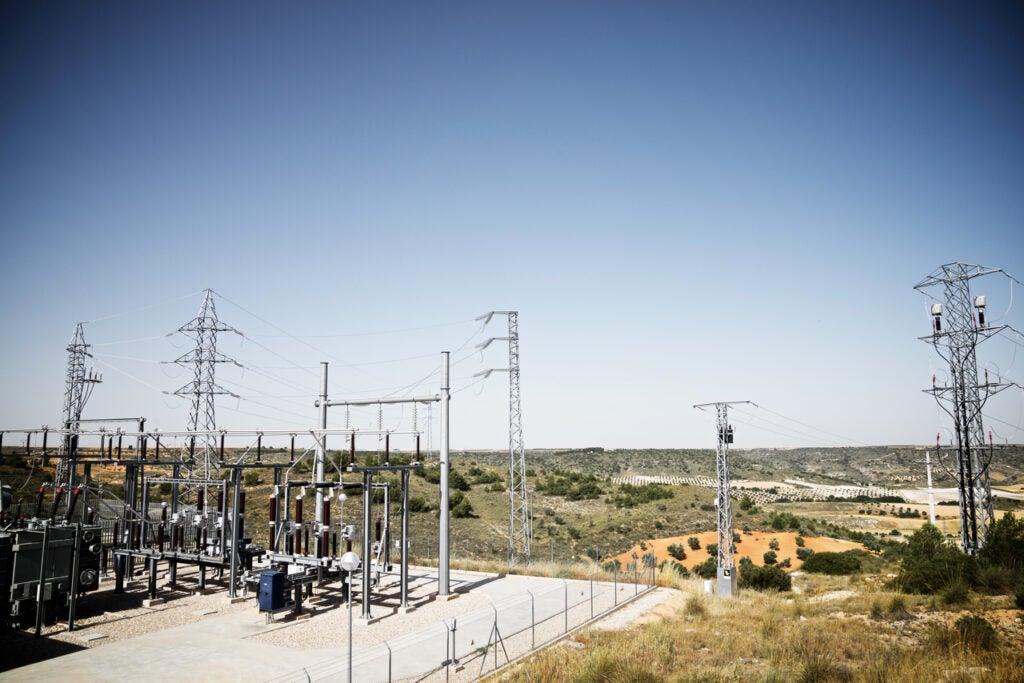
Kristie Deiuliis, managing director, Strategy, Planning & Optimization Infrastructure Advisory for Black & Veatch, said electrification technologies can help utilities manage electricity (Figure 2), and support grid flexibility. “Electrification technologies including electric vehicles, heat pumps, smart chargers, and batteries can help utilities manage electricity more effectively by turning flexible electric loads into controllable grid assets,” said Deiuliis. “These devices can shift electric usage to off peak times, absorb surplus renewable energy, and return power to the grid, which enhances stability and reduces strain on infrastructure. Their connected, data-rich operation improves grid visibility and forecasting, while their ability to store or adjust energy use supports renewable integration, reduces costs, and strengthens overall grid resilience.”
 |
|
2. Proactive electric vehicle (EV) charging programs can give utilities the ability to shift demand to off-peak hours. Source: Envato Elements |
Said Deiuliis, “Electrification is a critical element to any entity’s decarbonization plan because it reduces the reliance on combustible fuels and processes that create carbon and other greenhouse gases. Replacing or retrofitting technologies or processes that rely on fossil fuels or other non-electric energy sources with electric alternatives is both fundamental and essential to the ability of any public agency, utility, or company’s ability to decarbonize its operations over time.”
Deiuliis told POWER, “There are a wide range of electrification technologies, each of which should be evaluated for their feasibility and cost/benefits to a particular entity. Not all electrification technologies are universally practical for every entity or application. An assessment to ensure that investments achieve their intended benefits is important to align the investment in electrification to the intended environmental, economic, and operational objectives.”
Khalid Mandri, president of ABB Installation Products, said, “As global electricity demand continues to grow, electrification has become the cornerstone of any meaningful decarbonization strategy. According to the International Energy Agency (IEA), utilities need to refurbish or construct more than 80 million kilometers of grids worldwide by 2040—equivalent to rebuilding the entire existing global grid. This expansion is essential to decarbonize electricity supply and integrate renewable energy sources into the power system.”
Mandri added, “The fastest path to decarbonization is optimizing existing infrastructure through high-efficiency motors and digital energy management tools that enable industries to do more with less, reducing global energy demand while maintaining productivity.” Mandri told POWER, “Technology is key to the AI [artificial intelligence]-driven data center revolution and grid modernization, including advanced undergrounding solutions, digital substations, battery energy storage systems [BESS], microgrids, grid-forming technologies, and digital twins.”
Home Energy Solutions
POWER spoke with several companies that provide electrification solutions at the recent InterSolar and Energy Storage North America event in San Diego, California. Many electric-powered systems were originally designed to provide backup power in the event of an outage, but the technology has evolved to become a whole-home power provider. Lunar Energy’s solution has 20 kWh of battery capacity. It’s designed to work with a solar power system, with the battery available for backup power and energy storage.
Lunar Energy said its solutions incorporate knowledge gained from operating millions of distributed home energy resources under the Moixa GridShare software platform in use outside the U.S. Lunar’s Weather Watch feature ensures the battery is fully charged if bad weather is approaching, and will maintain that charge until the storm is out of the area. The Lunar system also provides real-time data about the system’s usage, so consumers know the amount of power available, and the battery recharges each day. The company’s Lunar AI keeps track of energy prices, optimizing and automating the system to help control costs.
 |
|
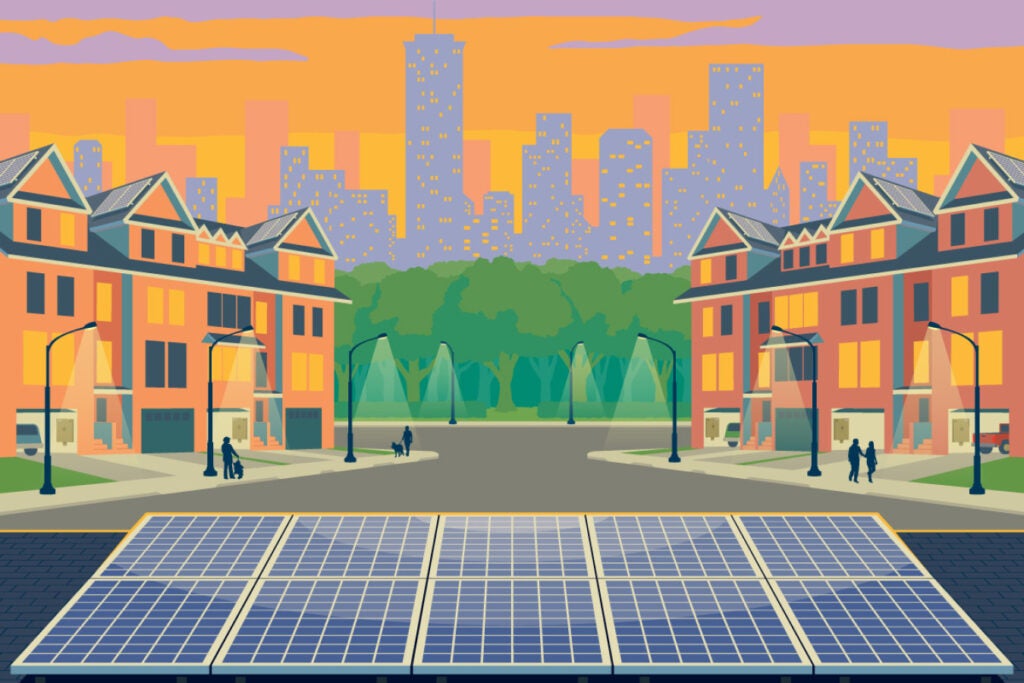
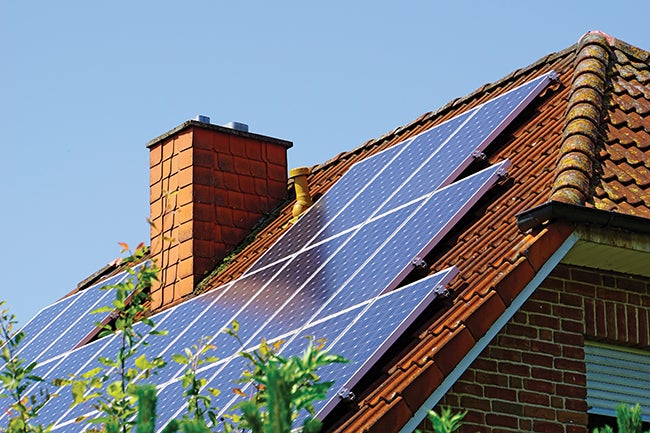
3. Electrification is driving a transition toward smarter distribution networks. This residential solar array represents the growing volume of variable renewable generation that modern utility operations must now orchestrate. Source: Envato Elements |
FranklinWH provides a whole-home energy management and storage solution. The company’s FranklinWH System integrates solar generation (Figure 3), energy storage, and intelligent energy management to provide protection against power outages or other electricity disruptions. The system can manage solar, battery, a generator, an EV, and grid power, allowing homeowners to have full control over their energy.
Just days after the InterSolar event, WeaveGrid, a grid-edge orchestration software provider for electric utilities, and FranklinWH announced a partnership to enable the participation of FranklinWH residential batteries in utility customer programs with device-level dispatch, enabling utilities to target specific distribution constraints and operating conditions.
Tau, considered a pioneer in advanced electrification, in January at the CES 2026 event in Las Vegas, Nevada, unveiled Ion, the company’s software-defined power electronic platform. The platform is designed to be applied and scaled across mobility, energy, industrial systems, and the power grid. The company said Ion “enables high-performance power conversion solutions that are being leveraged for charging systems, motor drives, data centers, and distributed energy applications.”
“Power converters are fundamental to how energy moves around the world, and Ion reinvents how they are built and deployed,” said Wesley Pennington, founder and CEO of Tau, at the January announcement. “Developing conventional power electronics requires significant capital investment and highly specialized expertise, while off-the-shelf solutions force compromises in efficiency, cost, and packaging. Ion delivers a modular, software-defined alternative that enables rapid, cost-effective deployment of highly efficient power systems—accelerating electrification and the deployment of new energy resources across industries.”
Using Clean Energy, Adding Intelligence
Vanessa Richter, Energy Industry Solutions Expert at Oracle Utilities, said, “Electrification is highly important to reaching decarbonization goals; it’s the ultimate goal. The only way to pull carbon out of the system is to move to clean energy, with the choice to use clean energy sources on the grid when they are available and at times when we have clean energy stored. And, while the barriers to decarbonization are myriad, widespread electrification gives us the best chance to do so affordably so that load can be shaped and controlled to maximize grid investments and reliability.
“Utilities and other entities must find ways to accomplish their electrification goals by helping business and consumer customers through education and by providing options and incentives for end users,” said Richter. “For example, utilities can help customers understand the benefits of switching to electric appliances and options for moving away from furnaces to heat pumps or replacing gas-powered hot water heaters and stove tops with electric versions. As another example, the increasingly important role of EVs is not met by an equal understanding of the opportunity for transportation electrification. Utilities can be centers of information, rebates, and training to break down barriers as well as put plans for EV charging infrastructure into place to facilitate changes.”
“Electrification isn’t just about adding load. It’s about adding intelligence,” said Gigawatt’s Patel. “The first step is to deploy key hardware throughout the grid, such as behind-the-meter solar, distributed storage, and smart, grid-forming inverters. Once these key distributed energy resources have reached a critical mass, they can then be aggregated, with customers opting in to be part of a VPP [virtual power plant] program, in the cloud and orchestrated to support both supply-side and demand-side management via VPP-capable platforms. This software coordination turns endpoint hardware into grid supporting assets instead of grid straining ones. They give utilities urgently needed visibility and controllability across these distributed assets, while supporting grid electrification.”
 |
|
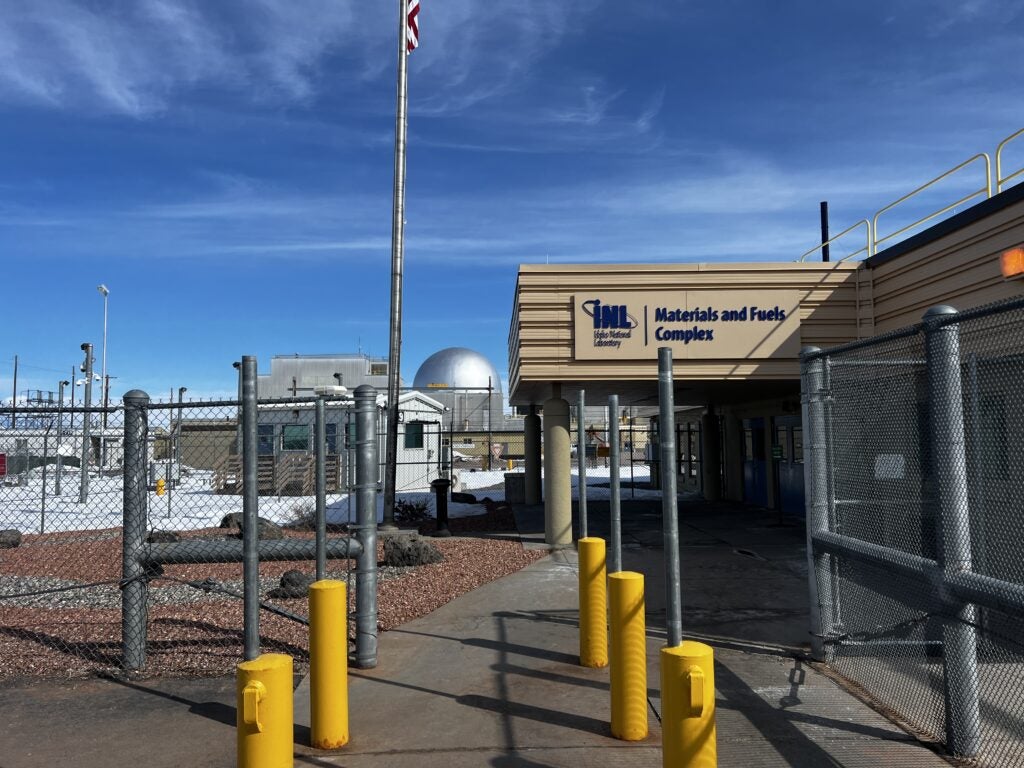
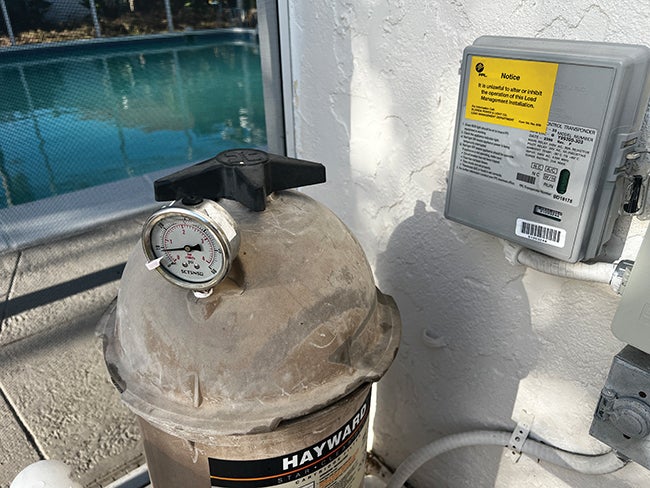
4. A load control transponder (shown at right) allows utilities to cycle high-demand devices—such as pool pumps and water heaters—providing rapid demand reduction to help prevent brownouts during peak periods. Source: POWER |
Richter said, “There are many technologies and applications of AI and grid tools that take the load curve and automate signals [such as communication with EV chargers, pool pumps (Figure 4), and smart thermostats] so everything at business and home can take advantage of appropriate times to run or charge when energy is clean and cheaper. Set and forget is a great use of technology because we can set parameters, make sure it’s going to run, enable it to happen at scale, and capture electricity when it’s best for grid and wallets. This approach works, but it takes steady adoption by customers willing to take actions. We are seeing good adoption, but it’s not yet large scale. Many ecosystem companies are doing this well and, when combined with outreach, this can help utilities enhance market penetration at scale.”
Delta-Q Technologies’ Chergui said, “As demand for electrical power increases, electrification technologies are ushering in a new era of smart grids that help utility companies better manage electricity supply. Idle battery equipment can store energy and release it when demand rises, enabling better energy management without building additional electricity generation. Electrification also allows the use of locally produced renewable energy from solar, wind, or biofuels to relieve strain on the electrical grid, especially during peak demand.”
—Darrell Proctor is a senior editor for POWER.