How do you know when you’re in a technological renaissance? When science, technology, and economics have lined up to produce something new.
COMMENTARY
In Europe it took artists, scientists, and craftspeople until 1550 to recognize that they had created the Renaissance—about 200 years into the revival of the classical teachings of ancient Greece and Rome, flowering of the arts and literature, and the beginnings of modern science. Today, we can see that we are in a renaissance in nuclear science and technology, and that it started only about a decade ago. We should take advantage of this realization.
The last few months have made it obvious. Since June, developers of five different reactor models have sustained “initial criticalities,” essentially very low-power chain reactions, to demonstrate the physics of their designs. So many in such quick succession is an unprecedented streak of milestones.
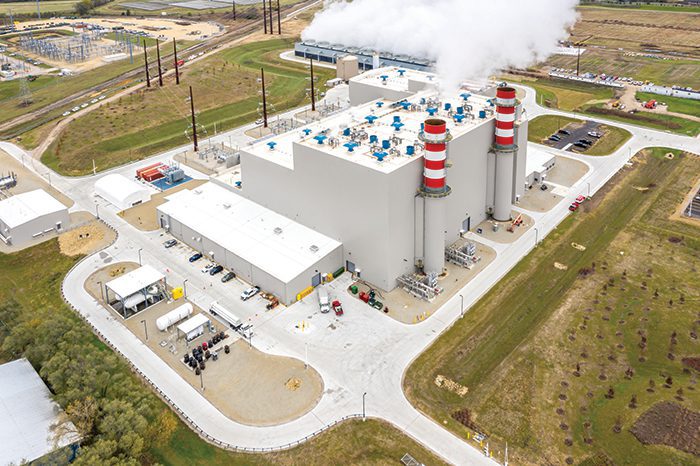
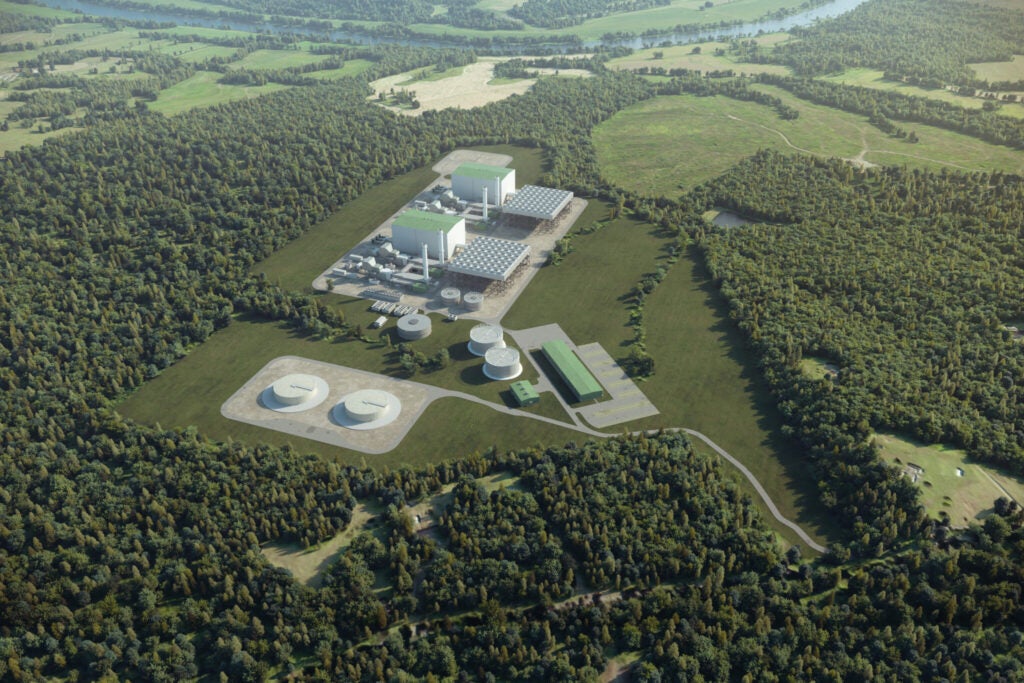
These are still a long way from being commercial products, but advanced reactors are under construction—in Wyoming, Idaho, and Tennessee—with construction of another due to begin in Texas. The companies behind those projects are among at least five that have each raised more than $1 billion in start-up funding.
Depending on how you count, there are a dozen start-up advanced reactor companies trading on Wall Street, and several more in related fields, like uranium enrichment. Others, seeing investor enthusiasm, have announced plans to go public.
Several states have established offices to assist nuclear companies in getting started within their borders, or set aside money to help. And the White House has set goals for nuclear expansion, as an investment in national security, among other benefits.
The politics of nuclear have changed, from New England to California. All six New England governors recently pledged to consider nuclear in their energy plans, even though several of those states passed moratoria on construction of new reactors over the last few decades. And California has reversed course to keep a nuclear power plant open because it is seen as essential to energy supply and global warming goals. The state is also hosting numerous nuclear start-ups with ambitious technical plans.
To borrow a phrase—from the medieval era, not the renaissance—the stars are lining up. When it happens in the heavens, this rare alignment is called a syzygy. Two motivating factors are external to the nuclear field: energy demand is growing and projected to grow sharply in the near future, and worldwide there is more concern about carbon-loading of the atmosphere and the oceans with greenhouse gases. Nuclear can help solve both. And two more are native to nuclear: a new generation of researchers and engineers are turning to the field, and they are using new tools, from 3D printing to artificial intelligence, to reduce costs and speed up construction.
If we recognize a pattern in these developments, how should we respond, to maximize the benefit to our prosperity, health, and security?
For starters, look ahead to the predictable bottlenecks, and move to minimize them. Tennessee and New York are funding new programs to train young people to work in the nuclear energy industry, for example. And the U.S. Department of Energy has taken a few steps to beef up the supply chain, for fuel and for critical components whose cost can be minimized if suppliers see a predictable demand. We should also improve coordination between government and industry to promote exports of nuclear energy hardware, which will help achieve economies of scale for factory-produced components, help the environment worldwide, meet the ravenous energy demand of countries with emerging economies, and improve American influence around the world.
The end point isn’t clear yet. Some of the designs now emerging will advance to commercial prototypes and then commercial production. A few will achieve commercial successes. Others, as faced by start-ups in all fields, will fall by the wayside. But this is a far cry from the 1980s, 1990s, and 2000s, when there were hardly any “new builds” in nuclear.
We can also help by recognizing that visible progress will not be smooth. Field engineers will find practical problems with designers’ work. Many of the new designs are less challenging to build, because they will operate at lower temperatures, but we will find problems with materials and fabrication techniques. And in first-of-a-kind projects, industrial mishaps are not unknown.
We should recognize that we are at a technological and commercial inflection point, even if the path ahead will not be as rosy as a Renaissance painting. It is a syzygy none the less, and we should embrace it.
—Mark Todd Peters, PhD is president of the American Nuclear Society.