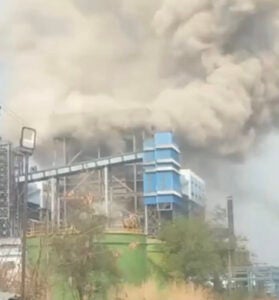
A catastrophic boiler explosion at Vedanta Limited’s Chhattisgarh Thermal Power Plant (VLCTPP) in east‑central India has left scores of workers dead and injured, prompting questions over boiler safety enforcement and operator oversight at privately owned coal plants in the country.
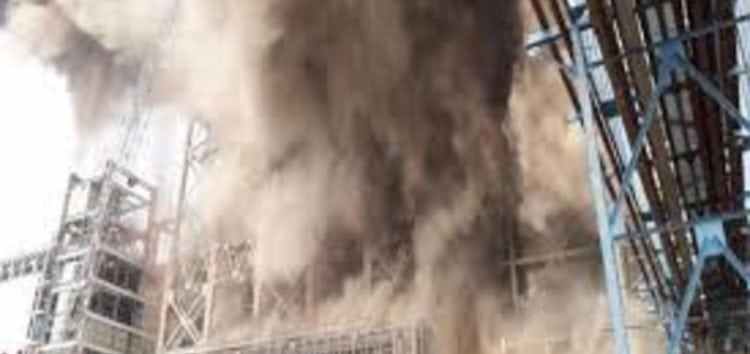
The explosion, which occurred on April 14, has triggered parallel criminal, technical, and administrative investigations into alleged safety lapses and negligent operation at the coal‑fired station. While casualty figures vary across official and media accounts and may be revised as critically injured workers succumb to their injuries, The Economic Times reported on April 19 that the death toll had risen to 24. Four workers died at the scene, and others succumbed to burn injuries over the following days. At least 36 workers were suffering “grievous burn injuries,” and three were still in critical condition, the newspaper said.
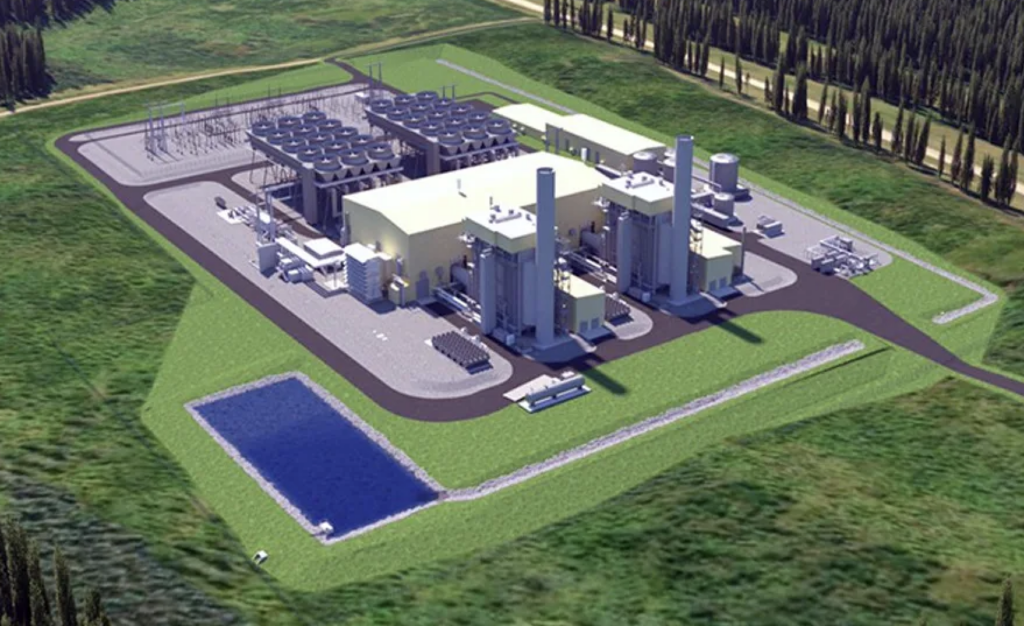
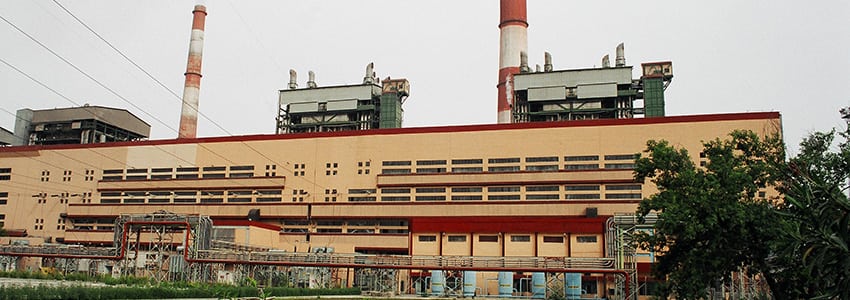
VLCTPP is a coal‑fired baseload facility at Singhitarai in Chhattisgarh’s Sakti district, configured as two 600‑MW supercritical units for a total planned capacity of 1,200 MW, according to Indian environment ministry clearances and Central Electricity Authority (CEA) filings. Originally proposed and built out to roughly 80% (Unit 1) and 30% (Unit 2) by developer Athena Chhattisgarh Power, the project spent years as a stranded, non‑operational asset in India’s insolvency process before Vedanta acquired it in 2022 for about ₹5.6 billion (roughly $68 million) in a stressed‑asset deal, then amalgamated it into Vedanta Ltd. in 2023 and rebranded it as Vedanta Ltd. Chhattisgarh Thermal Power Plant.
Company materials describe the revived plant—whose first 600‑MW unit completed trial operations and received commercial operation declaration in July 2025—as a “modern, efficient, and high‑performing” baseload asset for both Vedanta and Chhattisgarh. India’s CEA data indicate that Unit 1 finally entered commercial operation in mid‑2025, while Unit 2 remained under construction at the time of the April 2026 boiler explosion.
At least 10 people died and another 40 were injured after an explosion at the Vedanta coal-fired power plant in the Indian state of Chhattisgarh
This power plant, which is one of the largest private generating facilities in India, supplies electricity to a nearby giant aluminum… pic.twitter.com/EQZjZTxCgu
— Sprinter Press Agency (@SprinterPress) April 14, 2026
Boiler Safety: Reported Findings So Far
According to police and company statements reported by NDTV and other Indian outlets, the April 14 blast occurred in Unit 1 when a tube carrying high‑pressure steam from Boiler 1 to the turbine ruptured, releasing superheated steam and causing extensive burn injuries among workers in the area.
POWER has requested access to the underlying technical reports but has not yet been able to review them independently, and is therefore relying on media summaries of those documents.
NDTV, citing what it describes as a preliminary technical report from Chhattisgarh’s chief boiler inspector and a parallel analysis by the Forensic Science Laboratory (FSL) in Sakti, reported that investigators found an excessive accumulation of coal fuel in the Boiler 1 furnace, which reportedly led to a rapid, uncontrollable build‑up of internal pressure. The media conglomerate’s summary suggests the pressure was high enough to force a lower boiler pipe out of its seated position, rupturing the bottom‑ring header region and making the steam‑line failure a secondary consequence of the furnace over‑pressure rather than the initiating cause.
NDTV also reports that control‑room logs showed repeated malfunctions of the primary air (PA) fan—which is critical for maintaining the air–fuel ratio—starting around 10:30 a.m., but that operators continued running the unit and, between about 1:03 p.m. and 2:09 p.m., ramped Boiler 1 load from roughly 350 MW to 590 MW despite those warnings.
The preliminary report, as summarized by the network, suggests that impaired air flow, a build‑up of unburnt fuel on furnace surfaces, and aggressive load ramp‑up created a furnace‑pressure excursion that exceeded the design margin of the lower piping, causing the internal explosion that ruptured header pipes and vented high‑enthalpy steam and combustion products into adjacent work areas. In the same report, which echoed details from other news outlets, NDTV flagged “lapses in upkeep and negligent operation,” including alleged failures by Vedanta and its contractor NTPC GE Power Services Limited (NGSL) to adhere to prescribed machinery‑maintenance and operational standards.
On the legal front, police in Chhattisgarh’s Sakti district say they have registered a First Information Report (FIR)—a formal criminal complaint under Indian law—at Dabhra police station in connection with the blast, naming the chairman of Vedanta’s parent group and several other company and plant officials. Sakti Superintendent of Police Prafull Thakur, quoted by NDTV and other Indian outlets, has said the case was filed under Section 106 (causing death by negligence), Section 289 (negligent conduct with respect to machinery) and Section 3(5) (common intention) of India’s Bharatiya Nyaya Sanhita (BNS)—the country’s new criminal code—and that “eight to ten” individuals have been named. Additional names may be added if further responsibility is established, media reports suggest.
As of publication, the FIR has not been released, and POWER has not independently reviewed the complaint.
Alongside the criminal case, media reports cite officials who say multiple parallel inquiries are underway into the April 14 explosion. State authorities have constituted technical teams linked to the state chief boiler inspector, the Forensic Science Laboratory in Sakti, and Chhattisgarh’s Industrial Safety and Boiler departments to examine whether instrumentation, controls, and safeguards against furnace over‑pressure were functioning as intended.
Separately, the Sakti district administration has ordered a magisterial inquiry led by the Sub‑Divisional Magistrate of Dabhra. The inquiry has been tasked with reporting within 30 days on the cause of the accident, possible technical or human error, and the adequacy of prior safety inspections.
A seven-member expert team deployed under the Central Boiler Board and India’s Department for Promotion of Industry and Internal Trade—comprising engineers from Bharat Heavy Electricals Limited (BHEL) and NTPC Limited—has arrived at the site to conduct a detailed inspection of the boiler system, safety mechanisms, and material certifications, according to Indian media reports. A comprehensive report is expected within 30 days. Public statements by officials and commentators indicate that investigators across all parallel probes may be scrutinizing the respective roles of Vedanta and NGSL in maintenance regimes, boiler inspection practices, and decisions to ramp load ahead of the failure.
Similar Incidents: Fatal Boiler Accidents at Thermal Power Plants Since 2017
Serious boiler incidents at coal‑ and gas‑fired power stations are rare but not unprecedented. Accident reviews in North America, Europe, and Australia generally highlight similar failure modes, which include combustion‑control problems, protection systems that do not perform as designed, and human error during start‑up, shutdown, and abnormal operating conditions.
The National Board of Boiler and Pressure Vessel Inspectors, which compiles incident data from U.S. and Canadian jurisdictions, has reported that in a 10‑year analysis of 23,338 boiler and pressure‑vessel accidents recorded between 1992 and 2001, roughly 83% of incidents were linked to human oversight or lack of knowledge—including low‑water conditions, improper installation or repair, operator error, or poor maintenance—rather than spontaneous equipment failure.
Official investigations into recent incidents at thermal power plant boilers have identified similar patterns. In November 2017, a catastrophic explosion at NTPC’s Feroze Gandhi Unchahar Thermal Power Station in Raebareli district, Uttar Pradesh—a 500‑MW unit then operating on a trial basis—killed 45 workers and injured more than 100. Subsequent accounts, based on NTPC’s own statements and POWER‘s July 2018 reporting on an internal investigation, indicate that heavy ash buildup in the boiler and efforts to clear deposits while the unit remained online led to a boiler‑side release of hot gases and ash into an area where workers were conducting ash‑cleaning operations. An internal NTPC report later cited an “error in judgment” by plant operators—specifically, the decision to keep the unit online while ash was being cleared—as the primary cause of the blast, according to those reports. India’s power ministry subsequently constituted a committee under the Central Electricity Authority’s Member (Thermal) to investigate the boiler explosion and fix responsibility, and the state government ordered a parallel magisterial inquiry. A 2024 written reply in India’s lower house of Parliament indicated that NTPC’s disciplinary process ultimately imposed compulsory retirement on the then operations and maintenance head at Unchahar.
An October 2020 independent report by India’s Central Pollution Control Board, submitted to India’s National Green Tribunal, meanwhile, examined the July 2020 Unit V boiler blast at NLC India’s lignite-fired Thermal Power Station II in Neyveli, Cuddalore district, Tamil Nadu—the second fatal boiler blast at the same station within two months. That incident killed 15 workers in total and injured 17. After the report identified “insufficient knowledge amongst staff,” poor safety-protocol awareness, inadequate risk assessment, and an emergency plan with no measures to handle the conditions that led to the explosion as key contributors, the National Green Tribunal subsequently ordered a safety audit of all thermal power plants in India and directed interim compensation of ₹5 crore to victims.
Serious incidents have occurred elsewhere around the world. On June 29, 2017, five workers at Tampa Electric’s Big Bend Power Station in Apollo Beach, Florida, were killed when a blockage in a slag tank under Unit 2’s boiler caused molten slag at temperatures exceeding 1,000F to burst through onto workers who were water‑blasting in the area, highlighting furnace‑side hazards of online maintenance at coal‑fired units.
In April 2025, a “major operational safety event” at the 424-MW Callide C3 unit in Queensland, Australia, occurred when a large “clinker”—a hard, fused ash deposit—detached from a boiler wall and fell into the furnace ash conveyor water system, releasing steam that extinguished all four burners and caused total flame loss. The ensuing flame collapse and re‑ignition produced furnace pressure swings and a positive pressure surge that dislodged insulation and cladding and damaged platforms, which CS Energy and subsequent reviews have described as a significant boiler‑pressure event driven by clinker‑management, boiler‑protection, and broader process‑safety shortcomings. (The event follows a separate May 2021 failure that destroyed the 420‑MW Callide C4 unit in Queensland, Australia, knocking 3,045 MW offline and causing statewide blackouts. CS Energy’s February 2024 investigation traced that incident to a DC‑system switching error that cut power to protection and auxiliary systems, left the turbine‑generator running without lubrication or sealing oil, and led to rapid hydrogen combustion and explosions inside the generator.)
In January 2024, an explosion and fire at JERA’s Taketoyo Thermal Power Station in Aichi Prefecture, Japan—a coal and biomass co-firing facility—was traced by JERA’s accident investigation committee to design flaws in the biomass wood-pellet conveyor system that allowed high concentrations of dust to exceed the lower explosive limit. While no injuries were reported, the fire lasted more than five hours, and JERA estimated repair costs would exceed $68.5 million for the 2024–2025 financial year.
—Sonal C. Patel is senior editor at POWER magazine (@sonalcpatel, @POWERmagazine).