
security
-
 Trends
Meet the Tools Helping Power Companies Separate Threats from Noise
As threats to power companies rise—from cyberattacks to theft and vandalism—many utilities are rethinking how to secure facilities and critical infrastructure. Outdated systems that constantly trigger false alarms from wind, weather, or wildlife are draining resources—making it imperative for utilities to modernize their security to improve response, cut costs and reduce reliance on armed personnel. […]
-
 Legal & Regulatory
Security Is Vital for Data Centers in an Innovation-Driven World
Data centers serve as the silent backbone of our daily lives, the epicenter of digital communication, corporate data, and countless innovations including artificial intelligence (AI), cloud computing, and the
-
 Commentary
DeepSeek Launch Should Prompt AI Security Reviews Across the Nuclear Industry
The new artificial intelligence (AI) model from China called DeepSeek created a stock market meltdown on Monday, with the Nasdaq composite dropping 3% and the S&P 500 falling 1.5%. Beyond hammering the share prices of the world’s most valuable companies, DeepSeek has potential implications on vast swaths of America’s innovation industries—including energy. COMMENTARY While U.S. technology companies […]
-
 Connected Plant
The Power Sector’s High-Stakes Battle for Cyber-Resiliency
The power sector’s relentless pursuit of an increasingly connected power paradigm amid an escalating cyber threat landscape demands an urgent, multifaceted strategy for cybersecurity. Recently, the sector has embarked on innovative methods to tackle inherent challenges in its evolving quest for a robust cybersecurity posture. In 2022, a third party alerted industrial control systems (ICS) […]
-
 Energy Security
Powering Through: Utilities Prioritize Security, Innovation, and Collaboration During Critical Substation Upgrades
Spurred by the need to modernize and adapt, utilities are undergoing the same type of widespread digital transformation that other legacy industries have endured, except the power grid presents distinct challenges that add layers of complexity, pressure, and urgency. The International Energy Agency (IEA) recently issued a report warning that to maintain a reliable electricity […]
-
 Power
PowerWhy Utilities Need to Supercharge Their Approach to Cybersecurity
People know a storm can disrupt the electrical grid and cause a wave of complications across the region or country very quickly. But now, for those charged with grid reliability and keeping the lights on
-
 Energy Security
Next-Generation Ballistic Protection Ensures Long-Term Utility Security
In July 2014, the Department of Homeland Security mandated that utilities meet requirements and measures outlined in the North American Electric Reliability Corporation’s (NERC’s) critical infrastructure protection (CIP) standards. These standards regulate the physical safety and security of all aspects of the power grid, including energy substations and generators. They outline steps toward prioritizing which […]
-
 Commentary
The Future of Substation Security: Embracing AI-Powered Solutions for Utility Companies
A modern town without power—shuttered stores, empty parking lots and useless traffic lights—can resemble an eerie, dystopian future where residents struggle to get what they need. This is the short-term reality for localities that have been victims of targeted substation attacks, which have been rising steadily for the past decade. COMMENTARY At best, these widespread […]
-
 Power
PowerKeeping Substations Shielded: Maintaining Proper Protection from Lightning
Electrical substations utilize direct lightning stroke shielding to help ensure proper operation, and to prevent costly damages and extended outages. While modern substation designs and equipment make them
-
 Safety
Cameras Are an Important Security Tool for Power Plants and Substations
Physical security of plants and substations has become a real concern for power companies. In an interview with NPR, Puesh Kumar, director of the U.S. Energy Department’s Office of Cybersecurity, Energy
-
 Cybersecurity
Cybersecurity: Power Industry–Led Vendor Software Assurance Inventory Launched
Several major power companies have launched a software assurance database that will serve as a software bill of materials (SBOM) repository for the power industry. Part of a long-sought solution to address a critical supply chain cybersecurity risk, the collaborative effort announced on Feb. 8 seeks to help vendors identify and remediate vulnerabilities in software […]
-
 News
NewsCovering More with Less: Securing Renewable Energy Sources
A wide range of industries fall under the umbrella of critical infrastructure, and they are all—as the name implies—critical. From energy production and water treatment to transportation and data storage, everything within critical infrastructure serves an essential purpose when it comes to the continued functioning of the nation. Unfortunately, that makes critical infrastructure sites a […]
-
 Nuclear
IAEA Embarks on Unprecedented Mission to Inspect Nuclear Power Plant in Ukrainian ‘War Zone’
An expert team from the International Atomic Energy Agency (IAEA) has arrived in Kyiv and is readying to inspect Ukraine’s Zaporizhzhya Nuclear Power Plant (ZNPP) for damage from weeks of shelling. The development marks a significant breakthrough for the agency, which has for the past month pleaded with Russia and Ukraine to allow it to […]
-
Nuclear
IAEA: Shelling at Zaporizhzhya Nuclear Plant Raises ‘Real Risk’ of Nuclear Disaster
(Updated): The International Atomic Energy Agency (IAEA) is growing increasingly alarmed by military action at Ukraine’s Zaporizhzhya nuclear plant, warning that artillery shelling at the plant site on Aug. 5 underlines a “very real risk of a nuclear disaster.” IAEA Director General Rafael Mariano Grossi in a statement on Aug. 6 said new information about […]
-
IIOT
Digitalisation and Cyber Resilience: Why the Energy and Utilities Sector Is a Top Target for Cybercrime
The energy and utilities sector is not just the lifeblood of the world’s economy, but fundamental to society’s existence as a whole. Yet, recent events have highlighted just how volatile and unpredictable it can be. Output is influenced by everything from weather patterns to war, and no business, consumer, or household is immune from the […]
-
 Nuclear
How Does Nuclear Power Fit into a Country’s Energy Policy?
Reliable energy forms a fundamental building block of industrial and modern society. When a country examines its energy profile and determines its energy policy, it considers three main pillars: energy equity
-
 IIOT
IIOTFour Questions You Must Ace to Ensure Sound Cybersecurity in OT Systems
Some cybersecurity experts believe hackers today pose a greater threat than ever to power plants and electric grids. Much of the operational technology (OT) used in power stations and throughout the grid was installed at a time when cybersecurity was more of an afterthought than a focal point in the system design. Furthermore, the pool […]
-
 Press Releases
Abloy unveils keyless padlock with removable shackle
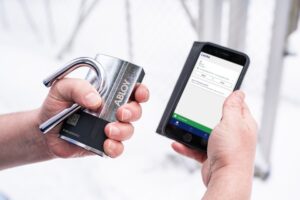
The new version of the keyless ABLOY BEAT padlock, designed especially for critical infrastructure, features a removable shackle. The highly weatherproof lock is operated with a mobile app and connects to both ASSA ABLOY’s and third-party management and operational systems. JOENSUU, Finland, February 24, 2022 – Abloy Oy today unveiled a digital, keyless padlock with […]
-
 Interview
The ‘Weakest Link’ in Supply Chain Security
The energy transition will bring with it a new generation of cybersecurity challenges for the power sector. While information-sharing has been valuable, strategies to address issues related to vendor security, cyber talent, and lagging investment will also be critical, a former utility supply chain executive who led the development of an industry-wide cybersecurity risk exchange […]
-
 Power
PowerPower Sector Risks Loom Large Over the Energy Transition
The fog of uncertainty that hangs over the global power industry is getting larger and denser as generating companies and utilities navigate ever more complex challenges.
-
 Connected Plant
The Benefits of Explosion-Protected Cameras in High-Risk Environments
Many critical infrastructure sites contain areas that are classified as hazardous due to a high risk of explosion. What makes most of these locations dangerous is the presence of flammable materials such as liquids, gases, vapors, and dust. In these areas, the use of network cameras can significantly improve the overall health and safety posture […]
-
 Commentary
Illuminating the Dark Side of the Smart Grid
The benefits of smart grid technologies and data-driven management are well understood. Using open protocols to control energy resources, extract information, and optimize responses can enable enormous productivity and stimulate new services. Similarly, the accumulation of data can inform better planning for a more resilient grid. But, as explained in “The Dark Side of the […]
-
Connected Plant
Nozomi Networks Pioneers SaaS Security and Visibility Solution for Dynamic IoT and OT Networks
SAN FRANCISCO, Oct. 27, 2020 — Nozomi Networks Inc., the leader in OT and IoT security, today introduced Vantage™, an innovative SaaS-based OT and IoT network visibility and monitoring solution designed to meet the evolving requirements of IoT-enabled infrastructures. “Vantage is a game-changer when it comes to simplifying the integration and centralized management of visibility […]
-
 Cybersecurity
Power Sector, Federal Entities Scramble to Close Supply Chain Security Gaps
Marking another major federal effort to address potential supply chain risks to the bulk power system (BPS), the Federal Energy Regulatory Commission (FERC) on Sept. 17 sought industry’s perspective on a number of important considerations, including possible actions the regulatory body could take to address security gaps. The U.S.-based power sector, meanwhile, has moved quickly […]
-
 News
NewsEPA Reinterprets ‘Ambient Air,’ Further Tweaks New Source Review
The Environmental Protection Agency (EPA) has finalized a change to a long-standing policy interpreting “ambient air”—a foundational concept under the Clean Air Act that applies to all types of air pollution, from ground-level ozone, particulate matter, and greenhouse gases. While the agency framed the change as part of a suite of actions to reform New Source […]
-
 News
NewsProtecting Critical Infrastructure from Drone Intrusions
Drones represent a classic good news/bad news scenario. The good news is great. The bad news is terrifying. On the good news front, drones can keep utility-sector workers safely on the ground, with the
-
 Connected Plant
FERC, NERC Want to Disclose Names, Penalties for Cybersecurity Reliability Violations
The names of bulk power system entities that violate federal critical infrastructure cybersecurity reliability standards—along with identification of standards violated and penalties assessed—may soon be routinely disclosed under changes proposed by the Federal Energy Regulatory Commission (FERC) and the North American Reliability Corp. (NERC). The proposed changes, which FERC and NERC outlined in an Aug. […]
-
 News
NewsNRC Staff Recommends Scaling Back Reactor Inspections
In a bid to enhance the reactor oversight process (ROP), staff at the Nuclear Regulatory Commission (NRC) has recommended the commission change qualitative descriptions for some color labels that signify risk, scale back on the time and scope of some annual inspections at the nation’s nuclear power fleet, as well as increase intervals between inspections. […]
-
 News
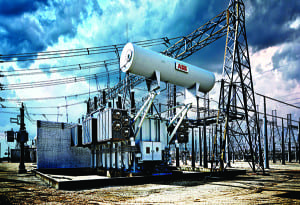
NewsConcrete Better Than Cameras in Protecting Grid
Some high-tech security features meant to protect U.S. power plants from physical attack may not be as effective as good old-fashioned fences and concrete, according to a Georgia Institute of Technology graduate who modeled security measures in a computer simulation while earning her PhD in Public Policy. Jenna McGrath, who graduated in December 2018, published […]
-
 Connected Plant
Control Room Considerations: What You Need to Know
Control rooms are vital for organizations to efficiently and effectively monitor multiple information streams and make accurate mission-critical decisions. With an ever-increasing number of content sources and