
incentives
-
 Legislative
One Big Beautiful Bill Act: What It Means to the Power Industry
On July 4, 2025, President Trump officially signed the “One Big Beautiful Bill Act” (OBBBA) into law. The White House called it “a once-in-a-generation piece of legislation.” The power sector is among
-
 Renewables
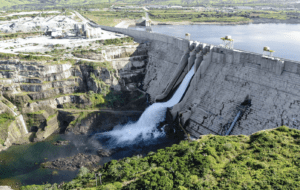
Hydropower Growth Continues, Though Policy Challenges Loom in U.S.
Hydroelectric power generation hit a 10-year high in Europe in 2024, while hydro growth in other regions—most notably China—kept the technology at the top of the list when it comes to global energy output from renewable resources. The International Hydropower Association (IHA) in its 2025 World Hydropower Outlook said hydro is playing a “stablizing role” in Europe and elsewhere when it comes to power supplies at a time of heightened concern about volatile markets and shifting policies around energy, particularly in the U.S.
-
 Legal & Regulatory
Analysis: FERC Denies Hypothetical Capital Structure Incentive for Valley Link Transmission Project
The Federal Energy Regulatory Commission (FERC) on May 13 of this year issued an order addressing the formula rate filings and requests for transmission rate incentives for the Valley Link Transmission Project Portfolio. The project is a $3-billion, 417-mile multi-state transmission initiative spanning Maryland, Virginia, and West Virginia (collectively, Valley Link). While FERC approved several […]
-
 Solar
SolarShedding Light on Solar Incentives—Why Property Owners Remain in the Dark
As the world grapples with climate change and seeks sustainable energy solutions, solar energy has emerged as a front-runner in renewable energy sources. Despite the numerous benefits associated with solar power, many property owners remain unaware of the federal, state and utility incentives available to them for installing solar panels. There are also many grant […]
-
 Solar
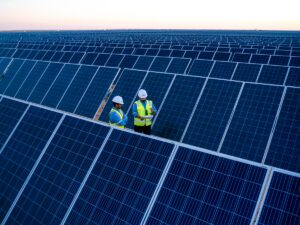
SolarUnderstanding the Domestic Content Bonus Credit and How to Maximize Incentives for Solar Projects
In May, the U.S. Department of the Treasury and IRS released additional guidance on the Inflation Reduction Act’s (IRA’s) domestic content bonus, part of President Biden’s economic strategy to boost American manufacturing, and iron and steel production. The domestic content bonus credit is available to taxpayers that certify their qualified facility, energy project, or energy […]
-
 Hydro
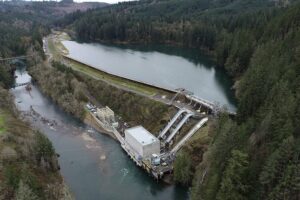
HydroDOE Injects $430M to Revitalize, Modernize U.S. Hydropower Fleet
The Department of Energy (DOE) has selected 293 hydroelectric projects across 33 states that will receive up to $430 million in incentive payments for capital improvements directly related to grid resiliency, dam safety, and environmental improvements. The funding, unveiled on Sept. 5, stems from the DOE Grid Deployment Office’s (GDO’s) Maintaining and Enhancing Hydroelectricity Incentives […]
-
 Nuclear
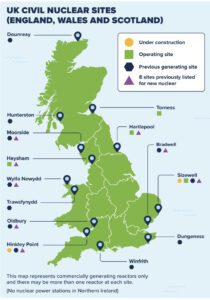
UK Picks Wylfa in Wales as Preferred Site for New ‘Mega’ Nuclear Project
The UK government has picked Wylfa in Anglesey, North Wales, as its preferred site for the country’s third large-scale nuclear power plant after Hinkley C in Somerset and Sizewell C in Suffolk. The Department of Energy Security and Net Zero (DESNZ ) on May 22 unveiled the site as its “first choice” for the project […]
-
 Interview
The POWER Interview: IRA’s Impact on Solar’s Evolution
The Solar Energy Industries Association (SEIA) and Wood Mackenzie’s recent report on solar power installations said the U.S. installed a record 32.4 GW of new solar generation capacity in 2023, including 22.5 GW of new utility-scale capacity. That’s a 37% jump from the previous record, set in 2021, and a 51% increase from 2022. The […]
-
 Commentary
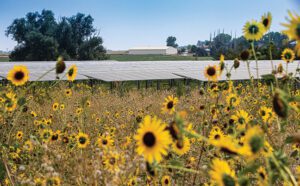
Equity in Energy: How Community Solar Is Involved
In the U.S., there has always been a direct correlation between the disparity in income and the distribution of renewable resources. Equity in energy refers to fairness in the distribution of energy, benefits, and burdens among different people and communities. It was designed to rectify historical inequalities, recognizing the need to create a fair and […]
-
 Legal & Regulatory
The Billion-Dollar Bet on Electric Vehicles
President Joe Biden signed the Infrastructure Investment and Jobs Act on Nov. 15, which allocates $550 billion in new spending over the next five years to improve U.S. infrastructure, including critical investments in the energy sector. These investments will cover power grid infrastructure, electric vehicles (EVs) and charging stations, renewable energy, nuclear power, hydropower, and […]
-
 Interview
The POWER Interview: Importance of Tax Credits and Incentives
Tax credits and incentives, also known as C&I, have long been important to support the growth of energy technologies, from oil and gas exploration to solar and wind power. Federal tax credits have lifted the U.S. renewable energy industry over the past decade, leading to rapid growth in the sector. Laurence Sotsky is the CEO […]
-
 Legal & Regulatory
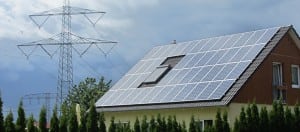
Renewable Growth Soars, Buoyed by Distributed Generation
Nameplate renewable capacity surged to more than 2,000 GW worldwide at the end of 2016, constituting more than 28% of total generating capacity (Figure 6). Most (56%) was hydropower, followed by wind (23%), and then solar, mostly from photovoltaic (PV) at about 15%. According to the International Renewable Energy Agency (IRENA) the expansion was fueled […]
-
 Nuclear
Moniz: Incentives Needed to Alleviate Nuclear Power Woes
U.S. Secretary of Energy Ernest Moniz said the time will come—perhaps 10 to 15 years from now—when “nuclear power is going to have to see a substantial resurgence.” Moniz was speaking on May 19 at the “Summit on Improving the Economics of America’s Nuclear Power Plants.” He provided opening remarks, framing the challenges facing the […]