
EPA
-
 Top Plant
Harnessing Cooling Tower Plumes to Provide Purified Water
A novel technology that is surprisingly simple in principle promises to significantly reduce water consumption in evaporative cooling tower systems by capturing water from cooling tower plumes. Sonal Patel
-
 Commentary
Reaction Swift After Supreme Court Strips EPA’s Authority Over Emissions
Reaction on both sides of the issue was swift after the U.S. Supreme Court in a 6-3 vote said the U.S. Environmental Protection Agency (EPA) should not have the authority to broadly regulate emissions of greenhouse gases (GHG) from the nation’s power plants. The case, West Virginia vs. EPA, could have ramifications for federal government […]
-
 Legal & Regulatory
EPA Proposes Tighter Controls on NOx Emissions from Power Plants, Industrial Sources
A sweeping new proposed rule published in the Federal Register by the Environmental Protection Agency (EPA) on April 6 establishes new nitrogen oxide (NOx) emissions budgets that will require fossil fuel–fired power plants in 25 states to participate in an allowance-based ozone season trading program starting in 2023. The proposal, which builds on the agency’s […]
-
 Environmental
SCOTUS Hears Arguments on EPA’s Purview Over Power Plant GHG Emissions
The U.S. Supreme Court is hearing arguments on a landmark case that could determine whether the Environmental Protection Agency (EPA) has the authority to broadly interpret the Clean Air Act (CAA) to establish carbon emission standards for coal, oil, and gas-fired power plants. Arguments in West Virginia v. Environmental Protection Agency (No. 20-1530) presented to […]
-
 Carbon Capture
Net-Zero Without Carbon Sequestration Is ‘Virtually Impossible’; Yet Site Acquisition and Permitting Hurdles Hinder Implementation
In a Flagship Report, the International Energy Agency said reaching net-zero carbon dioxide emissions is “virtually impossible” without carbon capture, utilization, and storage. Significant progress has
-
Press Releases
Charah Solutions Stands Ready to Assist Utility Partners in Meeting EPA Regulations for Approximately 1,000 Regulatory Mandated Coal Ash Surface Impoundments and Landfills Needing Remediation or Closure
This Week’s EPA Action Marks First Time EPA Will Enforce 2015 Coal Combustion Residuals Regulation from Coal-Fired Power Plants for the Management of Ash Impoundments and Landfills LOUISVILLE, KY (January 13, 2022) – On Tuesday of this week, the U.S. Environmental Protection Agency (EPA) took action, expanding and strengthening the regulation for coal ash and […]
-
 News
NewsRegulators Rattle AEP’s Plans to Operate 4.2-GW of Coal Power Through 2040
The Virginia State Corporation Commission (SCC) on Aug. 23 rattled American Electric Power’s (AEP’s) plans to operate the 2.9-GW John Amos and 1.3-GW Mountaineer coal power plants through 2040 when it partly denied cost recovery for expenses that the West Virginia plants need to comply with the federal Steam Electric Effluent Limitations Guidelines (ELG) rule. The […]
-
 Coal
CoalEPA Will Strengthen Limits on Wastewater Pollution from Coal-Fired Plants
The Environmental Protection Agency (EPA) is set to establish more stringent standards on water pollution from coal-fired power plants. The EPA on July 26 announced it would reinstate Obama-era regulations that were rolled back by the Trump administration. An EPA official on Monday said the new rule would impact about 100 coal-fired plants. The agency […]
-
 News
NewsIn Major Reversal, EPA, Army Will Revise Definition of ‘WOTUS’
In yet another dramatic turn for federal policy governing the “waters of the U.S.” (WOTUS), the Biden administration has announced its intent to revise the definition of WOTUS, citing “destructive impacts” to critical water bodies under a Trump-era rule. The Environmental Protection Agency (EPA) and the Department of the Army on June 9 issued a declaration […]
-
 News
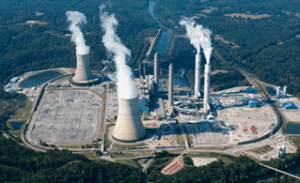
NewsAlabama Coal Plant Tops List of Emitters
A report from a Colorado-based group that provides analysis and market reports to the energy industry says an Alabama power plant has the highest emissions of carbon dioxide (CO2) of any coal-fired facility in the Lower 48 states. BTU Analytics in a report released April 29 ranked the James H. Miller plant in West Jefferson, […]
-
 News
NewsEPA Finalizes Rule to Curb Cross-State Pollution
The U.S. Environmental Protection Agency (EPA) has issued an update and finalized a pollution rule that will require reductions in ozone emissions from power plants in 12 states this year. The update to the Cross-State Air Pollution Rule (CSAPR), issued March 15, is designed to curb emissions of nitrogen oxide (NOx)—primarily from coal-fired power plants—ahead […]
-
 Legal & Regulatory
Montana District Court Vacates EPA’s ‘Secret Science’ Rule
The Environmental Protection Agency’s (EPA’s) “Secret Science” rule establishing new standards for consideration of certain “pivotal” scientific studies, which was slated to go into effect on Jan. 6 of this year, has been vacated and remanded by the U.S. District Court for the District of Montana. The decision reached Feb. 1 impacts the power generation […]
-
 News
NewsBiden Effects Regulatory Freeze, Revokes Trump Actions, Rejoins Paris Agreement
President Joe Biden just hours after his inauguration effected an immediate freeze on several Trump-era deregulatory actions that directly affect the power sector, and revoked a long list of rules and executive actions affecting the bulk power system. The president on Jan. 20 also kickstarted America’s return to the Paris Agreement, sending a brief letter […]
-
 News
NewsCourt Kills Trump Rule on Power Plant Emissions
A federal appeals court has vacated the Trump administration’s rollback of Obama-era greenhouse gas emission standards for power plants. A three-judge panel of the U.S. Court of Appeals for the District of Columbia on Jan. 19 said the measure intended to replace those standards, the Affordable Clean Energy (ACE) rule, “rested critically on a mistaken […]
-
 Commentary
Biden Presidency Promises Change for Power Industry
As we get closer to the presidential inauguration, and with President-elect Biden’s announcement of his Cabinet picks for the Department of Energy (DOE), Environmental Protection Agency (EPA), and the Department of the Interior (Interior), we begin the inevitable hypothesizing about which “Day 1 actions” will be taken, which actions will be among the administration’s “100 […]
-
 News
NewsN.C. Environmental Leader Biden’s Choice to Lead EPA
The leader of North Carolina’s agency overseeing environmental issues in that state will be nominated to lead the U.S. Environmental Protection Agency (EPA), POWER learned on Dec. 17. Michael Regan, 44, who previously worked at EPA and has served with the North Carolina Dept. of Environmental Quality (NCDEQ) since 2017, is expected to be nominated […]
-
 News
NewsFormer Michigan Gov. Granholm Set to Lead DOE
Former Michigan Gov. Jennifer Granholm will be President-elect Joe Biden’s choice to run the U.S. Dept. of Energy (DOE), POWER learned Dec. 15. She is poised take over the agency at a time when the DOE grapples with the nation’s move away from electricity generation from fossil fuels, and toward the use of more renewable […]
-
 Environmental
EPA Retains Soot Standards; Drastic PM Reductions Already Achieved, Industry Says
In a significant but controversial final action, the Environmental Protection Agency (EPA) on Dec. 7 retained its existing National Ambient Air Quality Standards (NAAQS) for both fine and coarse particulate matter (PM2.5 and PM10). While the EPA said the decision came “after careful review and consideration of the most recent available scientific evidence and technical […]
-
 Nuclear
Bipartisan Bill to Preserve Existing Nuclear Plants Clears Senate Committee
The Senate Committee on Environment and Public Works (EPW) has approved the American Nuclear Infrastructure Act of 2020 (ANIA), just two weeks after it was introduced. Among the bill’s major provisions are that it will seek to strengthen the nuclear fuel supply chain, help incentivize commercial deployment of new reactor designs, and create a credit […]
-
 Coal
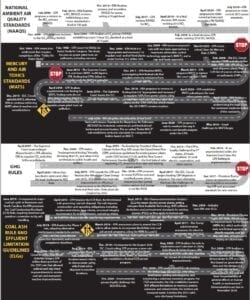
CoalTHE BIG PICTURE: EPA Regulatory Roundup
Over its 50-year history, several rules issued by the U.S. Environmental Protection Agency (EPA) have reshaped the power sector. But for at least a few modern rules, the road has been full of turns. Notes: CAA = Clean Air Act; BSER = best system of emission reduction; CO2 = carbon dioxide; GHG = greenhouse gases; […]
-
 Environmental
A Half Century of Environmental Progress
In the late 1960s, the U.S. was facing an environmental crisis. Air pollution was a serious problem in cities across the country, industrial activities and the widespread use of hazardous pesticides were
-
 Nuclear
Bipartisan Legislation Introduced to Boost Advanced Nuclear, Preserve Existing Nuclear
Legislation introduced on Nov. 17 by a bipartisan group of senators on the Senate Committee on Environment and Public Works (EPW) will seek to strengthen the nuclear fuel supply chain, help incentivize commercial deployment of new reactor designs, and create a credit program to preserve existing nuclear reactors at risk of premature shutdown. The American […]
-
 Coal
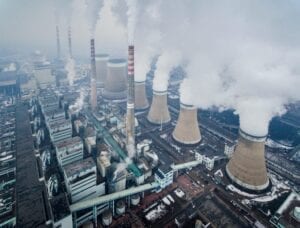
CoalChina Promotes Climate Goal, and Builds New Coal Plants
Chinese President Xi Jinping said he wants his country to “achieve carbon neutrality before 2060.” It will not be an easy task for the world’s largest emitter of greenhouse gases (GHG). China, though it has canceled some planned thermal power plants over the past several years, has as much as 200 GW of coal-fired facilities […]
-
 Top Plant
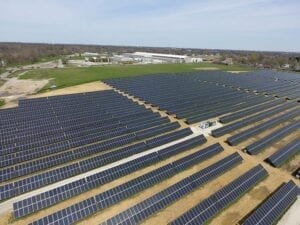
Turning a Brownfield into a Brightfield
A solar array in Indiana is a model project for renewable energy development, with the site providing clean energy at what was once a U.S. Environmental Protection Agency Superfund site. Areas of the U.S
-
 News
NewsEPA Loosens Limits on Coal Plant Effluent Discharges
The U.S. Environmental Protection Agency (EPA) has finalized a rule that revises regulations for coal-fired power plants, a move that will limit the number of generation facilities that could incur costs for failing to comply with pollution limits. The action on Aug. 31 revises a rule established in 2015, when the EPA issued an order […]
-
 Coal
CoalEPA Changes Closure Requirements in Coal Ash Rule
The U.S. Environmental Protection Agency (EPA) on July 29 finalized several changes to the regulations for disposal of coal combustion residuals (CCRs), or coal ash, from electric utilities. The changes include giving utilities more time to design clean-up and closure plans for their coal ash storage sites. The changes stem from an opinion issued Aug. […]
-
 News
NewsEPA Curbs State Review of Energy Projects
The Trump administration on June 1 moved to limit the ability of individual states to use provisions of the Clean Water Act (CWA) to block energy projects, a potential win for the power generation and other energy industry sectors that have battled lengthy licensing and permitting reviews and rejections based on climate change arguments. The […]
-
 Legal & Regulatory
Trump Expands Regulatory Rollback, Including for Power, Amid Economic Fallout
President Trump in a new executive order (EO) has directed federal agencies to rescind, modify, waive, or provide exemptions from regulatory requirements that may inhibit economic recovery. The Executive Order on Regulatory Relief to Support Economic Recovery, issued May 19, is sweeping and extends beyond the administration’s previous efforts to scale down regulatory mandates—including the […]
-
 News
NewsGroups File Legal Challenges to ACE Rule
Legal challenges to the Trump administration’s Affordable Clean Energy (ACE) rule began in earnest April 17, as more than two dozen states and cities, along with several environmental activist groups, filed briefs with the U.S. Court of Appeals in Washington, D.C., seeking a rollback of power plant regulations that also have been decried by coal […]
-
 News
NewsEPA Nixes Legal Justification for MATS Rule
The Environmental Protection Agency (EPA) on April 16 withdrew the legal justification for an Obama-era rule that required coal-fired power plants to reduce their emissions of mercury. The Mercury and Air Toxic Standards (MATS) remains in place, but Thursday’s action by the Trump administration could prevent similar regulations from being implemented in the future. EPA […]