
Congress
-
 Hydrogen
Hydrogen at a Crossroads: What’s Next for U.S. Infrastructure?
The federal government in 2021 passed the Bipartisan Infrastructure Investment and Jobs Act (BIIJA), which allocated $8 billion in funding to establish hydrogen hubs at multiple locations across the U.S. Seven hubs were approved for funding by the Biden administration, and some work has already begun to build centers of low-carbon hydrogen production within these […]
-
 Legal & Regulatory
GOP Lawmakers Aim to Protect Coal and Gas-Fired Power Plants from EPA Rules
Forty-three Republican senators (along with one Independent) introduced a Congressional Review Act (CRA) resolution of disapproval on June 5 to overturn emissions rules issued by the Environmental Protection Agency (EPA), which they say target existing coal-fired power plants and new gas-fired plants. The action was led by U.S. Sen. Shelley Moore Capito (R-W.Va.), Ranking Member […]
-
Commentary
True Permitting Reform Requires Congressional Action
James Carville famously advised Bill Clinton that regarding elections, “it’s the economy, stupid.” This message has resonated with all presidential candidates since. So, it is no surprise that as the 2024 election approaches, President Biden appears to be banking on $1.6 trillion in new spending—much of it infrastructure spending—to stimulate economic growth. These funds have […]
-
Solar
Clean-Energy Companies Urge Congress to Pass Siting, Permitting, and Transmission Reform
Nearly 200 solar and storage companies sent a letter to congressional leaders on April 17 calling for legislation to improve permitting, project siting, transmission, and public lands access for solar and solar plus storage projects. Market forecasts show that a range of policy and economic outcomes will determine the volume of solar deployment over the […]
-
 Commentary
Investment, Innovation, Job Creation—Why Solar’s U.S. Growth Drivers Will Suffer if Tariff Moratorium Isn’t Restored
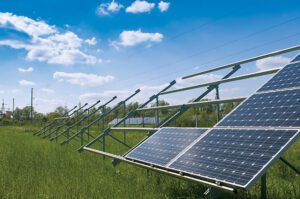
Solar power is having a moment. While rooftop solar technologies have been around for decades, consumer demand, urgent climate change concerns, and competitive price points have coalesced, creating historical interest in solar power, including 700,000 homeowners installing solar panels in 2022 alone. COMMENTARY The industry is expected to grow by up to 30% this year, […]
-
 Commentary
America—and the World—Needs More Nuclear Power
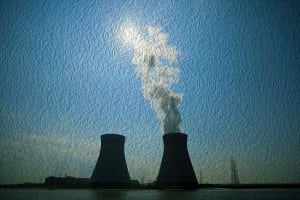
Nuclear energy is making a comeback—at home in America and worldwide. The 118th Congress presents new opportunities to make sure America leads the world on this crucial clean energy technology. The drumbeat
-
 Commentary
The Reasons Behind the Strong Support for Renewable Wood Energy
President Biden recently laid out a detailed plan to strengthen America’s forests. Renewable wood energy—that is, biomass energy produced from wood that is not suitable for higher-value products—is an
-
 Legal & Regulatory
Energy Security, Climate Change Initiatives Endure with Surprise U.S. Senate Deal
The inclusion of an estimated $369 billion in energy security and climate change investments in a July 27–unveiled U.S. Senate budget reconciliation proposal has prompted optimism from a range of energy sectors. Less than two weeks after negotiations on clean energy and climate provisions within the reconciliation package hit an impasse and suggested their demise, […]
-
 Climate change
Climate Change Policy Belongs in Congress, Not State Courts
Crafting solutions to address the pressing challenges of our time is Congress’s foremost job. There is no doubt that policy-making can be messy, take time, and require compromise. But, overall members and their staff do incredible work for the American public. During my tenure serving Indiana’s 9th Congressional District, I prided myself on working with […]
-
 Nuclear
Coal Plant Site Unveiled for 500-MW Natrium Advanced Nuclear Pilot
A site at PacifiCorp’s retiring 600-MW coal and gas–fired Naughton Power Plant in Kemmerer, Wyoming, will house the Natrium demonstration, a pioneering commercial-scale 500-MW project that will pair a 345-MW sodium-cooled fast reactor with a molten salt-based energy storage system. Project stakeholders on Nov. 16 unveiled the site for the federally backed demonstration, which will validate […]
-
 Nuclear
Urgency Ramping Up to Commercialize Nuclear Accident Tolerant Fuels by 2025
Marking another milestone in an industry-led accelerated quest to commercialize accident tolerant fuels (ATF), nuclear fuel test rods containing Westinghouse’s EnCore technologies that completed their inaugural cycle at Exelon’s Byron nuclear plant have shipped to Oak Ridge National Laboratory (ORNL). While initial visual inspections show “no signs of degradation,” the irradiated fuel will now be […]
-
Nuclear
Bipartisan Bill to Preserve Existing Nuclear Plants Clears Senate Committee
The Senate Committee on Environment and Public Works (EPW) has approved the American Nuclear Infrastructure Act of 2020 (ANIA), just two weeks after it was introduced. Among the bill’s major provisions are that it will seek to strengthen the nuclear fuel supply chain, help incentivize commercial deployment of new reactor designs, and create a credit […]
-
 Nuclear
DOE Launches Program to Demonstrate Advanced Nuclear Reactors Within 5 Years
Bolstered by $230 million in Congressionally appropriated funding, the Department of Energy (DOE) has officially launched the Advanced Reactor Demonstration Program (ARDP) to help U.S.-based private developers of advanced nuclear reactors demonstrate their technology in the U.S. Much anticipated by industry, the program formally established under the Office of Nuclear Energy program on May 14 […]
-
 News
NewsMaximizing the Solar ITC Phaseout: Lessons from Wind
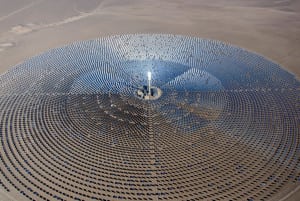
Every company invested in our nation’s clean energy transition is aware that 2019 is the last year that solar energy can take advantage of the 30% Investment Tax Credit (ITC) under Internal Revenue Code
-
Legal & Regulatory
A Renewed Congressional Focus on Investigating the Energy Industry
Legislative scrutiny of the energy industry have picked up of late. Here are practical steps from law firm K&L Gates that your company could take to prepare for congressional investigations.
-
 News
NewsTrump Acts on Critical Infrastructure Resiliency Against EMP Threats
President Trump has signed an executive order (EO) to boost coordination for and national resilience against electromagnetic pulse (EMP) threats—both from nuclear warfare and natural events like solar superstorms. The action suggests new federal mandates to protect critical infrastructure against EMP events and attacks may be on the horizon. Senior Trump administration officials from the National Security […]
-
 IIOT
IIOTDOE and FERC Mull Incentivizing Cybersecurity, Physical Security of Power and Gas Infrastructure
The U.S. Department of Energy (DOE) and Federal Energy Regulatory Commission (FERC) want to explore how federal and state authorities could incentivize cybersecurity and physical security in the power and natural gas sectors. The agencies issued a notice on Feb. 4 announcing they would jointly hold a technical conference on Thursday, March 28, 2019, from […]
-
 News
NewsClean Air Act Issues Congress Could Grapple With in New Session
While the Republican-led U.S. House and Senate in the 115th Congress was mainly focused on reviewing, for modification or repeal, several environmental rules issued under the Clean Air Act (CAA), the new Democrat majority in the House could focus on a slew of different measures, a new report from the Congressional Research Service (CRS) suggests. […]
-
 Legal & Regulatory
Challenges for the Nuclear Regulatory Commission in Licensing Accident Tolerant Fuel
After the meltdowns at Japan’s Fukushima Daiichi nuclear plant in March 2011, Congress directed the Department of Energy (DOE) to support development of new fuel designs that could tolerate loss-of-cooling
-
 Legal & Regulatory
Trump Budget Backs Nuclear, Coal; Cuts Funding for Renewables
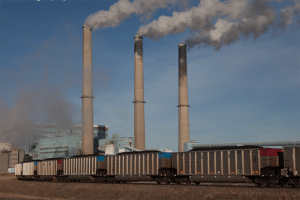
The Trump administration’s fiscal year 2019 budget request released February 12 asks for more money to support fossil fuel-based power systems, but seeks funding below current levels for other energy initiatives, including renewable energy and energy efficiency. The energy funding is part of a $4.4 trillion budget that features large increases in military spending, along […]
-
 Renewables
House Proposed Tax Bill Ends Wind PTC, Extends Nuclear Credit
The U.S. House of Representatives on November 2 proposed a tax bill that would phase out the wind energy production tax credit (PTC), extend a tax credit for the nuclear power industry, add credits for geothermal and fuel cell programs, and end a tax credit for the purchase of electric vehicles. Wind energy proponents decried […]
-
 Coal
CoalCoal Refuse Emissions Bill Passes House, Garners Veto Threat
The U.S. House of Representatives has passed, with bipartisan support, a bill that slackens emissions limits for power plants that burn coal refuse. The Satisfying Energy Needs and Saving the Environment (SENSE) Act passed the House with a 231–183 vote on March 15. However, the White House has said it strongly opposes the bill (H.R. […]
-
 Legal & Regulatory
Senate’s Failed Veto Override Leaves WOTUS Rule Intact
Congressional efforts to block the Environmental Protection Agency’s (EPA’s) contentious rule asserting federal authority over small bodies of water were derailed on Jan. 21. Senate Republicans voted 52–40, failing to override the president’s veto of the so-called “Clean Water Rule”—also “Waters of the United States” (or WOTUS) well short of the 60 necessary votes. Clean […]
-
 Power Demand
Pot, Power, and Politics
Legal marijuana, cultivated indoors on a large scale, poses a growing threat to electrical safety and a booming new business demand for electric power. Legal marijuana cultivation is posing electrical problems in three of the four states where recreational cannabis use is now permitted. The problem is that indoor growing operations—long a production staple when […]
-
 Legal & Regulatory
House Energy Subcommittee Resolves to Bar EPA Carbon Rules
A subcommittee of the House Energy and Commerce Committee has passed two resolutions under a rarely invoked law to render the Environmental Protection Agency’s (EPA’s) newly finalized carbon rules for new and existing power plants toothless. The joint resolutions introduced on Oct. 26 by Energy and Power Subcommittee Chair Rep. Ed Whitfield (R-Ky.) under the […]
-
 Nuclear
Lawmakers Press for Smaller, More Efficient NRC
Some members of the U.S. House of Representatives feel the Nuclear Regulatory Commission (NRC) needs to appropriately align its budget and staffing levels with the organization’s workload. That message was delivered to the agency’s commissioners during the Subcommittee on Energy and Power and the Subcommittee on Environment and the Economy joint oversight hearing held on […]
-
 Legal & Regulatory
Ex-Im Bank Reauthorization Stalled, Even as House Prepares to Adjourn
Though the U.S. Senate voted 64–29 this week to renew the charter of the Export-Import Bank of the United States (Ex-Im), the House may adjourn for its summer break without taking action on the issue. Congress let the Ex-Im bank’s charter lapse for the first time in its 81 years of continuous operation on June […]
-
Legal & Regulatory
Coal Ash Bill Clears U.S. House
The U.S. House of Representatives on July 23 passed by a 258–166 vote a coal ash bill that industry and states say is much-needed, but which the White House has threatened to veto. The Improving Coal Combustion Residuals Regulation Act of 2015 (H.R. 1734) sponsored by Rep. David McKinley (R-W.Va.) seeks to implement standards finalized […]
-
Legal & Regulatory
House Passes Measure to Stall EPA Clean Power Plan
A bill that would halt the Clean Power Plan’s compliance deadlines until litigation on the rule has been completed has passed the U.S. House of Representatives with a 247–180 vote. The Ratepayer Protection Act (H.R. 2042) now goes to the Senate, where the GOP is working on a similar measure to suspend the Environmental Protection […]
-
 Cybersecurity
Congressional Passage of Cybersecurity Bill Is a Triumph for Automation, Groups Say
The Cybersecurity Enhancement Act of 2014 that cleared Congress last week and was presented to President Obama on Monday has the backing of automation organizations. The bill was one of four cybersecurity measures passed—without much debate and by voice vote—by Congress before the 113th session came to a close on Tuesday, Dec. 16. Sen. John […]