Capable new lasers with quantum cascade and tunable diode technologies lay the foundation for accurate, low-maintenance, and fast-response continuous emissions monitoring systems to monitor multiple gas components simultaneously.
The power industry is facing the dual requirement to provide reliable and affordable energy, while simultaneously meeting stringent environmental regulations, placing pressure on plant operators to more effectively monitor emissions.
Continuous emissions monitoring systems (CEMS) are required in most industrial plants around the world, but as the industry adopts an array of diverse fuel sources, traditional CEMS technologies are often stretched to their limits. Power plants have historically relied on CEMS to measure and report pollutants—such as nitrogen oxides (NOx), sulfur dioxide (SO2), and carbon monoxide (CO)—as mandated by regulatory bodies. These systems typically require multiple analyzers, complex sample conditioning equipment, and significant maintenance.
Professionals in the power industry have always contended with analyzer drift, component failure, data gaps, and cost concerns, but as alternative fuel sources become more prominent—such as the co-firing of natural gas with hydrogen and the use of biofuels—personnel must now measure unique emissions profiles that challenge the capabilities of legacy monitoring equipment. Modern technology, particularly advancements in laser-based spectroscopy, provides a path forward with more accurate, reliable, adaptable, and integrated solutions to meet these new requirements.
This article examines the issues with traditional CEMS in the power generation sector, and it introduces integrated solutions that leverage advanced laser technology to overcome these challenges. These improvements are substantiated with a case study, exemplifying the technological evolution of emissions monitoring for cleaner and more effective results.
Conventional CEMS Limitations
Supplying unwavering accuracy and reliability in demanding operational environments is the core challenge with CEMS. Failure to meet these requirements can result in fines, forced shutdowns, reputational damage, and other consequences. Yet, many plants continue operating CEMS technologies of suboptimal quality.
One of the most pronounced pain points end users face is the fragmented and maintenance-intensive nature of traditional CEMS. These conventional systems many times require separate analyzers for every target gas, such as NOx, SO2, CO, as well as carbon dioxide (CO2) and oxygen (O2).
These setups depend on extractive sampling, where a gas sample is pulled from the emissions stack, cooled to remove moisture, and conditioned prior to analysis. This entire system is full of potential failure points. For example, the sample lines can clog, the chillers and pumps that remove moisture can fail, and the converters used to measure contaminant totals can degrade over time, causing inaccurate readings and costly, unplanned maintenance by plant personnel, who are typically already stretched thin.
The increasing diversity of fuel sources in the modern energy landscape further complicates matters. While a natural gas–fired turbine has a relatively straightforward emissions profile, the introduction of hydrogen fuel blends changes combustion dynamics and, consequently, the flue gas composition. Similarly, burning biomass or other alternative fuels introduces different contaminants and moisture levels that can interfere with traditional analyzer performance.
A traditional CEMS designed for one fuel may not be suitable for others, forcing plants to either install entirely new systems or accept a higher degree of measurement uncertainty—a risky proposition when compliance and sustainability is at stake.
Furthermore, regulations are dynamic, and when required detection limits for pollutants are reduced, it stresses non-specialized systems. For example, new regulations require measuring ammonia (NH3) slip in some gas turbine applications, in addition to pollutants like NOx. NH3 is a notoriously sticky gas that is difficult to measure accurately using conventional methods, especially at low parts-per-million (ppm) levels. Traditional measurement techniques often require converting ammonia back to NOx and measuring the differential, an indirect process that introduces further inaccuracies.
However, modern technologies are addressing these maintenance-intensive requirements, sources of process inaccuracies, and other issues with solutions that handle multifaceted gas matrices. These solutions can adapt to different fuel types while meeting low-level measurement requirements, and they are streamlining operations by reducing cumbersome multi-analyzer setups down to one-component solutions.
The Integrated, Laser-Based Approach
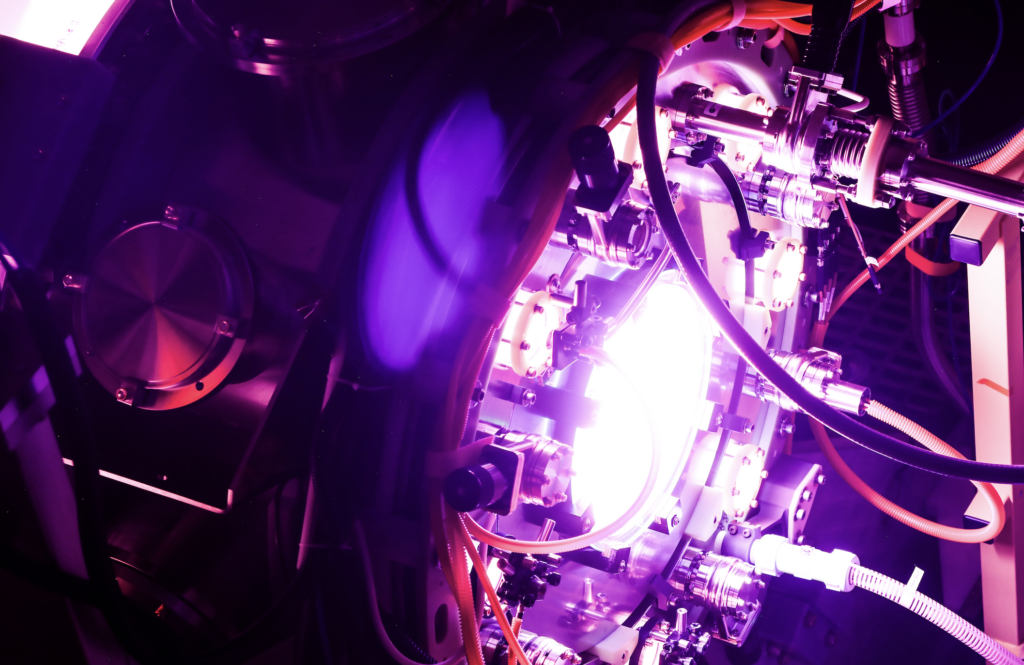
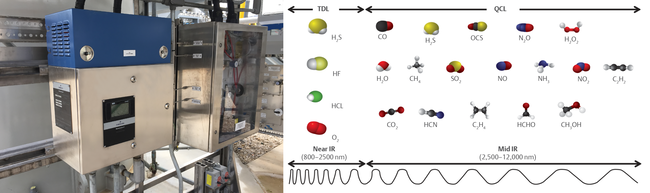
Today’s leading CEMS solutions replace conventional complexity with a single integrated advanced laser spectroscopy platform (Figure 1). This modern approach provides better accuracy, greater reliability, and lower costs of ongoing ownership, particularly in the natural gas and emerging power sectors. These solutions feature both quantum cascade laser (QCL) and tunable diode laser (TDL) technologies working in tandem, enabling detection of a multitude of gases.
Different gases absorb light at specific frequencies, creating a unique spectral fingerprint. TDLs operate in the near-infrared (IR) spectrum, which is ideal for measuring certain molecules, while QCLs operate in the mid-IR range. The mid-IR spectrum is particularly valuable for emissions monitoring because molecules exhibit their strongest and most fundamental vibrations in this zone, creating absorption peaks that are sharper and more intense. This facilitates high-accuracy and interference-free measurement of a wide range of gases, even in complex mixtures.
By combining QCL and TDL technologies in a single analyzer, this type of modern system can simultaneously measure the most critical components in typical flue gas streams—NOx (direct measurements of both nitric oxide [NO] and nitrogen dioxide [NO2] independently), CO, O2, CO2, methane (CH4), NH3, and SO2—without the need for separate analyzers or outdated conversion equipment. This multi-component analysis is performed using a hot/wet extractive method, in which the sample is maintained at a high temperature from the probe to the analyzer (Figure 2).
By keeping the flue gas above its dew point, this approach eliminates the need for chillers and pumps to remove moisture, while also preserving the sample integrity, and providing a more accurate and timely measurement of the actual stack gas composition. This is especially critical when measuring soluble gases like NH3, which would otherwise be lost in the condensed water of a conventional cold/dry system.
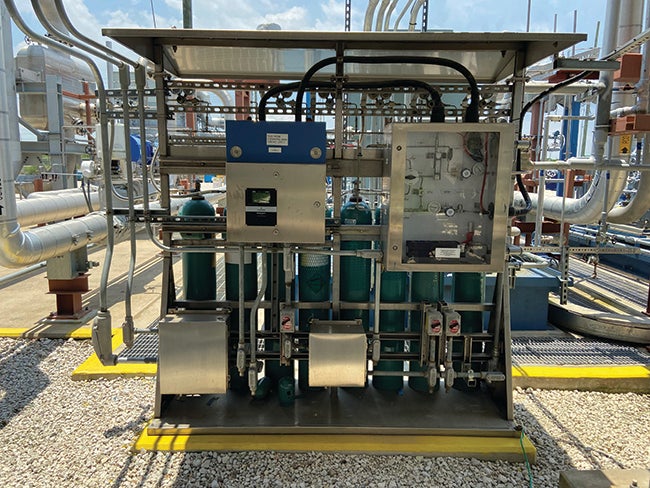
Leaders in the space are complementing these laser technology platforms with Environmental Protection Agency (EPA) Part 75 data acquisition and handling systems (DAHS) for reliable data collection, analysis, and reporting. An integrated DAHS eliminates the need for third-party reporting software, and it provides plant personnel with full control of and confidence in their data. These holistic systems—consisting of analyzer, sample handling system, and DAHS—can be housed in compact field-mountable cabinets, simplifying installation and reducing the physical footprint previously required for large shelters housing multiple devices (Figure 3).
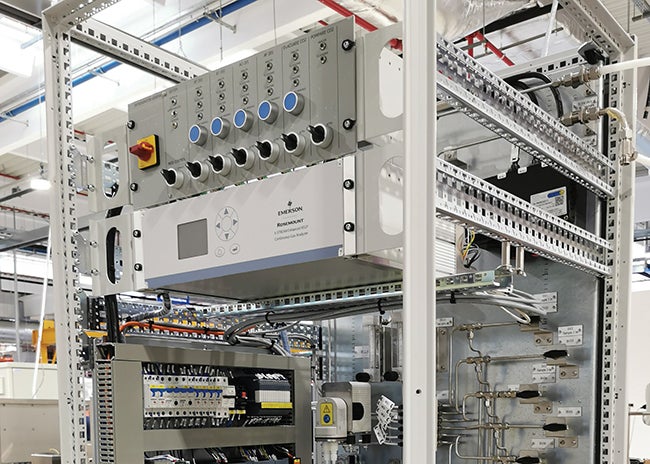
Additionally, many end users are finding it helpful to pair CEMS with comprehensive lifecycle services and long-term service agreements (LTSAs) with trusted suppliers. These service packages ensure that CEMS perform optimally throughout their operational life, filling critical resource gaps for busy plant personnel. These services range from initial commissioning and calibration to ongoing diagnostics, emergency response, and proactive maintenance.
This holistic approach, combining integrated analyzers with robust data handling and dedicated lifecycle support, provides a complete turnkey solution for users, empowering the power industry to meet compliance obligations confidently and efficiently.
Proven Performance in Demanding Applications
Emerson recently completed a unique CEMS package on a floating liquefied natural gas (FLNG) facility. Space on the FLNG was a constraint so the end user chose an Emerson non-shelter solution to minimize the footprint of the complete system, while making all measurements with the latest technologies, minimizing future required maintenance activity. This system consists of two complete EPA Part 75 CEMS measuring NO, NO2, CO, NH3, O2, CO2, and volumetric flow rate so that concentration results can be converted to emission rates in lb/hr and tons/year (Figure 4).
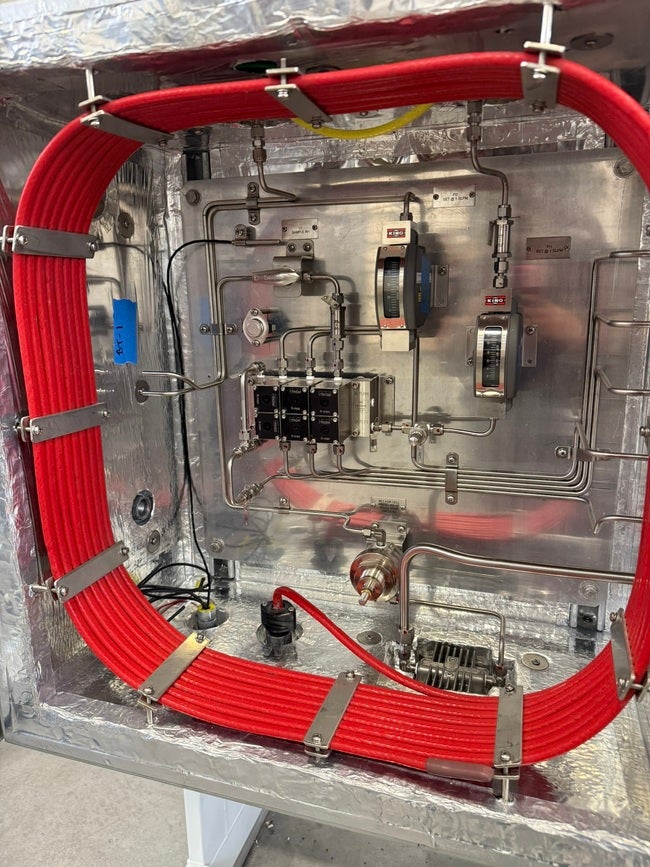
Emerson’s Rosemount CT5100 Continuous Gas Analyzers were the key components in the CEMS engineered solution selected for this critical energy infrastructure project. These analyzers combine QCL and TDL technologies in a single unit, providing measurement breadth that was previously unattainable using a single device. The hot/wet sampling system operates at more than 200C, eliminating issues with chiller failures or plugged sample lines. The system provides 10 to 15 years of operation with little to no drift, drastically reducing the need for frequent calibrations. A fast update rate of one second provides operators with real-time process insights, enabling tighter control of combustion and emissions abatement systems.
A Clear Path for Emissions Monitoring
With the imperative need for measurement accuracy, maintenance simplicity, operational reliability, and reporting efficiency, the power industry is embracing integrated and smart CEMS solutions. These solutions streamline the unwieldy components of past systems into an elegant package containing a single QCL/TDL probe and analyzer—with an optional onboard DAHS—to reduce space requirements, improve operations, and minimize maintenance complexity.
When backed by dedicated lifecycle services from trusted suppliers, these offerings provide complete compliance solutions, empowering professionals in the power generation industry to move beyond the incremental fixes and workarounds that have characterized emissions monitoring for decades. This holistic strategy is powering smart CEMS, adaptable to any regulatory environment now and for the foreseeable future.
—Keith N. Linsley is the senior global product manager for CEMS and Process Analyzer Systems at Emerson.