
Global Monitor
-
 Coal
CoalChina’s Five-Year Plan Is Heavy on Non-Fossil Generation
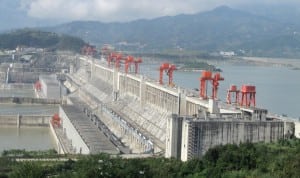
The People’s Republic of China’s Congress approved a much-anticipated draft of the country’s 12th Five-Year Plan (2011–2015) on March 14. Along with key objectives that included boosting its gross domestic product (GDP) by 7% annually on average, the country for the first time in a five-year plan established targets to tackle climate change. It plans to reduce carbon dioxide emissions per unit of GDP by 17% from 2010 levels by 2015 and to reduce energy consumption per unit of GDP by 16% from 2010 levels by 2015.
-
 Nuclear
The Battle to Control Quake-Stricken Japanese Reactors
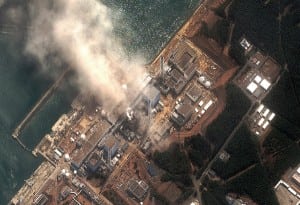
As POWER closes this issue (March 15), 6,000 people have been confirmed dead and 10,000 others are still missing as a result of the magnitude 9.0 earthquake and ensuing tsunami that destroyed Japan’s eastern shore on March 11. At this writing, the country is battling a third cataclysm—the potential meltdown of several reactors at Tokyo Electric Power Co. (TEPCO’s) Daiichi nuclear power plant in Fukushima Prefecture.
-
 Nuclear
Nuclear Monitor: News from France, Japan, U.S., Belgium, Germany
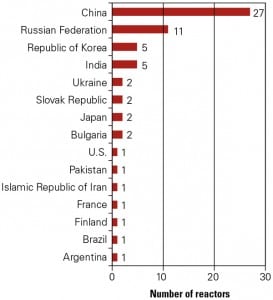
Five new nuclear reactors were connected to the grid while construction of 14 others began in 2010, the International Atomic Energy Agency (IAEA) reported in early March. Around the world, a total 65 reactors with a net power capacity of 62.9 GW were in various stages of construction—almost half of them in China.
-
 Geothermal
Geologists Tap Magma for Energy Production
Geologists drilling an exploratory well in Iceland’s Krafla volcano in search of supercritical geothermal resources in 2009 unexpectedly uncovered a new way to harness energy from deep within Earth’s crust. It involves accessing shallow bodies of molten rock, which the geologists say could likely be found elsewhere in Iceland and around the world, wherever young volcanic rocks occur.
-
 Coal
CoalTurning Flue Gas Carbon into a Raw Material for Manufacturing
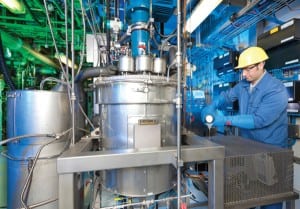
Bayer in February brought online a pilot plant at Chempark Leverkusen, Germany, to recycle carbon dioxide (CO2) scrubbed from the flue gas of a 1,000-MW RWE lignite-fired unit and convert it into a raw material and petroleum substitute for plastic manufacturing. The Bayer facility (Figure 4) essentially produces a chemical precursor into which CO2 is incorporated and then processed into polyurethanes that are used for many everyday items.
-
 Business
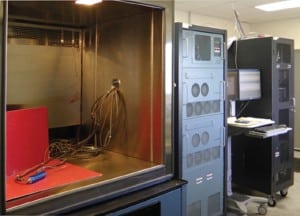
KEMA Opens Lab to Test Energy Storage Performance
Dutch energy consulting firm KEMA in February opened a new laboratory in Chalfont, Pa., to test and verify emerging utility-scale energy storage systems.
-
Business
POWER Digest (April 2011)
China Inaugurates 660-kV DC Line. The China Power Grid Co. on Feb. 28 began transmitting power through a 660-kV direct current power transmission link that runs from northwest China’s Ningxia Hui Autonomous Region. Part of China’s west-east power transmission program, the 10.4 billion yuan (US$1.58 billion) project runs 1,333 kilometers through five provinces and regions […]
-
 Coal
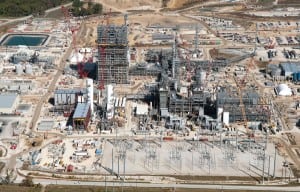
CoalU.S. and China Push Forward with Cleaner Coal Projects, Amid Setbacks
In his January State of the Union speech, President Barack Obama called on Congress to pass legislation that would allow the U.S. to source 80% of its electricity from “clean energy” sources by 2035—including traditional renewable sources like wind and solar as well as nuclear and “clean coal.” That broadened definition of “clean energy” was designed to inspire bipartisan interest, as was widely reported. But, as was also widely pointed out, the speech followed a visit to Washington from Chinese government officials and a series of key agreements aimed at increasing “clean energy” cooperation between the two countries.
-
 Nuclear
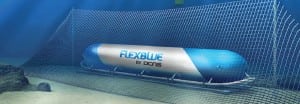
Small Nuclear Reactor Concept Goes Underwater
France in January announced its contribution to the wave of small and modular reactors (SMRs): a submarine-like nuclear plant that can be submerged in waters 60 meters (m) to 100 m deep and several kilometers offshore.
-
 Hydro
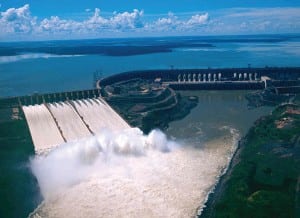
HydroBrazil Greenlights 11-GW Belo Monte Project
Brazil’s environment agency, IBAMA, in January issued a partial installation license that allows for construction of the controversial Belo Monte dam complex, an 11,233-MW project estimated to cost some 19.6 billion reals (US$11.7 billion), to begin on the margins of the Amazon’s Xingu River. Saying the project is needed to meet soaring electricity demand when completed, as planned in 2015, the government gave license to dam-building consortium Norte Energia to begin clearing 238.1 hectares (588 acres) of forestland.
-
 Wind
WindEuropean Offshore Wind Turbine Capacity Grows 51% in 2010
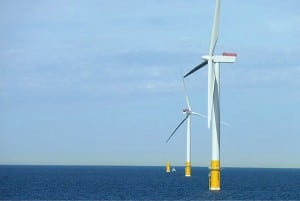
Europe installed 308 new offshore wind turbines in 2010—a 51% increase in installed offshore capacity over the previous year, the European Wind Energy Association (EWEA) said in new figures released this January. The 883 MW of new capacity—worth some €2.6 billion—were installed at nine wind farms in five countries, bringing the continent’s total offshore installed wind capacity to 2,964 MW.
-
 Gas
GasE.ON Starts 417-MW Cogeneration Plant in Slovakia
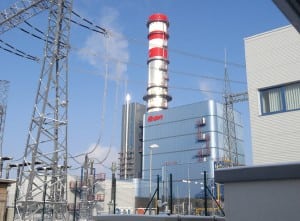
At the beginning of 2011, German firm E.ON began operation of its new 417-MW Malzenice gas and steam turbine power station in Slovakia’s Trnava region, near the country’s capital, Bratislava (Figure 5). The facility, which is expected to generate more than 300 billion kWh annually, boasts an efficiency of 58%—which E.ON claims is among the “highest in Europe.”
-
 Gas
GasUsing Flue Gas to Mitigate Ocean Acidification
Lab-scale experiments have shown that seawater and calcium could effectively remove most of the carbon dioxide (CO2) from a natural gas power plant’s flue gas stream. A large fraction of the captured gas could then be converted into dissolved calcium bicarbonate—which, pumped into the sea, could be beneficial to the ocean’s marine life, says a researcher representing both the Lawrence Livermore National Laboratory’s (LLNL’s) Carbon Management Program and the University of California, Santa Cruz.
-
Business
POWER Digest (March 2011)
GDF SUEZ, RWE, and Iberdrola Pull out of Cernavoda Nuclear Expansion. French power company GDF SUEZ, Germany’s RWE, and Spain’s Iberdrola on Jan. 20 said they would no longer participate in a project to build Units 3 and 4 of the Cernavoda nuclear project in Romania. The companies cited “economic and market uncertainties surrounding the […]
-
Business
POWER Digest (Feb. 2011)
MHI to Continue Pre-Construction Work for North Anna Unit. Mitsubishi Heavy Industries Ltd. (MHI), through Mitsubishi Nuclear Energy Systems Inc., and Dominion subsidiary Virginia Electric and Power Co. on Dec. 27 said they had reached an agreement to continue pre-construction, engineering, and planning work in preparation for a third unit at Dominion’s North Anna Nuclear […]
-
 Nuclear
Major Milestones for the AP1000 Reactor
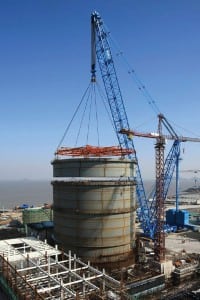
Westinghouse’s AP1000 reactor design hit several milestones in recent months, prompting speculation that it could take the coveted lead in the charge to deploy the world’s third-generation nuclear power plants.
-
 Solar
SolarDOI Approves Nine Solar Projects on Federal Land—So Far
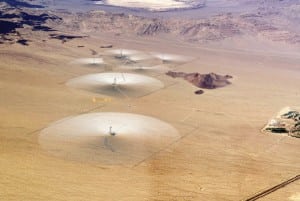
U.S. Interior Secretary Ken Salazar in late December approved—for the ninth time since October 2010—a solar power project to be built on federal lands.
-
 Hydro
HydroLaos Inaugurates Major Revenue-Generating Hydropower Plant
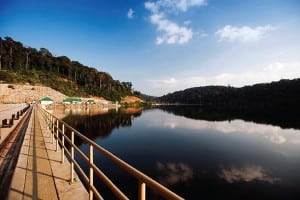
Lao People’s Democratic Republic (PDR), the tiny landlocked country in Southeast Asia of just 6.3 million people, in December inaugurated the 1,070-MW Nam Theun 2 Power Station, a hydropower project in Khammouane Province.
-
 Hydro
HydroMarine Power Developments Move Forward in North America
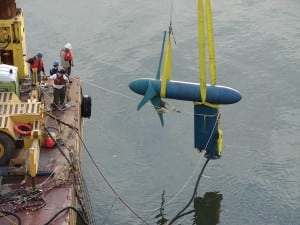
In early January, Verdant Power—a decade-old company based in New York—made headlines for filing an application with the Federal Energy Regulatory Commission (FERC) for a project that could allow it to install up to 30 new tidal power turbines in the East Channel of the East River in New York City.
-
 Nuclear
Ukraine Opens Chernobyl to Visitors
The Ukraine will on April 26 mark 25 years after explosions at the Chernobyl Nuclear Power Plant (then in the Ukrainian Soviet Socialist Republic) resulted in a fire that sent a plume of radioactive fallout into the atmosphere and over an extensive area.
-
Water
Readers Write
In the September and October 2010 issues, POWER Contributing Editor David Daniels explored the causes and damage mechanisms of condenser tube leaks (“Taming Condenser Tube Leaks,” Part I and Part II). Dennis J. Schumerth, Valtimet’s director of business development, took issue with several of Daniels’ statements regarding the proper use of titanium condenser tubes. We have given Schumerth the opportunity to express his concerns and for Daniels to reply.
-
Business
POWER Digest (Jan. 2011)
TANE and Shaw to Provide EPC Services for South Texas Expansion. Nuclear Innovation North America LLC (NINA), the nuclear development company jointly owned by NRG Energy and Toshiba Corp., on Nov. 29 announced that it awarded the engineering, procurement, and construction (EPC) contract for South Texas Projects Units 3 and 4 to a restructured EPC […]
-
 Hydro
HydroGerman Researchers Develop Cost-Efficient Small Hydro Plant
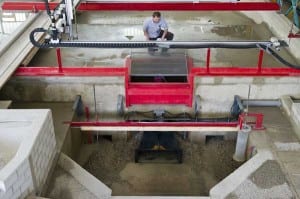
Researchers at Germany’s Technische Universitaet Muenchen (TUM) claim to have developed a small-scale hydroelectric power plant that is capable of operating profitably even at modest dam heights while minimizing impact on waterways.
-
 Coal
CoalIEA: Global Power Demand to Surge 2.2% Annually Through 2035
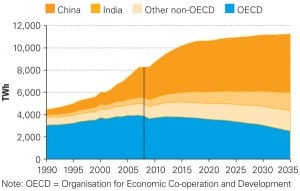
Though electricity generation has entered a key period of transition—as investment shifts to low-carbon technologies—world electricity demand is set to grow faster than any other “final form of energy,” the International Energy Agency (IEA) says in its latest annual World Energy Outlook.
-
 Hydro
HydroConstruction of Tibetan Dam Sets Off Cross-Border Tensions
China in mid-November embarked upon building the first massive hydropower project in Tibet, a 6 x 85-MW plant straddling the middle reaches of the mighty Yarlung Tsangpo River (Figure 2). According to the Hunan Daily, a Chinese state-owned enterprise, Sinohydro began damming the river in Shannan Prefecture, Tibet, on Nov. 8, kicking off the 7.9 billion yuan ($1.2 billion) “run of the river” project that is estimated to generate electricity for the surrounding region by 2014.
-
 Gas
GasMHI Prepares to Test J-Series in Japan
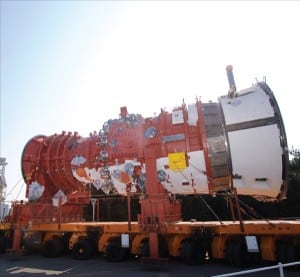
Mitsubishi Heavy Industries (MHI) has begun converting a combined-cycle plant in Japan to prepare for verification testing of its long-anticipated J-Series gas turbine in February 2011—a system that the company claims has the most power generation capacity and highest thermal efficiency in the 1,600C turbine inlet temperature class (Figure 3). The work being carried out at the Takasago Machinery Works facility in Hyogo Prefecture (where the company’s G-Series gas turbines were tested) includes installation of the J-Series turbine, and it marks another major milestone in the technology’s development.
-
 Gas
GasTransCanada Opens 683-MW Halton Hills Combined-Cycle Plant
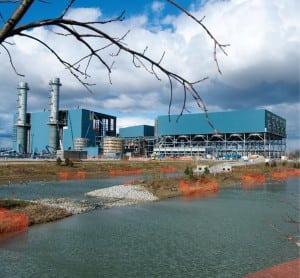
TransCanada Corp. on Oct. 28 officially opened its C$700 million Halton Hills Generating Station. The 683-MW 2 x 1 combined-cycle plant on a greenfield site in Ontario (Figure 5) will operate under a 20-year power purchase agreement with the Ontario Power Authority (OPA). Construction of the peaker plant started in December 2007 and was completed on time and on budget, TransCanada said.
-
 Hydro
HydroUK Cancels Tidal Barrage Plans, Approves Key Nuclear Sites
The UK government in late October shelved plans to build the Severn barrage—a project that would have involved building a 10-mile dam across the mouth of the Severn River—after a two-year-long feasibility study failed to convince ministers to use public funds to build it. The Department of Energy and Climate Change instead gave its long-awaited approval to eight sites for new nuclear reactors, saying that private companies could begin building the country’s new fleet of reactors, provided no public subsidy is involved.
-
Hydro
Massive Energy Storage Facility Planned for Mexico-U.S. Border
Dubai-based energy firm Rubenius in October proposed to build a $4 billion energy storage facility based on sodium sulfur (NaS) technology on a 345-acre site in the Mexican state of Baja California, close to the U.S. border. If it comes to fruition, the facility—dubbed a “mega region energy warehouse” by Mexico’s President Felipe Calderon—will feature 1,000 MW of battery storage and offer “storage space” to energy companies and utilities in both Mexico and the U.S.
-
Smart Grid
How the U.S. Grid’s Unpredictability Increases Its Security
Experts have decried congressional and academic reliance on a mathematical model for understanding complex systems that suggests an attack on a small part of the U.S. power grid could disrupt the entire power system network.