
Latest
-
 Waste to Energy
Experts ponder future of biomass industry
This month we officially commemorate the 125th anniversary of the magazine that has been essential reading for owners and operators of power generating plants. As you read this brief history, you’ll see that—although we’re looking back at an illustrious past—the secret of POWER’s success has been its commitment to the future. As we look forward to the next milestone anniversary, we anticipate covering the latest developments in a new generation of power technologies. As always, our mission is to provide the best information and advice in the service of safely and efficiently powering the global energy industry.
-
 Nuclear
Transfer ABWR construction techniques to U.S. shores
Advanced boiling water reactor (ABWR) construction practices honed in Japan aren’t just impressive, they’re also eminently suitable for the fleet of new units planned for the U.S. Conceptually, these techniques show the transition from "construction" to "manufacturing" that has already taken place in other industries.
-
 Instrumentation & Controls
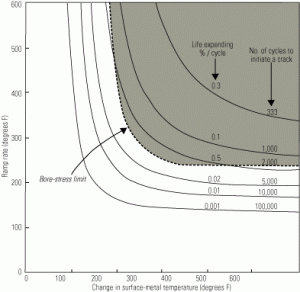
Reduce stress with proper on-line rotor temperature monitoring
On-line temperature monitoring of steam turbine rotors must be based on modeling thermodynamic processes—not direct temperature measurements. Good operating decisions can significantly extend the life of aging turbines, particularly those that are routinely cycled or operated at their maximum ramp rates.
-
 Instrumentation & Controls
Water chemistry an important factor to consider for cycling HRSGs
Operators of combined-cycle plants that have been pressed into cycling service should make sure that the aqueous diet of their steam generators—especially heat-recovery steam generators—fits the plants’ more active lifestyle. Following are some tips for keeping your HRSGs’ water treatment regimen in tip-top shape. These prescriptions can keep the units vital longer and make them subject to fewer unexpected failures.
-
 Instrumentation & Controls
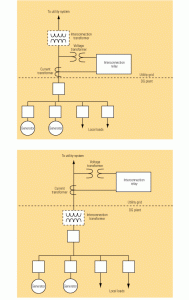
DG interconnection standards remain elusive
The state of interconnection standards for distributed generation plants remains disconcerting to many prospective owners of such plants. IEEE 1547 has been in place for several years and appears to be the best option in a field of competing standards. But IEEE 1547 is an imperfect standard; it holds at least six holes. Here are some suggestions for filling them.
-
 Instrumentation & Controls
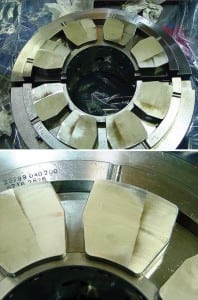
Controlling shaft voltages
Contrary to public belief, the most common electrical phenomenon produced by a power plant’s steam turbines, turbine-driven compressors, and pumps isn’t sparks or lightning bolts. It’s static electricity. The physical effects of static electricity—greater vibration and higher temperatures—can damage bearings, shaft journals, couplings, and gears enough to cause a forced outage. A few inexpensive instruments in the hands of a well-trained technician can prevent "frosting" and "worm tracks" in your babbitt bearings. We’ll start the training right now.
-
 Business
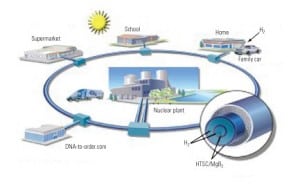
Could SuperCables deliver both hydrogen and electricity via a SuperGrid?
Transporting large quantities of electric power over long distances via superconducting DC cables was first considered more than 40 years ago by two IBM scientists. With the recent advent of long-length commercial high-temperature superconductors (HTSCs) and the desire to move the U.S. to a hydrogen-based economy, SuperCables could revolutionize the marketing of electricity. Using HTSCs cooled by hydrogen, a SuperCable could simultaneously deliver electricity and hydrogen to end users for domestic and industrial consumption and to power fuel cell cars.
-
 Marmaduke
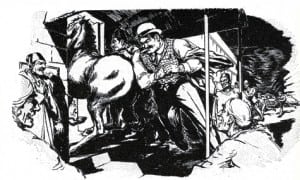
Marmy’s Egyptian nightmare
Steve Elonka began chronicling the exploits of Marmaduke Surfaceblow—a six-foot-four marine engineer with a steel-brush mustache and a foghorn voice—in POWER in 1948, when he raised the wooden mast of the SS Asia Sun with the help of two cobras and a case of Sandpaper Gin. Marmy’s simple solutions to seemingly intractable plant problems remain timeless. This story originally appeared in 1950. Two years later, one of its key characters, King Farouk, abdicated the Egyptian throne to his infant son following a military coup.
-
 Business
This month in POWER…
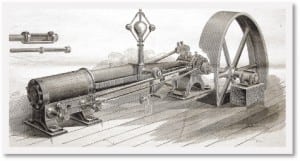
May 1885 POWER reported on the latest Twist Automatic Engine (Figure 1) in its cover story for the May 1885 issue. The editor explained that “each end of the cylinder has one main valve, for admission and exhaust, and one cut-off valve; all being plugs with partial rotary movement; and the cut-off valves being within […]
-
 Commentary
Keep grid modernization a national priority
As the possibility of national climate change legislation increases on Capitol Hill and captures the attention of the electric power community, I am concerned that regulators, legislators, and utility executives will forget the urgency of modernizing the U.S. electricity delivery infrastructure. On the surface, the issues of reducing greenhouse gas emissions and upgrading and […]