
Latest
-
 Water
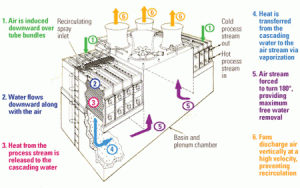
WaterWet surface air coolers minimize water use by maximizing heat transfer efficiency
Gas-fired power plant designers and operators are increasingly challenged to reduce their plants’ water consumption and improve their thermal efficiency. Closed-loop, evaporative cooling systems (known as wet surface air coolers, or WSACs) are a cost-effective heat transfer technology that can simultaneously achieve both goals. In addition to providing lower-temperature cooling and condensing while requiring less space and horsepower than conventional systems, WSACs can use poor-quality water as spray makeup.
-

The man with a plan
I haven’t always been a supporter of former President Jimmy Carter’s politics, but I did vote for him, mainly because we shared the Navy experience and he was educated as an engineer. His later opposition to nuclear power surprised many of us in the power business at the time, and I found his suggestion to […]
-
 Nuclear
Global Monitor (August 2008)
Australia considers seabed sequestration legislation / ElectraTherm installs its first commercial waste-heat generator / Mass. researchers achieve dramatic increase in thermoelectric efficiency / Nuclear power option for developing nations gaining steam / The great green wall of China / POWER digest / Correction
-
 O&M
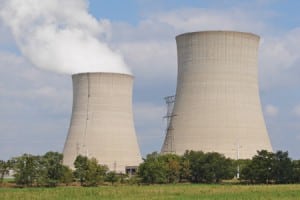
O&MFocus on O&M (August 2008)
Assess your cooling tower’s condition / Proper technique for vertical-up stick welding / Move material with a sonic horn
-
 Legal & Regulatory
Reality bites California GHG plan
The California Air Resources Board (ARB) recently issued its long-awaited draft Climate Change Scoping Plan (Draft Plan) for implementing Assembly Bill (AB) 32, California’s ambitious greenhouse gas (GHG) emissions-reduction initiative. AB 32 requires California to reduce GHG emissions to 1990 levels by 2020—roughly a 30% reduction in projected “business-as-usual” emissions levels or 168 million metric […]
-
 Coal
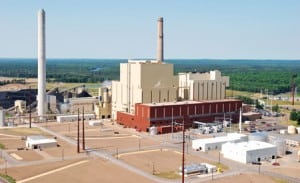
CoalWisconsin Public Service Corp.’s Weston 4 earns POWER’s highest honor
Wisconsin Public Service Corp. placed its world-class Weston 4 into commercial service on June 30 and is now enjoying the benefits of coal-fired supercritical technology’s inherently higher efficiency, operating flexibility, and lower CO2 emissions. For its unequalled environmental protection credentials, well-integrated project team, and employing without a doubt the most advanced coal-fired steam generation technology in the U.S. today, Weston 4 is awarded POWER magazine’s 2008 Plant of the Year award.
-
 Coal
CoalLamar Repowering Project’s creative melding of old and new wins Marmaduke Award
Lamar Light and Power is a municipal utility that has been generating the southeastern Colorado city’s electricity since 1920. Rising natural gas and oil costs pushed LL&P to retire its steam plant five years ago and begin hunting for more economic power sources. The answer: repower the existing plant with a state-of-the-art coal-fired circulating fluidized-bed combustor and cross-connect old and new steam turbines. The $120 million project will stabilize the region’s electricity rates for many years to come and is the winner of POWER’s 2008 Marmaduke Award for excellence in O&M—named for Marmaduke Surfaceblow, the fictional marine engineer/plant troubleshooter par excellence.
-
 O&M
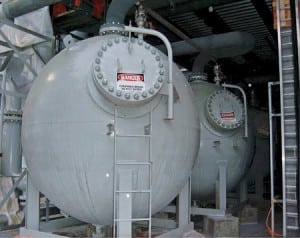
O&MCondensate polishers add operating reliability and flexibility
Many of today’s advanced steam generators favor either an all-volatile treatment or oxygenated treatment chemistry program, both of which require strict maintenance of an ultra-pure boiler feedwater or condensate system. Those requirements are many times at odds with the lower-quality water sources, such as graywater, available for plant makeup and cooling water. Adding a condensate polisher can be a simple, cost-effective solution.
-
 Nuclear
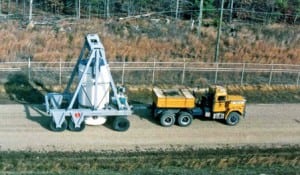
How to solve the used nuclear fuel storage problem
A familiar argument against building new nuclear power plants in the U.S. is that there’s no long-term solution to the used nuclear fuel storage problem. This situation was created in 1977 with the indefinite suspension of programs to reprocess commercial used nuclear fuel. The Global Nuclear Energy Partnership’s announcement in February 2006 that it was reconsidering the reprocessing of used nuclear fuel represented a major shift in policy. It may even open the door to building new U.S. nuclear plants.
-
 O&M
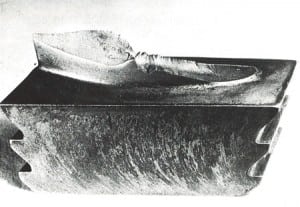
O&MField application of compressor coatings saves big dollars
Over time, turbine compressors and other driven compressors suffer from corrosion, oxidation, and, in many cases, severe fouling, which in turn can cause in-service breakdown and premature overhaul. Today’s innovative protective coatings can be applied on-site to rotors and individual components to replicate the surface finish, corrosion resistance, and antifouling properties of new components.