
Latest
-
 O&M
O&MHow to Measure Flyash Levels
Measuring the level of flyash in your silos is not an easy task, in part because the flyash collected at one plant can be remarkably different from that collected at another plant, even if both fire the same coal. Such variability means that selecting the right instrument for your application is important.
-
 Coal
CoalCourt Kicks CAIR Rules to the Curb
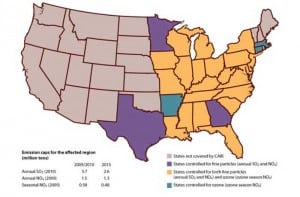
A federal appeals court has struck down a key Environmental Protection Agency (EPA) program for reducing fine particulate and smog-causing emissions in the eastern half of the nation, saying the rules were riddled with “several fatal flaws,” including the agency’s failure to properly focus pollution cuts to prevent movement of air pollution from one state from worsening air quality in a downwind state.
-
Coal
EEI Leaders Say Promise of Carbon Capture and Storage “Overblown”
In a sobering assessment of a key technology that’s expected to help keep the coal industry viable in the face of likely greenhouse gas caps, several electric utility executives have expressed deep concern that the promise of carbon capture and storage for coal-fired power plants has been “overblown” and “oversold.”
-
 Commentary
EPA Staff’s GHG Proposal Will Paralyze the U.S. Economy
The Environmental Protection Agency (EPA) has announced that is it well on its way to regulating at least 85% of the energy used in America in the name of global warming (never mind the fact that temperatures have inexplicably not increased since at least 2001). If the proposal is enacted, any organization or person that emits more than miniscule amounts of CO2 will be required to obtain a permit, effectively bringing our economy to its knees in short order.
-
Commentary
Stymied on Coal, Jacksonville Goes Back to Gas
By Kennedy Maize
Stymied in its plans for new coal-fired generation, Florida’s Jacksonville Energy Authority is moving to natural gas. . . .
For several years, JEA was heavily involved in a multiple-utility plan for a $2.3 billion, 800-MW coal-fired plant to meet the region’s rapidly-growing electricity demand. But Florida Republican Gov. Charlie Crist (rumored to be on presumptive Republican presidential nominee John McCain’s vice presidential short list) clobbered the project and imposed a 20% renewable energy mandate on Florida utilities. “I worked on that for three years. In a flash of an eye, it got cancelled,” JEA project manager Mike Lawson told the Florida Times-Union. -
Commentary
The Madness of Gore
Is Al Gore out of his mind? Or is he simply issuing a difficult challenge that he knows can’t be met, but will stimulate the country toward a positive effort?
It’s hard to tell, given his speech in Washington last week, calling for the U.S. to replace all – that’s 100 percent, folks – of its electric generation with renewables in a decade. We’re talking 2018 here.
-

It’s all about power
—Dr. Robert Peltier, PE Editor-in-Chief The Lieberman-Warner Climate Security Act (L-W) that proposes to cut carbon emissions by two-thirds by 2050 was delivered stillborn on the Senate floor in early June, as expected. Faced with public outcry over record-high gasoline prices, no senator was able to breathe life back into a bill that is estimated […]
-
 Commentary
Kilowatt-hour tax is fairest approach
By Jim Rogers, Duke Energy Corp. The climate change debate has been dramatized in movies, on Hollywood’s red carpets, and in documentaries featuring melting ice caps. The collective effect is extraordinary, and positive. America now stands ready to address one of its toughest challenges since the industrial revolution—decarbonizing our energy supply and economy. Now the […]
-
 Coal
CoalGlobal Monitor (July 2008)
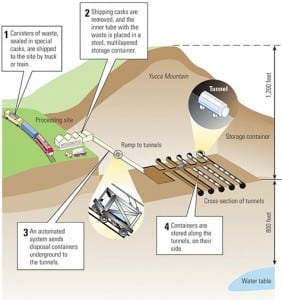
Yucca Mountain plan sent to NRC/ CPV cells get cooling chips from IBM/ StatoilHydro to pilot test first offshore floating wind turbine/ U.S. rivers next massive power source?/ Siemens delivers 500-MW gasifiers/ Algae: A green solution/ POWER digest
-
 O&M
O&MFocus on O&M (July 2008)
Protection against arc flash more important than ever; Laramie River Station uses new coating technology; Protecting power plant pipes: Basics you must know