
Latest
-
News
AREVA to Build New EPRs in France, India; Wins Major Uranium Deal
French nuclear giant AREVA has had a spate of good news lately. Last week, French President Nicolas Sarkozy announced that France would be going ahead with the construction of a second EPR. On Tuesday, the company said it had won a deal of more than €5 billion to enrich uranium from French power giant Électricité de France (EDF), and on Wednesday, it signed a major agreement in India to build two of six planned EPRs in Maharashtra state.
-
News
Global Wind Installations Surpass 120 GW in 2008
Last year, the U.S. passed Germany to become a world leader in wind power installations, while China’s total capacity doubled for the fourth year in a row, the Global Wind Energy Council (GWEC) said last week. Total worldwide installations in 2008 were more than 27,000 MW, dominated by the three main markets in Europe, North America, and Asia.
-
News
Texas PUC Assigns $5 Billion for CREZ Transmission Projects
The Texas Public Utility Commission (PUC) assigned approximately $5 billion of transmission projects to be constructed in Texas’ Competitive Renewable Energy Zones (CREZ) at an open meeting last Thursday.
-
News
Luminant and MHI Establish Nuclear Plant Development Joint Venture
Luminant and Mitsubishi Heavy Industries (MHI) on Monday announced they had established a joint venture to develop Luminant’s Comanche Peak Units 3 & 4 in Texas using MHI’s US-Advanced Pressurized Water Reactor (US-APWR).
-
Engineers Week Is Feb. 15–21
I just renewed my professional society membership dues for the umpteenth year, and while writing the check, I paused to consider if I was getting good value from them. I expect to receive another "suitable for framing" certificate this year, as the number of my membership years ends with a zero, but I wondered if there were other, more tangible benefits.
-
-
Legal & Regulatory
Oil—Unsafe at Any Price
A confluence of circumstances promised to make 2008 a transformative year for renewable energy in the U.S. States enacted additional, and more demanding, renewable portfolio standards, promoting accelerated and sustained development of "green" energy resources. Increasing concerns about global warming and climate change prompted some of this activity. However, the unprecedented escalation of oil prices to almost $150 a barrel (translating into prices at the pump in excess of $4) was the largest impetus for demands that this nation end its addiction to fossil fuels.
-
 Instrumentation & Controls
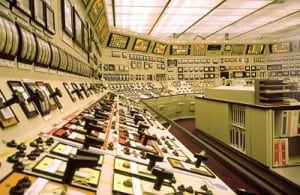
ISA POWID: Where Power Computing Professionals Meet
Which new and emerging technologies will be essential to your power plant’s success? Our special cover story series gives you a glimpse into the future of advanced distributed controls, wireless applications, and automation technologies.
-
 Instrumentation & Controls
Distributed Control Technology: From Progress to Possibilities
The past decade has seen an explosion of technology that has significantly altered the process control industry. The adoption of commercially available technology driven by desktop computing has allowed suppliers to focus on applications to enhance the process and deliver ever-greater value to the user.
-
 Instrumentation & Controls
Optimize Your Plant Using the Latest Distributed Control System Technology
Distributed control systems are powerful assets for new and modernized power plants. Thanks to three product generations of technology innovations, these systems now provide new benefits — including improved O&M efficiency, greater plant design flexibility, and improved process control and asset reliability — that help competitive plants advance in the game.